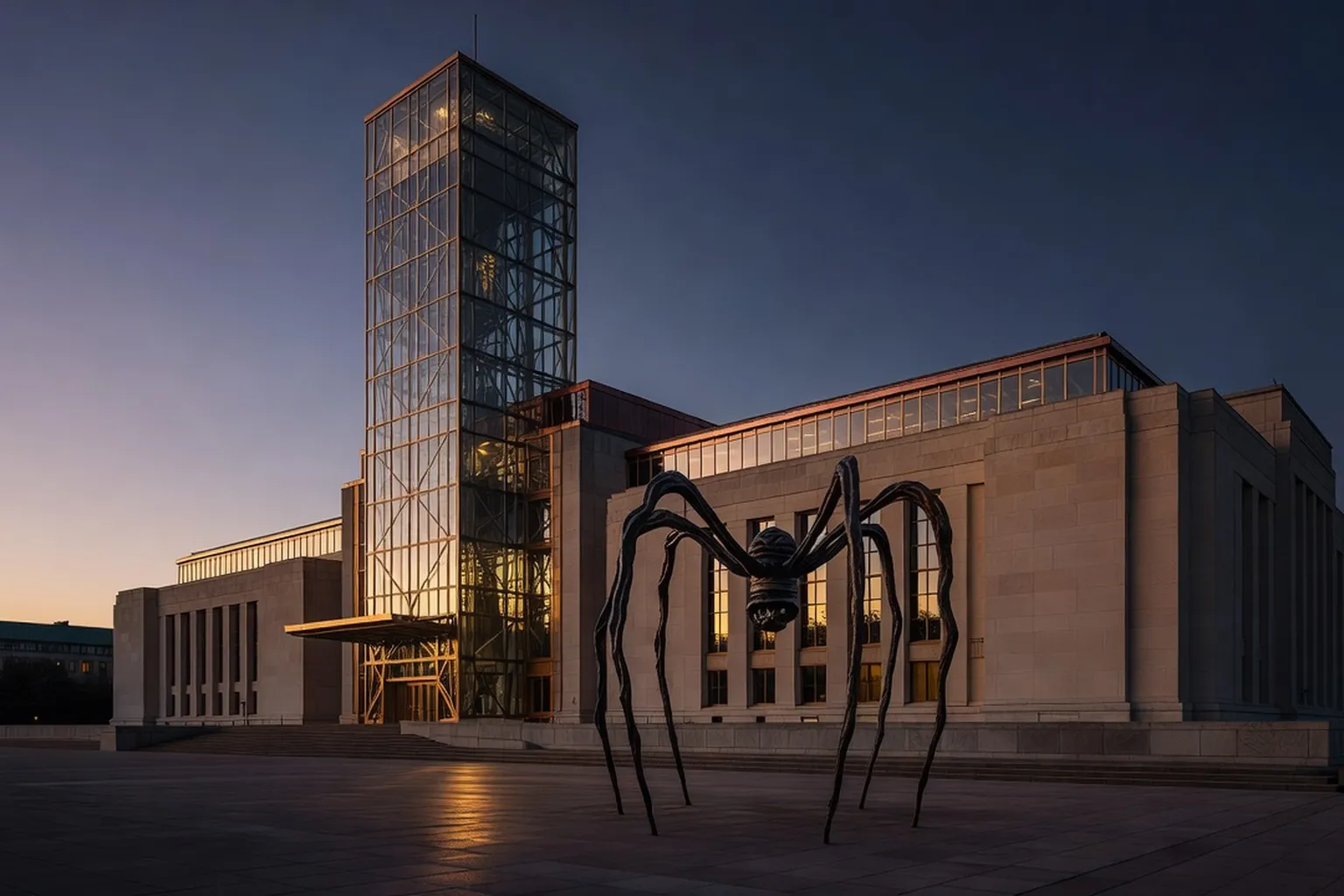
In the heart of Ottawa, the National Gallery of Canada stands as a beacon of culture and history, a place where art from across the nation converges to tell the stories of its people. To get a sense of how the collection comes together for visitors, we spoke with a member of the Gallery’s education and public engagement team, who spends much of their time helping visitors navigate the Indigenous and Canadian galleries. On a crisp autumn afternoon, we sat down in a quiet corner near the Indigenous artworks to talk about the Gallery’s approach to its collection.
The National Gallery, with its gleaming glass facade and distinctive architecture designed by Moshe Safdie, provides an inspiring backdrop for our conversation. As we begin, the sun casts a warm glow through the colossal windows, highlighting the artful blend of natural beauty and human creativity within. Our guide, drawing on years of day-to-day work in the galleries, offers a glimpse into the intricate processes behind the scenes at one of Canada’s most esteemed art institutions.
Meet the team behind the collection
Question: What drew you to work at the National Gallery of Canada, and what keeps you engaged in this work?
Gallery educator: What drew me here in the first place was the Gallery’s commitment to showcasing both Indigenous and Canadian art side by side, which matched my own academic interests and personal passion. What keeps me here is the opportunity to continually learn and engage with the evolving narratives of Canadian art. The Gallery is not just about preserving history; it’s about engaging with contemporary dialogues and ensuring that all voices, particularly those of Indigenous artists, are heard.
In this role, I’ve had the chance to support exhibitions that bring both historical and contemporary Indigenous art to a broader audience. Each project offers a new challenge and a chance to highlight the incredible diversity and depth of Indigenous cultures across Canada. The Gallery periodically presents triennial and thematic exhibitions dedicated to contemporary Indigenous art — visitors planning a trip should check the official website for what’s currently on view.
As our conversation unfolds, our guide’s enthusiasm for the work becomes evident — a commitment to authentic representation and a deep respect for the artists whose work fills the galleries. The Gallery, through this kind of front-line engagement, serves as a bridge between Canada’s past and its creative future, making it an essential stop for things to do in Ottawa.
Question: What has been one of the more memorable exhibitions you’ve seen come through the Gallery?
Gallery educator: The National Gallery has, over the years, presented major retrospectives of pivotal Canadian Indigenous artists — including career-spanning surveys of figures like Norval Morrisseau, often described as a foundational voice in Woodland School painting for his vibrant depictions of Anishinaabe stories and legends. Exhibitions of that scale are major undertakings, involving extensive research and collaboration with Indigenous communities to ensure the artist’s legacy is honoured authentically.
Retrospectives like these don’t only celebrate the art — they spark conversations about the role of Indigenous narratives in the broader context of Canadian culture. It’s rewarding to watch how these exhibitions resonate with both Indigenous and non-Indigenous visitors, bridging cultural divides and fostering understanding. Such projects underscore the power of art as a medium for dialogue and connection, which is at the heart of what the Gallery strives to achieve.
In reflecting on this work, our guide highlights the delicate balance between academic research and community collaboration that is essential to curatorial practice. That commitment to representing Indigenous voices with integrity and respect is a cornerstone of the Gallery’s approach to the Canadian art scene.
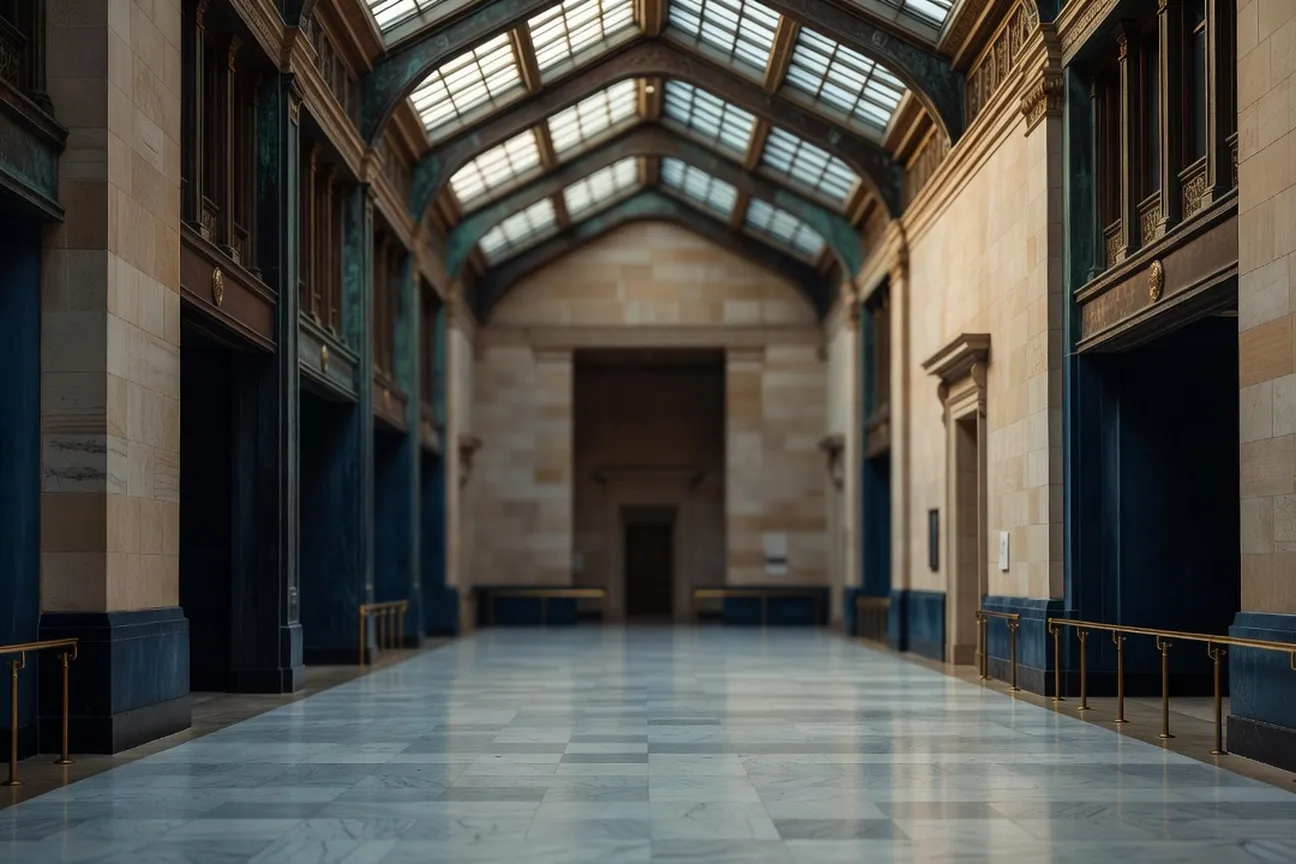
Maman and the plaza — the question we keep being asked
Question: The sculpture ‘Maman’ by Louise Bourgeois is one of the most famous pieces at the Gallery. What is the most common question you receive about it?
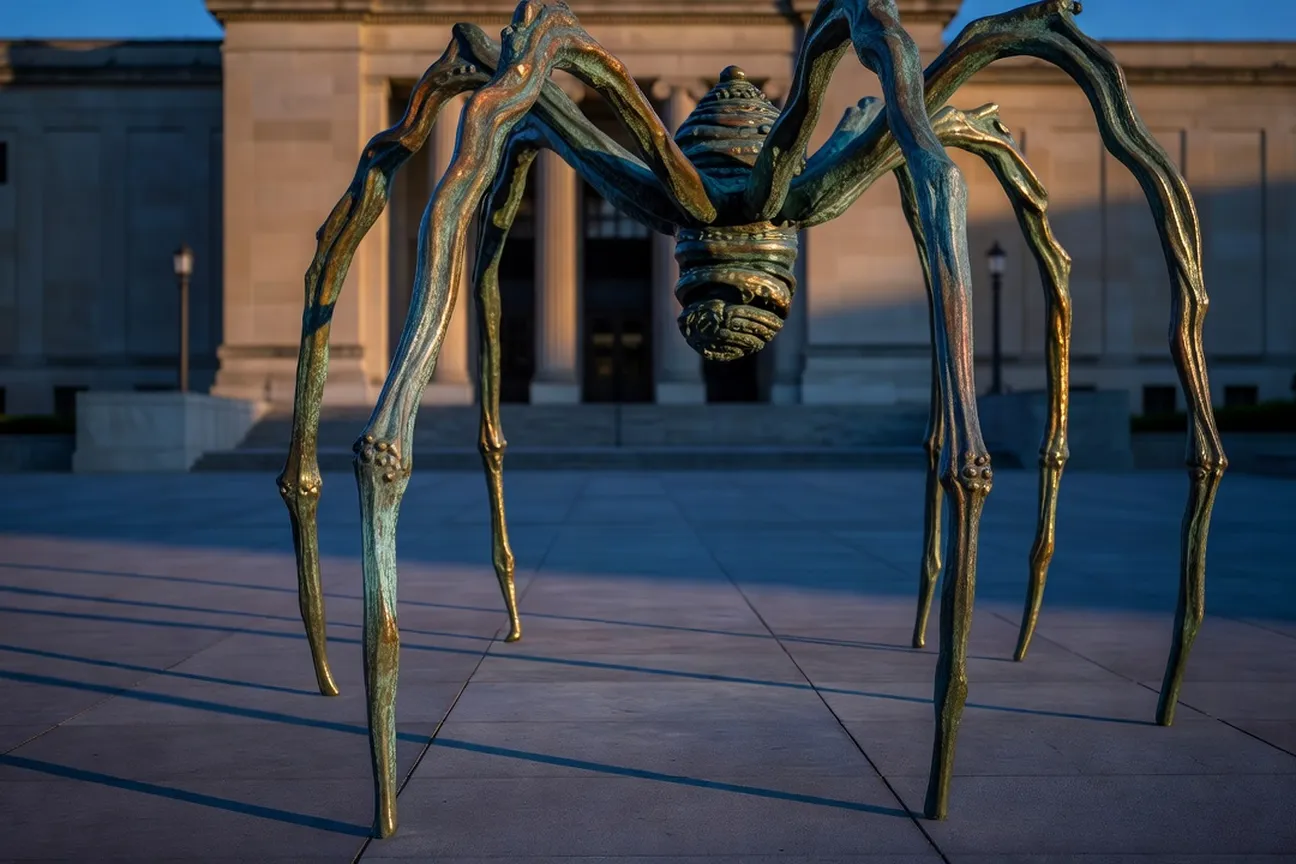
Gallery educator: Without a doubt, the question we get asked the most is about the symbolism and meaning behind ‘Maman’. This towering bronze spider sculpture is both striking and enigmatic. Louise Bourgeois created the Maman series in the late 1990s, and the National Gallery of Canada’s cast has stood on the plaza outside the building for years, becoming an iconic part of the site and capturing the curiosity of visitors from around the world.
Bourgeois conceived ‘Maman’ as a tribute to her mother, who worked as a weaver, reflecting themes of strength, protection, and the maternal role. The spider, with its intricate web-spinning abilities, symbolises both the nurturing and protective qualities Bourgeois associated with her mother. It’s fascinating to watch how visitors react to the sculpture, often with a mix of awe and contemplation, prompting them to reflect on their own familial relationships.
These layers of meaning are part of why ‘Maman’ keeps sparking personal reflection and dialogue among visitors. The sculpture, situated prominently outside the Gallery, is a testament to the power of public art in transforming urban spaces and engaging diverse audiences.
Question: How does ‘Maman’ fit into the broader context of the Gallery’s outdoor installations?
Gallery educator: ‘Maman’ is part of a curated selection of outdoor sculptures that enhance the visitor experience even before they step inside the Gallery. The aim is to create an environment where art is accessible to all, inviting people to explore and interact with it in a public setting.
The outdoor installations are generally free to view from the plaza, making art an integral part of the community and encouraging engagement from those who might not typically visit a museum. Extending the Gallery’s reach beyond its walls helps foster a broader appreciation for art in everyday life. This approach aligns with the Gallery’s mission to make art inclusive and available to everyone, enriching the cultural landscape of Ottawa. The building itself, with its pink granite and glass towers designed by Moshe Safdie, is a stop worth including on a wider architecture walking tour from Parliament Hill to ByWard Market for visitors who want to read the city’s skyline as a continuous story rather than isolated landmarks.
Our French-language partner voyage-canada.com covers similar editorial ground for francophone readers planning a cross-country trip.
Integrating art into public spaces this way does more than enhance the city’s aesthetic appeal — it encourages a deeper connection between the community and the artistic world, complementing nearby attractions such as Parliament Hill heritage.
The Indigenous collection: how it is shown
Question: Can you explain how the Indigenous collection is curated and displayed at the Gallery?
Gallery educator: Curating the Indigenous collection is a process that requires sensitivity, collaboration, and a commitment to authenticity. The Gallery’s approach is to work closely with Indigenous artists, scholars, and community members to ensure that works are presented in a way that honours their cultural significance and context. The collection spans a wide range of mediums, including traditional crafts, contemporary paintings, and multimedia installations, reflecting the diversity of Indigenous cultures across Canada.
One initiative visitors often notice is bilingual and multilingual labelling on interpretive materials, which respects the linguistic heritage of the artworks and enhances the educational experience. Displays are also updated over time to include new acquisitions and contemporary pieces, keeping the collection dynamic and relevant.
Through these efforts, the Gallery’s teams strive to create an inclusive and informative experience that resonates with visitors of all backgrounds. The Indigenous collection at the National Gallery stands as a testament to Canada’s rich and varied artistic heritage, offering a window into the cultural narratives that have shaped the nation.
Question: How do you ensure that the Indigenous collection remains accessible and engaging for international visitors?
Gallery educator: Accessibility and engagement are at the forefront of the Gallery’s approach. Many international visitors may not be familiar with the nuances of Indigenous art in Canada, so there’s a strong emphasis on educational programming and guided tours where they’re offered. These programs are designed to provide context and insight into the artworks and the cultures they represent — check the official website for current tour languages and schedules.
The Gallery also uses digital tools to enhance the visitor experience, including audio guides and interactive features that let visitors explore the collection in greater depth. By providing multiple entry points for engagement, the goal is to make the Indigenous collection accessible to a global audience, fostering a deeper understanding and appreciation of Canada’s Indigenous cultures.
Through this kind of programming, the Gallery continues to invite visitors from around the world to connect with Canada’s rich tapestry of Indigenous art. For those planning a visit to Ottawa, the National Gallery offers an opportunity to experience the artistic expressions of Canada’s First Peoples, complemented by other cultural experiences such as the ByWard Market field guide.
The Canadian Group of Seven canvases visitors miss
Question: What can you tell us about the lesser-known works of the Group of Seven that are often overlooked by visitors?
Gallery educator: Many visitors head straight for the most famous Group of Seven canvases — Tom Thomson’s “The Jack Pine” is a favourite stop. But the collection also includes equally compelling pieces that offer a deeper insight into the breadth of their work, including landscapes by Lawren Harris and A.Y. Jackson that are less reproduced but no less striking.
These works are housed in the Gallery’s dedicated Canadian and Indigenous galleries, and because they’re not the headline pieces, they can be easy to miss on a first pass through. The Gallery rotates works regularly to manage conservation needs, so the exact selection on view can vary from one visit to the next — the room layout and current display can be checked at the information desk or on the official website when you arrive. Guided tours, where offered, typically cover the historical and cultural context of these paintings — check the Gallery’s website for current tour times and whether they’re included with admission.
Insider tip: Ask at the information desk which gallery room is currently showing the lesser-known Group of Seven canvases — most visitors walk straight past them on the way to the more famous works, and they’re worth a deliberate detour.
It’s important to appreciate that the Group of Seven were not just landscape painters, but storytellers of the Canadian wilderness. Their lesser-known works are integral to understanding their narrative and the evolution of Canadian art.
Travellers based in France will find our partner timetours-voyages.fr covers similar ground in French.
The allure of the Group of Seven lies not only in their celebrated canvases but also in the stories and landscapes that aren’t as frequently celebrated. A visit to the National Gallery can be a journey into both the familiar and the unexpected.
Question: Does the Gallery run exhibitions focusing on these lesser-known works or artists related to the Group of Seven?
Gallery educator: The National Gallery periodically runs special and thematic exhibitions that expand on the Group of Seven’s legacy, sometimes pairing their work with contemporaries and influences such as Emily Carr, who shared their fascination with the Canadian landscape but approached it with a distinct perspective of her own.
These exhibitions are a good opportunity to examine the cross-pollination of ideas among Canadian artists of the early 20th century. Special exhibitions are generally housed in a dedicated pavilion with separate ticketing — the current and upcoming exhibition schedule, along with ticket details, is posted on the Gallery’s official website, so it’s worth checking before you plan a visit around a specific show.
“The Group of Seven were not just landscape painters, but storytellers of the Canadian wilderness.”
Rotation strategy and special exhibitions
Question: How does the National Gallery manage the rotation of its vast collection to keep the exhibitions fresh and engaging?
Gallery educator: The rotation strategy is planned to balance the conservation needs of the artworks with the educational and aesthetic goals of the gallery. Paintings are typically rotated on a cycle of several months, though this varies depending on the specific requirements of each piece. Works on paper, such as watercolours and prints, are more susceptible to light damage and therefore have shorter display periods than oil paintings.
Each rotation is an opportunity to tell a new story, and rotations are sometimes themed around anniversaries or cultural moments relevant to the works on view. This thematic approach keeps regular visitors engaged and attracts those interested in specific historical narratives. The current thematic focus, if any, is announced on the Gallery’s official website ahead of each visit.
In terms of logistics, the rotation process involves a highly coordinated effort between curators, conservators, and the installation team. A detailed cataloguing system tracks the condition and location of artworks, ensuring that each piece is carefully monitored and preserved. This system is crucial, especially when preparing for large-scale special exhibitions that may require international loans or collaborations.
| Medium | Typical display period | Reason |
|---|---|---|
| Paintings (oil, canvas) | About 6 months | Standard rotation cycle |
| Works on paper (watercolours, prints) | About 3 months | Higher sensitivity to light damage |
| Sculpture and outdoor installations | Long-term/permanent | Durable materials, weather-resistant siting |
The National Gallery’s approach ensures that there is always something new to discover. Each visit is an opportunity to see different facets of the collection, making it a dynamic and evolving experience.
Question: What kind of special exhibitions might international visitors find particularly interesting?
Gallery educator: The National Gallery periodically hosts special exhibitions dedicated to contemporary Indigenous artists from across Canada, showcasing their interpretations of landscape and identity. These are typically curated in collaboration with Indigenous communities and aim to provide a platform for voices that have historically been underrepresented in institutional settings.
Exhibitions of this kind often go beyond paintings on a wall, incorporating multimedia installations and interactive components that let visitors engage with the themes in a multi-sensory way. Special exhibitions are usually housed in a dedicated pavilion with separate ticketing from general admission — current and upcoming shows, along with dates and pricing, are listed on the Gallery’s official website, so it’s worth checking before your visit.
Exhibitions like these offer international visitors a profound insight into the diversity and dynamism of contemporary Indigenous art in Canada — an opportunity to witness how traditional narratives and modern expressions coexist and inform each other.
How to plan a half-day visit
Question: What would you recommend for visitors planning a half-day at the National Gallery?
Gallery educator: A half-day visit to the National Gallery can be a richly rewarding experience if planned thoughtfully. I’d recommend starting with the Indigenous and Canadian galleries, which typically provide a comprehensive overview of Canadian art, from early Indigenous works to contemporary pieces, offering a narrative that is both chronological and thematic. Visitors stitching the gallery into a wider museum day can compare notes with our Ottawa museums guide for what else to prioritise nearby.
After exploring these galleries, take a break at the Scotiabank Great Hall. This architectural landmark, with its views of the Ottawa River and Parliament Hill, is a good spot for reflection, and the on-site café is a convenient place to recharge before continuing.
Following this, I’d suggest visiting the European and American galleries. These collections provide a contrast to Canadian art and include works by internationally recognised artists. The juxtaposition of these works with the Canadian collection allows for a broader understanding of global art movements and their influences.
To round off your visit, a stop at the Gallery’s boutique is worth it if you have time — it typically offers art-inspired merchandise, from prints and books to work by Canadian artisans. For those interested in further exploration, our Parliament Hill heritage article provides insights into another iconic destination nearby.
A suggested half-day route:
- Indigenous and Canadian galleries — start here for the chronological narrative
- Scotiabank Great Hall — a break with river and Parliament Hill views
- European and American galleries — a contrast with the Canadian collection
- The Gallery boutique — prints, books and Canadian-made items
Question: Are there any specific tips for making the most out of a brief visit in terms of timing or ticketing?
Gallery educator: To make the most of a short visit, I’d recommend checking ticket options and current admission pricing on the Gallery’s official website before you go, and buying online in advance if that option is available — it can save time at the door and sometimes comes with discounts or packages that include special exhibitions or guided tours.
Timing matters too. Arriving soon after opening tends to mean fewer crowds, and many visitors also find the late afternoon quieter. Confirm the day’s opening and closing hours on the official website before you plan your route, since they can vary by season and day of the week.
For those who want a more structured experience, ask at the information desk whether audio guides are currently available for rent — the Gallery has offered them in multiple languages in the past, though availability and pricing can change. A visit to the National Gallery, combined with an exploration of the ByWard Market field guide, makes for a culturally rich half-day in Ottawa.
Quick facts: National Gallery of Canada
| Detail | Figure |
|---|---|
| Collection | Extensive permanent collection of Canadian, Indigenous and international art |
| Admission pricing | Varies by age category — check the official website for current rates |
| Children | Free admission for young children (age threshold set by the Gallery — confirm current policy online) |
| Opening hours | Vary by season and day — confirm current hours on the official website before visiting |
| Closed | Typically closed on select days and statutory holidays — confirm before visiting |
| Audio guide rental | Availability and pricing vary — ask at the information desk or check the official website |
Good to know: Arriving soon after opening or later in the afternoon tends to mean quieter galleries, since both windows avoid the midday peak.
Reflecting on this conversation, it’s clear that the National Gallery of Canada is more than just a repository of art. It is a living, dynamic institution that connects visitors to the rich tapestry of Canadian and Indigenous narratives. Through its thoughtful curation and diverse exhibitions, the Gallery invites both introspection and discovery.
Ottawa, with its vibrant artistic and cultural scene, offers a unique window into the Canadian spirit. Whether through the serene landscapes of the Group of Seven or the contemporary voices of Indigenous artists, the city presents a compelling story that resonates on both local and international stages. For photography enthusiasts who want to explore architectural and cultural subjects on another continent, this interview with photographer Jean-Pierre Moreau on capturing Uzbekistan’s mosques, markets and human light offers a compelling contrast — from Canadian landscapes to the ancient architecture of the Silk Road.
Frequently asked
This interview reflects the perspective of a member of the National Gallery of Canada's education and public engagement team, presented in an editorial Q&A format to give visitors an insider's view of the collection.
Visitors can explore an extensive permanent collection, including pieces by Canadian artists like the Group of Seven, as well as international works. The gallery offers both permanent exhibitions and rotating special exhibitions. Check the gallery's official website for the current collection overview.
Admission pricing varies by age category and changes periodically. Consult the National Gallery of Canada's official website for current adult, senior, student, and youth admission rates, as well as any free-admission days.
Opening hours vary by season and can change for holidays or special events. Check the National Gallery of Canada's official website before your visit to confirm current hours and any late-evening openings.
The National Gallery of Canada has historically offered guided and self-guided audio tours. Availability, schedule, and pricing can change, so confirm current tour offerings on the official website before you visit.