
Most visitors to Ottawa arrive with the National Gallery of Canada already circled on their itinerary, and rightly so — but the gallery is only one entry in a list that runs considerably longer. Between the parliamentary precinct and the far bank of the Ottawa River, the capital region holds a cluster of national museums whose scale and ambition rival institutions in cities several times Ottawa’s size. This is a deliberate feature of Canada’s capital planning, not an accident of tourism marketing, and it means a visitor with three or four days here can move from military history to Indigenous heritage to dinosaur bones to the mechanics of flight without ever leaving a fifteen-minute transit radius.
The trouble is that abundance creates its own problem. Four major national museums, each large enough to fill an unhurried half-day, is more than most itineraries can absorb without either rushing hopelessly or abandoning half the list. This guide exists to solve that problem directly: what each museum actually contains, how much time it deserves, what its admission and hours look like in practice, and how to build a sequence that respects both your attention span and your feet. We also cover our interview with a National Gallery curator if the Gallery itself is your starting point, since the two experiences complement each other closely.
Why Ottawa has so many national museums
The concentration of national museums in Ottawa traces back to a 19th-century decision that has quietly shaped the city ever since: as the seat of a young federation, Ottawa needed to hold not just Parliament but the physical evidence of a national story — its wars, its peoples, its industry, its natural history. Rather than scatter these collections across provinces, successive federal governments built them here, clustering them within walking or short-transit distance of the parliamentary precinct. The result is a downtown core where a visitor can move from the seat of government to a museum housing a Lancaster bomber in under twenty minutes.
This clustering is unusual internationally. Washington has the Smithsonian complex; London disperses its national collections across several boroughs; Paris scatters its grands musées along both banks of the Seine. Ottawa instead compresses a comparable range of national institutions into a walkable core plus a short river crossing into Gatineau, Quebec. That compactness is the single biggest reason a museum-focused trip to Ottawa rewards careful planning rather than improvisation — the sites are close enough to tempt you into over-scheduling, and rich enough to punish you for it.
A few practical notes before diving into each museum:
- All four institutions covered here are federally operated national museums, distinct from municipal or private collections in the city.
- Three sit on the Ottawa side of the river; the fourth, the Canadian Museum of History, sits directly across in Gatineau.
- Each museum charges separate admission — there is no combined “museum pass” covering all four, though some offer joint promotions seasonally.
- Winter hours run shorter than summer hours at every institution listed here, so always verify before a December or January visit.
Planning tip: Treat each of these four museums as a half-day commitment minimum. Anyone who tells you they “did the War Museum in forty-five minutes” saw the lobby and the gift shop.
The Canadian War Museum: scale, honesty, and difficult history
The Canadian War Museum, at 1 Vimy Place along the Ottawa River, is the largest and arguably the most emotionally demanding of the group. Its low, weathering-steel form — opened in 2005 and shaped by an architectural team associated with Moriyama & Teshima — deliberately avoids triumphalism. The building’s angular, half-buried profile is meant to evoke a battlefield scar rather than a monument, and the museum’s curatorial voice matches that architecture: exhibits do not shy from the costs of war, including internment, conscription crises, and the psychological toll on returning veterans.
The permanent galleries proceed chronologically across four large halls, beginning with early conflicts between Indigenous nations and European settlers and ending with Canada’s peacekeeping and contemporary military deployments. The centrepiece for most visitors is Gallery 3, covering the First and Second World Wars, with immersive displays that recreate the scale and disorientation of trench warfare and the air campaigns that followed. The LeBreton Gallery, in a separate hall, houses the museum’s largest military hardware — including its Lancaster bomber — alongside tanks and artillery. The Regeneration Hall, at the building’s far end, is a quiet, deliberately unglamorous commemorative space built around themes of remembrance and renewal, and tends to be where visitors linger longest and speak least.
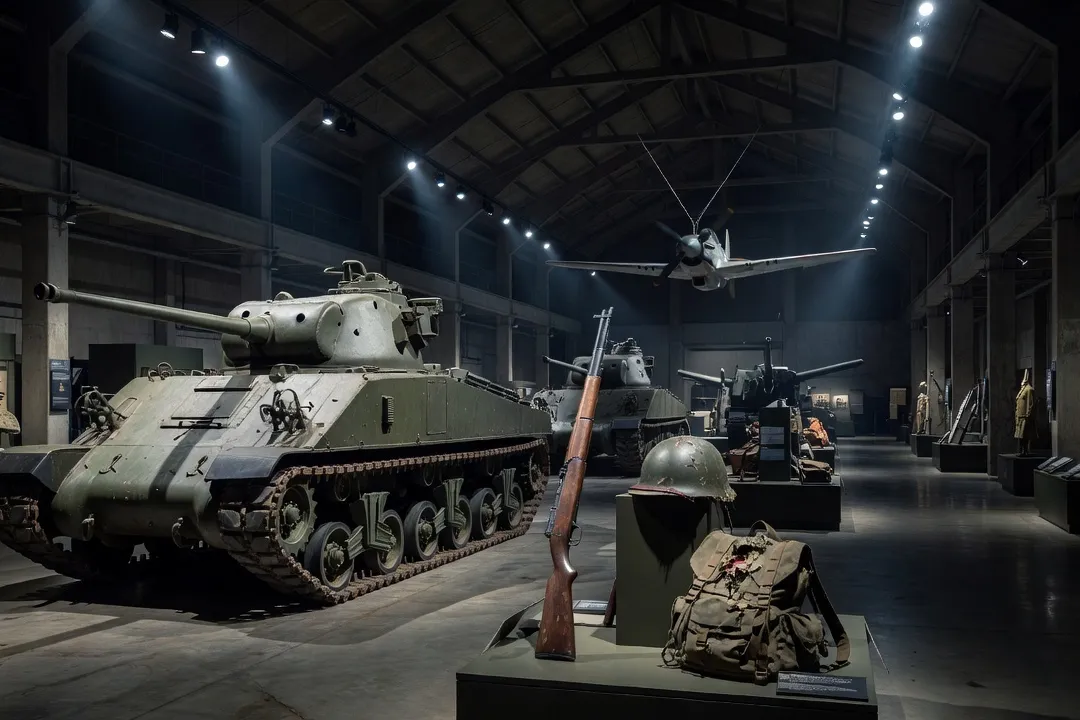
The LeBreton Gallery also holds a Cold War-era interceptor and armoured vehicles used in more recent deployments alongside the Lancaster. Budget at least two to three hours for a proper visit; history-minded travellers, or anyone visiting with family members who served, can easily fill a half-day. The museum’s café serves simple, thematically appropriate fare — bison burgers and split-pea soup among the options — and is a reasonable lunch stop if you’re sequencing a second museum visit the same afternoon.
Don’t miss: The Regeneration Hall. It’s the single most affecting space in any Ottawa museum, takes only ten minutes, and is the space where the visit tends to sink in most.
The Canadian Museum of History across the river in Gatineau
Cross the Ottawa River — on foot via the Alexandra Bridge, or by a short bus ride — and you arrive at the Canadian Museum of History, whose sweeping copper-toned roofline was designed to echo the Gatineau Hills behind it. Where the War Museum is spare and unflinching, the History Museum is expansive and narrative-driven, tracing the country’s social and cultural development from earliest Indigenous settlement through European contact to contemporary multiculturalism.
Its signature space is the Grand Hall, a soaring room lined with totem poles from British Columbia’s coastal nations, several exceeding fifteen metres in height, arranged to face a reconstructed shoreline of longhouse facades. It is one of the most photographed interiors in the national capital region, and deservedly so — the scale is genuinely difficult to convey in a photograph taken from ground level. Adjacent, the First Peoples Hall presents a more intimate, artifact-dense account of Indigenous history across the continent, weighted toward original objects rather than reconstructions.
Families should note that the same complex houses the Canadian Children’s Museum, a semi-separate wing built around interactive, global-culture exhibits aimed at younger visitors — useful to know if you’re travelling with children who may tire of the main galleries’ denser historical content. The museum’s location just across the river from Parliament Hill makes it a natural pairing with Parliament Hill’s heritage and the surrounding precinct, and many visitors combine the two in a single day, treating the river crossing as a scenic interlude rather than a detour.
Here is how the four institutions compare at a glance:
| Museum | Core theme | Time needed | Best for |
|---|---|---|---|
| Canadian War Museum | Military history, 17th century to present | 2–3 hours | History enthusiasts, reflective visits |
| Canadian Museum of History | Social and Indigenous history, national narrative | 2.5–3.5 hours | First-time visitors, families |
| Canada Science and Technology Museum | Applied science, transportation, industry | 2–2.5 hours | Children, hands-on learners |
| Canadian Museum of Nature | Natural history, dinosaurs, biodiversity | 1.5–2.5 hours | Families, casual afternoon visits |
The Canada Science and Technology Museum for hands-on learning
Located slightly further from the downtown core on St. Laurent Boulevard, the Canada Science and Technology Museum trades historical narrative for direct, physical engagement. This is the museum most likely to produce genuine enthusiasm from children under twelve, largely because so much of it is built around things you touch, pedal, crank, or trigger rather than glass cases you circle at a respectful distance.
The collection spans transportation, communications, and industrial technology, with a rail yard of full-size locomotives as one of its most striking permanent displays — visitors can walk directly beside steam engines that once hauled freight across the country. A separate wing houses a functioning planetarium-adjacent space exhibit and a crank-generator station where visitors physically produce the electricity that powers a small display, a demonstration that reliably outlasts most other exhibits in terms of child attention span. The museum has undergone major renovation in recent years, and its current layout favours open, walkable galleries over the maze-like corridors of its earlier incarnation — worth knowing if you visited years ago and remember a more cramped floor plan.
Compared to the War Museum or History Museum, this is a lighter, faster visit — most families move through in two to two and a half hours, including a stop at the café. It pairs naturally as a second stop on a day that begins at the Museum of Nature, since both museums sit on the same side of the city and share a broadly similar, family-forward pace.
The Canadian Museum of Nature and its dinosaur gallery
Housed in the castellated Victoria Memorial Museum Building on McLeod Street — itself a national historic site dating to 1912 — the Canadian Museum of Nature offers the most immediately photogenic collection of the four, anchored by its permanent dinosaur gallery. The building briefly served as Canada’s temporary Parliament after the 1916 Centre Block fire, a detail worth watching for in the museum’s own interpretive material as you move through the building.
The dinosaur gallery itself occupies the building’s upper floor and includes several mounted skeletons recovered from Alberta’s badlands, displayed alongside interpretive material on the geological conditions that preserved them. It’s a smaller, more intimate space than equivalent dinosaur halls in larger institutions elsewhere, and that intimacy works in its favour — visitors are rarely more than a few metres from the specimens, and the lighting is deliberately theatrical rather than clinical.
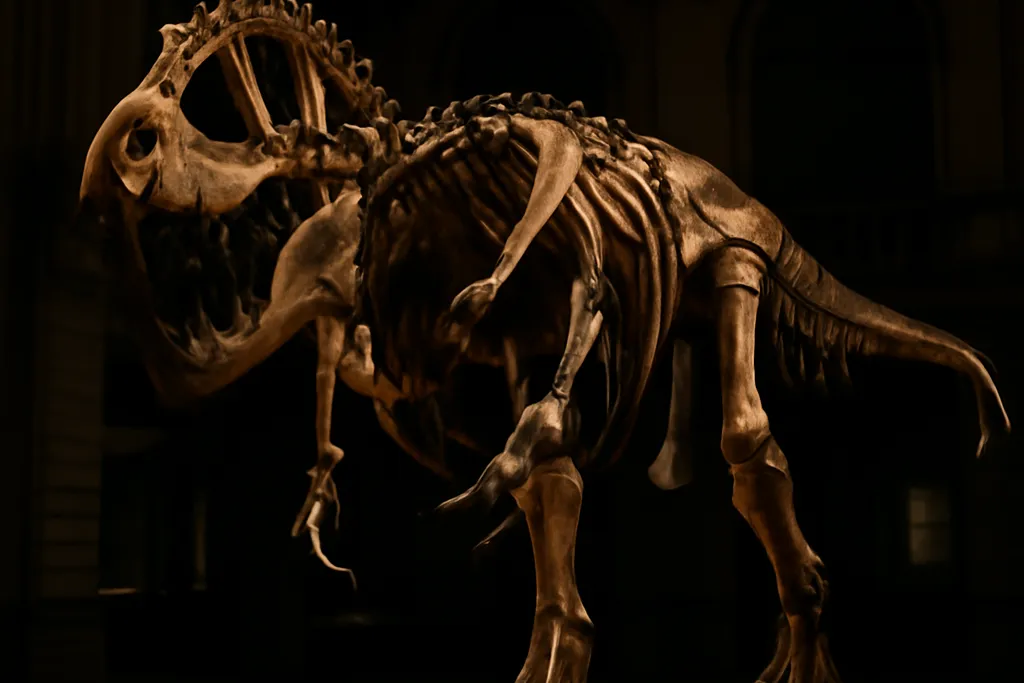
Beyond the dinosaurs, the museum’s other galleries cover Canadian biodiversity, Arctic ecosystems, and a well-regarded live-animal gallery featuring reptiles and amphibians, popular with younger visitors who have exhausted their patience for static displays elsewhere. The building’s turret and stained-glass stairwell are worth a slow look on the way up — architectural details easy to miss when you’re moving quickly toward the dinosaurs.
Consider this museum for:
- Families with children roughly aged five to twelve, who tend to respond most strongly to the dinosaur gallery.
- Visitors short on time, since a satisfying visit is achievable in ninety minutes.
- A lighter afternoon stop after a denser morning at the War Museum or History Museum.
- Anyone interested in early 20th-century Canadian architecture, given the building’s own history as a temporary Parliament.
Tickets, hours, and free-admission evenings
Admission prices and hours change often enough — and vary enough by season, day of week, and museum — that printing specific figures here would go stale within months and risks misleading your budgeting. All four institutions publish current pricing, hours, and any free-admission evenings directly on their own official websites, and that is the only reliable source to check before finalizing your visit.
| Museum | Typical daily rhythm | Admission | Reduced/free-admission windows |
|---|---|---|---|
| Canadian War Museum | Open daily, with at least one extended evening | Consult official site | Some evenings offer reduced or free entry, seasonally |
| Canadian Museum of History | Open daily, extended hours in summer | Consult official site | Select evenings, seasonally |
| Canada Science and Technology Museum | Open daily | Consult official site | Occasional evening promotions |
| Canadian Museum of Nature | Open daily, with at least one extended evening | Consult official site | Some evenings offer reduced or free entry, seasonally |
Most of these institutions also offer discounted or free admission for young children, and several offer family-rate bundles that undercut buying individual tickets — again, confirm current terms directly with each museum. If cost is the deciding factor in how many museums you can fit into a trip, our budget tips including free museum evenings piece goes into more detail on how to track down which evenings currently offer reduced or free entry, since these promotions rotate by season and are worth checking close to your travel dates rather than relying on older listings.
Planning tip: Many of these museums extend hours and reduce or waive admission on select evenings, which also tends to mean smaller crowds than a Saturday afternoon. Check each museum’s official site for the current schedule before you build your itinerary around it.
Planning a multi-museum itinerary without burning out
The single most common mistake visitors make is treating these four museums as items on a checklist to be ticked off in one exhausting day. Each is large enough to reward genuine attention, and each covers emotionally or intellectually distinct territory — the War Museum’s reflective weight sits uneasily next to the Nature Museum’s lighter, family-forward pace if you try to do both back to back without a break.
A more sustainable approach spreads the four across two, ideally three, separate outings:
- Pair the Canadian Museum of History with a Parliament Hill visit, since both sit near the same river crossing and share a similar historical register.
- Pair the Canadian War Museum with a quieter afternoon — a walk along the river or a stop at a nearby café — rather than stacking it against a second dense museum the same day.
- Pair the Canada Science and Technology Museum with the Canadian Museum of Nature on a family-oriented day, since both favour hands-on, faster-paced engagement.
- Leave at least one buffer half-day unscheduled if your trip runs four days or longer, since museum fatigue compounds faster than most visitors expect.
Transit between these sites is straightforward but not instantaneous — the History Museum’s Gatineau location in particular requires either a river crossing on foot or a short bus connection, and travellers unfamiliar with the city’s transit network should build in extra time. Our guide to how to get around Ottawa between attractions covers the specific routes and approximate travel times between each museum and the downtown core, which is worth reviewing before finalizing which pairings make sense for your schedule.
Don’t miss: If you’re museum-hopping over multiple days, alternate a dense historical museum with a lighter, faster one. The contrast in pacing is as important as the contrast in subject matter.
For travellers building out a broader Canadian trip beyond Ottawa, our French-language partner site covers cultural itineraries across the country, while readers planning from France may find curated heritage-focused circuits useful for connecting an Ottawa museum stay to a wider national itinerary.
Which museum to choose if you only have one day
If your Ottawa visit allows only a single day for museums, the choice comes down to what you value most in a national collection, since no single institution captures everything the other three offer.
- Choose the Canadian War Museum if you want the most emotionally substantial, historically comprehensive experience, and don’t mind a heavier tone.
- Choose the Canadian Museum of History if you want the broadest narrative sweep, the most photogenic single space in the Grand Hall, and an easy pairing with a Parliament Hill visit the same day.
- Choose the Canadian Museum of Nature if you’re travelling with young children or simply want a shorter, lighter, still genuinely rewarding visit.
- Choose the Canada Science and Technology Museum if hands-on engagement matters more to your group than historical narrative.
For most first-time visitors with only one day to spare, the Canadian Museum of History edges ahead as the single best all-around choice: it delivers a strong historical narrative, an unforgettable central space in the Grand Hall, family-friendly programming through the adjoining Children’s Museum, and a location that pairs naturally with a Parliament Hill morning. But there is no wrong choice among these four — each rewards the time you give it, and each reveals a different facet of how Canada has chosen to tell its own story to the people who come looking for it.
Frequently asked
The region hosts several national museums, including the Canadian War Museum, the Canadian Museum of History, the Canada Science and Technology Museum, the Canadian Museum of Nature, and the National Gallery of Canada, making it one of the highest concentrations of national institutions in the world.
The Canada Science and Technology Museum and the Canadian Museum of Nature both offer hands-on exhibits and interactive displays that tend to hold younger visitors' attention longer than purely historical collections.
Most visitors need two to three hours to see the main galleries thoroughly, though history enthusiasts can easily spend a full half-day given the museum's scale.
Yes, it sits directly across the Ottawa River from Parliament Hill in Gatineau, Quebec, and is easily reached on foot or by a short bus ride, making it simple to combine with a Parliament Hill visit.
It is possible to combine two museums in one day if they are chosen for complementary themes and manageable size, but rushing risks missing the depth that makes each collection worthwhile.