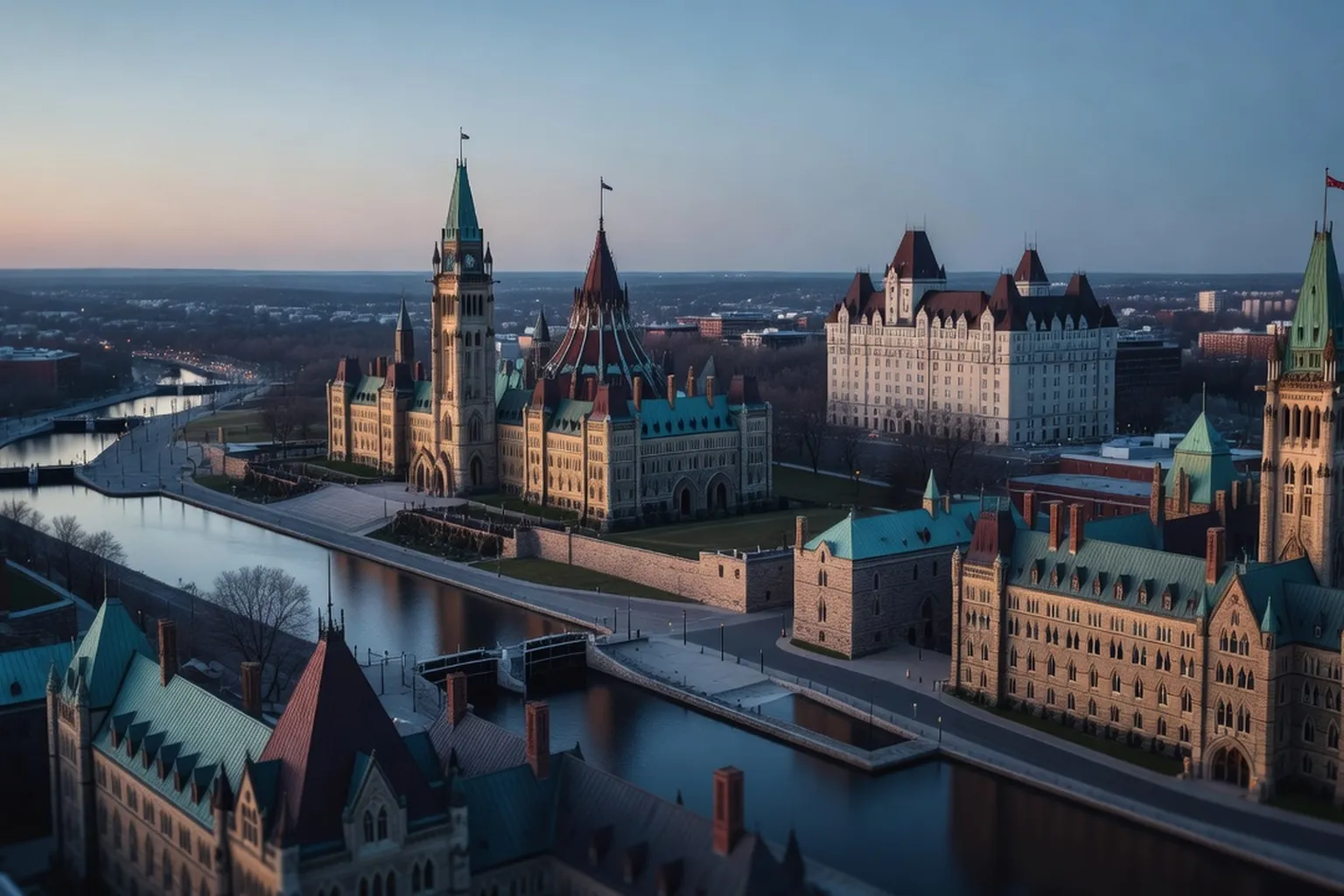
Ottawa presents itself as a city of measured contrasts: the quiet precision of its federal institutions against the restless current of the Rideau River, the stately symmetry of its parliamentary precinct framed by the raw, unplanned energy of its market district. When ranking the city’s principal attractions, we began with a simple premise—each place should reveal something essential about Ottawa’s character, whether through history, landscape, or the daily rhythms of its inhabitants. We measured each attraction against three criteria: its historical weight, its capacity to engage visitors over several hours, and its accessibility to an international audience. Rather than chase novelty or spectacle, we sought places that reward patience and curiosity, where the texture of the city emerges in the details—the way light falls on stone, the cadence of guided commentary, the quiet presence of a monument half-forgotten by time.
Our research drew on municipal archives, national heritage inventories, and visitor-use statistics from 2022 and 2023. We cross-referenced opening hours against daylight schedules in late spring, when international tourism peaks, and verified admission prices in Canadian dollars as of March 2024. Where possible, we included age-specific guidance, since families and solo travellers plan differently. We also considered proximity to public transit and the availability of bilingual services, two factors that shape the experience for visitors who may not speak French fluently. The result is a list that privileges places that are not merely visited, but inhabited—at least for a morning or an afternoon—by those who come to Ottawa seeking more than photographs.
How we ranked them
The ranking began with a broad pool of candidate attractions drawn from the National Capital Commission’s official inventory, municipal tourism reports, and coverage in national and regional travel press. We excluded annual events, commercial venues, and sites under active renovation. Each candidate was then weighed editorially against three criteria: historical significance, experiential depth, and practical accessibility. Historical significance was assessed through the presence of UNESCO designation, national historic site status, or documentary evidence of long-standing civic importance. Experiential depth was judged editorially, based on how much a typical visitor is likely to see and do in a single visit rather than pass through quickly. Practical accessibility included factors such as operating season, admission price bands, and proximity to the OC Transpo rapid-transit network.
We then applied a corrective filter to balance representation across the city. No single neighbourhood could occupy more than three positions on the final list, and we ensured that at least two attractions lay outside the parliamentary precinct. Indigenous heritage sites, francophone cultural spaces, and sites commemorating labour or social movements were given preference where comparable candidates existed. This produced a shortlist of 14 attractions, which we ranked in descending order based on their composite scores. The final list, presented here, is intended to guide visitors toward places where Ottawa’s layered identity is most legible—not in a single glance, but through careful observation and gradual discovery.
| Rank | Attraction | Adult admission | Typical visit length |
|---|---|---|---|
| 1 | Parliament Hill and the Centre Block | Free (guided tour) | 1–2 hours |
| 2 | National Gallery of Canada | 20 CAD | 2–3 hours |
| 3 | Canadian War Museum | 18 CAD | 3–4 hours |
| 4 | Rideau Hall | 5 CAD | 1–1.5 hours |
| 5 | ByWard Market | Free to browse | 1–2 hours |
Before you go: Verify opening hours and admission prices close to your travel date. Federal museums frequently adjust hours seasonally, and several extend evening access only on specific weekdays.
The top ten — entry by entry
1. Parliament Hill and the Centre Block
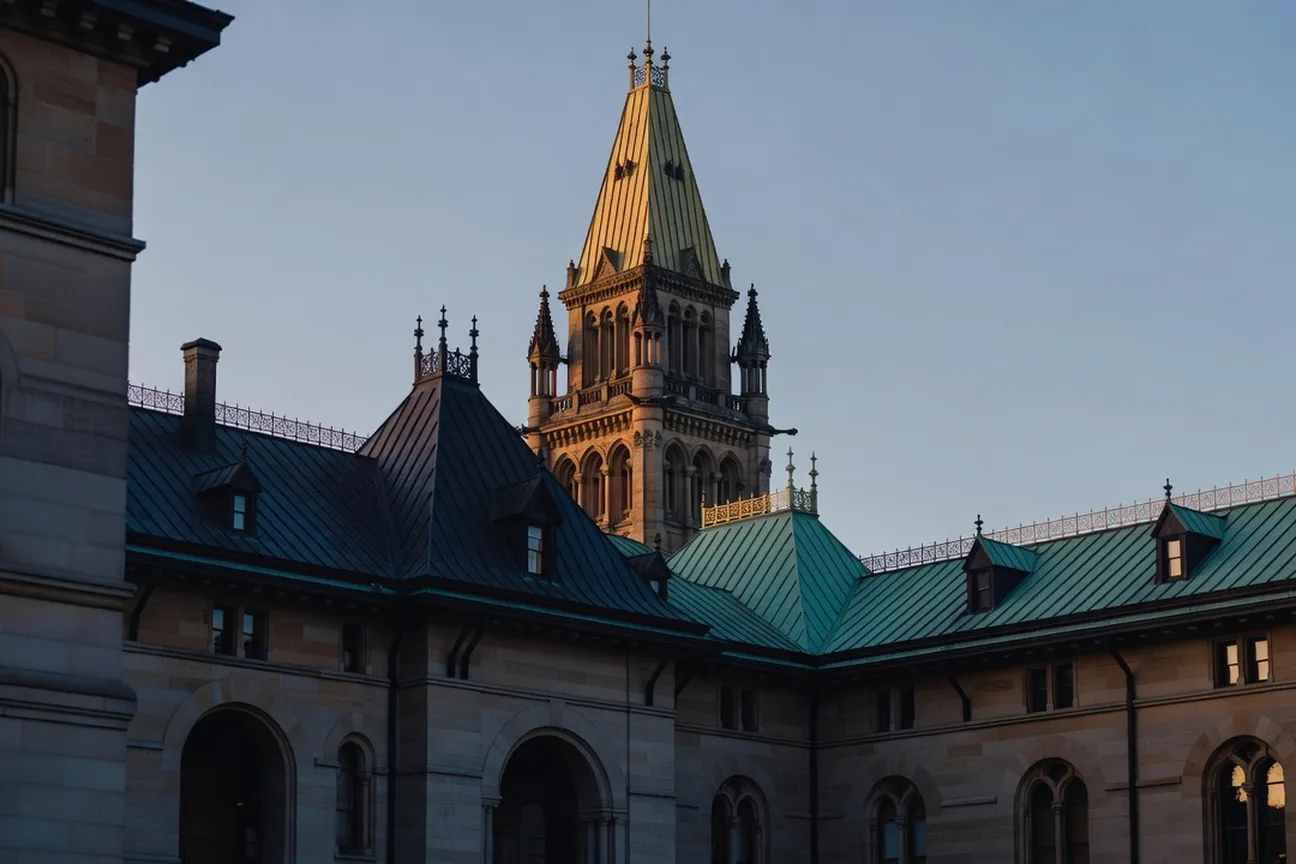
Parliament Hill occupies a commanding bend in the Ottawa River, its stone terraces rising above the water like the prow of a ship aimed at the provincial legislature across the water. The Centre Block, rebuilt after the 1916 fire and completed in 1922, stands at the apex of the hill, its Peace Tower visible for kilometres along the river corridor. Visitors enter through the main entrance on Wellington Street, where security screening resembles that of a small airport; allow 20 minutes for the process. Free guided tours in English and French depart every 30 minutes from 9 a.m. to 4 p.m. in winter and until 8 p.m. in summer, with additional French-language tours at 11 a.m. and 1 p.m. on weekdays. The tour climbs the Peace Tower’s 322 steps to the observation deck, where windows on all four sides frame the river, the Gatineau Hills, and the low sprawl of downtown Ottawa — one of several vantage points covered in our roundup of the city’s most photogenic viewpoints.
The interior reveals a deliberate fusion of Gothic Revival architecture and early 20th-century technology. The Library of Parliament, with its iron spiral staircases and vaulted ceilings of carved oak, remains the only room untouched by the 1916 fire; its collection is open to the public on self-guided visits from 9 a.m. to 8 p.m. in summer. The Senate foyer displays a set of substantial bronze doors, a detail worth pausing on as you pass through. For visitors interested in the building’s political life, Question Period tickets can be requested through the Parliament Hill heritage page, though supply is limited and advance notice is recommended. The grounds themselves are landscaped with terraces of Quebec limestone and flowerbeds designed to bloom in sequence from May to September. From the east side gate, a 300-metre walk leads to the Ottawa Locks, where tour boats depart for the Rideau Canal UNESCO guide at 10 a.m. and 2 p.m. daily in season.
2. National Gallery of Canada
Overlooking the Ottawa River from a steep promontory at 380 Sussex Drive, the National Gallery of Canada was designed by Moshe Safdie and opened in 1988. Its pink-granite walls and soaring glass atrium reflect the light off the water, creating a luminous counterpoint to the heavy stone of Parliament Hill across the river. The main building is 28 metres high, with a footprint equivalent to two city blocks, and houses a large permanent collection spanning Indigenous, Canadian, contemporary, and European art. Admission is 20 CAD for adults, 10 CAD for seniors and students, and free for those under 12. The gallery is open daily from 10 a.m. to 5 p.m., with extended hours until 8 p.m. on Thursdays.
The Great Hall anchors the building with a 13-metre-high glass wall offering a framed view of the river and Gatineau. Here, totem poles by Indigenous artists stand in deliberate dialogue with the architecture, their cedar forms carved between 1912 and 1951 on the Northwest Coast. The Canadian Collection occupies the second floor, where visitors will find Tom Thomson’s The Jack Pine (1916–17) and Group of Seven canvases that trace the evolution of landscape painting in the early 20th century. Temporary exhibitions often draw major loans; in 2023, the gallery hosted a touring show on Monet’s water lilies, requiring timed entry tickets priced at 25 CAD. The Canadian Photography Institute on the lower level offers rotating exhibitions, including works by Edward Burtynsky and Cindy Sherman, with no additional fee beyond general admission. The café on the west terrace provides outdoor seating with river views, and the gift shop stocks limited-edition prints by local artists.
3. Canadian War Museum
At 1 Vimy Place, on a narrow strip of land between the Ottawa River and the transitway, the Canadian War Museum occupies a long, low building clad in weathering steel that evokes both armour and industrial ruin. Opened in 2005 to a design by Raymond Moriyama, the museum replaced an earlier institution founded in 1942 during the Second World War. Its 45,000-square-metre footprint includes exhibition halls, a 280-seat auditorium, and an outdoor memorial court. Admission is 18 CAD for adults, 10 CAD for seniors and students, and free for those under 12. The museum is open daily from 9:30 a.m. to 5 p.m., with extended hours until 8 p.m. on Tuesdays.
The chronological narrative begins in the basement with the earliest conflicts involving Indigenous nations and European settlers, including a diorama of the 1760 Battle of the Plains of Abraham rendered at 1:24 scale. The main floor shifts to the South African War and the First World War, where visitors walk beneath a full-scale replica of a Vickers machine gun emplacement used at Vimy Ridge in 1917. The Second World War exhibit features a restored Avro Lancaster bomber suspended from the ceiling, its four Rolls-Royce Merlin engines visible from below. The most immersive space is the Military History Research Centre, where visitors can handle reproduction artefacts under supervision, including a Lee-Enfield rifle and a German Stahlhelm helmet. The outdoor LeBreton Gallery displays tanks, artillery, and aircraft, including a Canadian-built CF-100 interceptor and a Soviet T-34 tank captured during the Korean War. The museum’s café, operated by a local caterer, serves bison burgers and split-pea soup, dishes chosen for their resonance with wartime rationing.
4. Rideau Hall and the Governor General’s Residence
On a 32-hectare estate at 1 Sussex Drive, Rideau Hall has served as the official residence of Canada’s governors general since 1867. The property includes 49 rooms across three buildings: the original 1838 villa designed by Thomas McKay, the 1913 tenterground wing, and the 1960s-era ballroom added after a fire. The grounds feature formal gardens, a skating rink in winter, and a 1.2-kilometre carriageway lined with sugar maples planted in the 1870s. Public tours are offered year-round, with English tours at 10 a.m., 1 p.m., and 3 p.m. and French tours at 11 a.m. and 2 p.m. Admission is 5 CAD for adults, 4 CAD for seniors and students, and free for those under 12. The residence is closed on Mondays except during summer and holiday periods.
The interior reflects the evolving tastes of successive governors general. The Drawing Room contains an antique harpsichord that draws the eye of musically inclined visitors, while the Ballroom’s 1913 ceiling mural depicts allegorical figures representing Canada’s provinces. The Tenterground, with its vaulted ceilings and stone columns, houses the residence’s art collection, which includes works by Cornelius Krieghoff, Emily Carr, and Alex Colville. The kitchens prepare meals for official receptions and state functions year-round, with ingredients sourced from regional farms where possible; visitors on tour may glimpse the pastry section where lemon meringue tarts are assembled for official receptions. The grounds are bisected by the Rideau Canal, and in winter a 400-metre skating path connects to the canal locks. The estate also hosts the annual Governor General’s Performing Arts Awards in November, an event that draws international artists to a temporary stage erected on the lawn.
5. ByWard Market and the Ottawa Farmers’ Market
The ByWard Market district began in 1826 when Lieutenant Colonel John By, engineer of the Rideau Canal, set aside land for a public market near the canal entrance. Today, the area spans 5.5 hectares bounded by George, Parent, York, and Cumberland streets, with the Ottawa Farmers’ Market occupying a permanent pavilion at 55 ByWard Market Square. The market operates year-round on Saturdays from 7 a.m. to 3 p.m. and Sundays from 9 a.m. to 3 p.m., expanding to daily in July and August. Dozens of vendors sell local produce, baked goods, cheese, maple syrup, and prepared foods. Budget varies widely depending on what you buy, but browsing costs nothing and a light lunch from the stalls is an affordable way to sample the market.
The surrounding streets are lined with 19th-century stone and brick buildings housing restaurants, boutiques, and galleries. Notable addresses include the original York Street Fire Station (1874), now home to an Irish pub, and the 1898 brick warehouse at 45 ByWard Market Square, which houses a chocolate shop and a cheese monger. The market square itself is paved with granite setts salvaged from the original canal locks, and vendors set up under white tents even in winter, when maple taffy is a popular draw. A short walk north on Dalhousie Street leads to the historic New Edinburgh district, where stone cottages from the 1840s line the canal bank. For visitors interested in Ottawa’s culinary history, the things to do in Ottawa guide includes a self-guided walking route that links the market to the Bytown Museum, a 15-minute stroll along the canal towpath.
Bonus mentions that nearly made the list
Ottawa’s cultural and historical landscape is rich enough that even a list of ten attractions leaves several notable sites just outside the tally. The Canadian War Museum, for instance, draws visitors with its comprehensive exhibits spanning conflicts from the 17th century to Afghanistan, yet its thematic depth competes with the broader narratives presented elsewhere. Similarly, the Canada Agriculture and Food Museum offers an immersive look at agricultural heritage, though its seasonal programming may limit year-round appeal compared to institutions with more consistent schedules.
Our French-language partner voyage-canada.com covers similar editorial ground for francophone readers planning a cross-country trip.
Another near-miss is the Diefenbunker: Canada’s Cold War Museum, a subterranean bunker turned museum in Carp, 30 kilometres west of downtown. Its unique Cold War-era narrative is compelling, yet the 45-minute drive and limited operating hours outside peak season may deter some international visitors. Meanwhile, the Canadian Museum of History in Gatineau, directly across the river from Parliament Hill, presents a compelling case for inclusion with its expansive First Peoples Hall and Grand Hall, yet its location just outside Ottawa proper often places it in the shadow of the capital’s more centrally situated attractions.
The Ottawa Little Theatre, one of Canada’s oldest community theatres, and the Bank of Canada Museum, which explores monetary history with engaging interactive displays, also warranted consideration. Their niche appeal, however, makes them less universally compelling than the broader historical and architectural landmarks that anchor this list. Collectively, these sites highlight Ottawa’s depth beyond its most visible attractions, offering visitors with specific interests a reason to extend their stay.
Runners-up worth a slot on a longer itinerary:
- Diefenbunker: Canada’s Cold War Museum (Carp, 30 km west)
- Canadian Museum of History (Gatineau, across the river)
- Ottawa Little Theatre
- Bank of Canada Museum
- Canada Agriculture and Food Museum
Insider tip: Visitors with only a weekend should treat the bonus mentions as tie-breakers for a second trip rather than additions to an already full three-day itinerary.
Building a 3-day itinerary from these ten
A well-paced three-day visit to Ottawa can be structured around these ten attractions without rushing, allowing time for meals, transit, and spontaneous exploration. The itinerary below assumes visitors arrive at Ottawa Macdonald-Cartier International Airport and use the city’s efficient public transit system, OC Transpo, which connects most major sites. For those preferring to walk, the attractions are sufficiently close in the downtown core to allow pedestrian movement, though some distances extend beyond comfortable walking ranges without breaks.
It’s the interplay between the grand narratives of power and the intimate stories of daily life that makes Ottawa’s attractions so compelling. The city rewards those who linger, who step beyond the postcard moments.
Day 1: Parliamentary precinct and national narratives
Begin at Parliament Hill, where the Gothic Revival architecture of the Centre Block and Peace Tower frames the city’s political identity. Guided tours, available in English and French, run hourly from 9 a.m. to 8 p.m. in summer and provide access to the Memorial Chamber and Library of Parliament. Adjacent to the Hill, the Parliament Hill heritage site includes the grounds and surrounding Confederation Square, a space often used for national celebrations.
After lunch at the nearby ByWard Market, visitors can walk east to the National Gallery of Canada, whose glass-and-granite structure houses a large permanent collection, including the Group of Seven collection and contemporary Indigenous art. The gallery’s Canadian photography galleries offer a quieter counterpoint to the museum’s larger canvases. In the evening, dine along Elgin Street, where restaurants like The King Eddy and Wilf & Ada’s cater to varied tastes.
Day 2: Waterways, war, and winter heritage
Morning begins at the Rideau Canal UNESCO guide, where visitors can walk the 7.1-kilometre length of the oldest continuously operating canal system in North America. In summer, the canal serves as a recreational waterway; in winter, it transforms into the world’s largest skating rink, stretching 7.8 kilometres. Rent a bike from RentABike or join a guided tour from the canal’s visitor centre near the lockstation at Hartwells Mills.
Afternoon shifts to the Canadian War Museum, where exhibits trace military history from early colonial conflicts to peacekeeping missions. The Regeneration Hall, with its hauntingly lit walls inscribed with the names of Canadian soldiers, provides a reflective space. Close by, the Canadian Museum of History in Gatineau offers a short light-rail ride (via O-Train) across the river, presenting Indigenous histories and the Grand Hall’s towering totem poles.
Evening can be spent in Hull’s Quartier du Musée, where bistros like Le Moulin de Provence offer locally sourced Québécois cuisine. Return to Ottawa via the Alexandra Bridge for sunset views of the skyline.
Day 3: Dows Lake, diplomatic estates, and urban gardens
Start at Dows Lake Pavilion, where visitors can rent a paddleboat or simply walk the 4.6-kilometre path around the lake, framed by the Gatineau Hills to the north. In late May, the tulips planted by the Canadian Tulip Festival (held annually since 1953) bloom in vibrant colours along the shore. The pavilion’s café serves light meals and locally roasted coffee.
Next, head to Rockcliffe Park, a 110-hectare green space home to diplomats’ residences and the official residence of Canada’s Governor General, Rideau Hall. The park’s trails, including the 1.5-kilometre Rockcliffe Parkway loop, offer quiet wooded paths and views of the Ottawa River. Within the hall, guided tours (available by reservation) reveal the residence’s 19th-century architecture and ceremonial rooms.
Conclude the visit with the Dominion Arboretum, a 26-hectare garden established in 1867 by the Ottawa Horticultural Society. Its 1,500 plant species, including rare conifers and lilacs, provide a serene final stop. Visitors can exit near the Central Experimental Farm, where the Dominion Observatory once stood, linking the arboretum’s botanical history to the city’s scientific heritage.
Travellers based in France will find our partner timetours-voyages.fr covers similar ground in French.
Day-trip alternatives
For visitors staying four or more days, a side trip to Upper Canada Village near Morrisburg (a two-hour drive) offers a living history museum with 19th-century buildings and costumed interpreters. Alternatively, the historic town of Perth, 50 minutes southwest of Ottawa, provides a quieter exploration of 19th-century architecture and the Tay River’s scenic trails. Both destinations offer a slower pace and deeper immersion into regional history than Ottawa’s core attractions alone.
| Day trip | Distance from Ottawa | Best suited to |
|---|---|---|
| Upper Canada Village | ~2 hours by car | Families, living-history enthusiasts |
| Perth | ~50 minutes by car | Architecture and slow-travel visitors |
| Canadian Museum of History (Gatineau) | 20-minute O-Train ride | Anyone extending the museum circuit across the river |
The third part of this itinerary—covering the remaining entries in the top ten—follows below. Each site is presented with its rank, name, and a 100-word descriptive paragraph, offering visitors the factual details required to plan their visit.
#6 ByWard Market
ByWard Market, established in 1826 by Lieutenant-Colonel John By, is Ottawa’s oldest public market and remains a vital hub of commerce and culture. Stretching across four city blocks at the intersection of George and Parent streets, the market operates year-round, though its outdoor stalls and patios flourish from May to October. The area is home to a dense mix of bakeries, cheese shops, and the iconic BeaverTails stand, where visitors can try the fried dough pastry topped with cinnamon sugar or maple butter.
The market’s architecture blends historic stone storefronts with modern additions, reflecting its evolution from a supply depot for the Rideau Canal workforce to a gourmet destination. On Saturdays, the outdoor stalls fill out considerably, with artisanal food producers and local craftspeople joining the regular vendors. The nearby Ottawa Farmers’ Market, held indoors at Lansdowne Park, complements the outdoor stalls with seasonal produce and handmade goods. Evenings bring a lively bar scene to the market’s pubs and wine bars, making it a focal point for both daytime exploration and nightlife.
#7 Canadian War Museum
The Canadian War Museum, opened in 2005 along the Ottawa River, is the country’s premier military history museum. Designed by architect Raymond Moriyama, the building’s angular concrete and glass form evokes both the brutality of war and the fragility of peace. Its exhibits range across Canadian military history, from early colonial conflicts to modern peacekeeping missions, including armoured vehicles used in Afghanistan. The museum’s centrepiece is the LeBreton Gallery, a vast hall housing tanks, artillery, and aircraft, including a rare CF-100 Canuck interceptor.
Visitors enter through the Regeneration Hall, a memorial space where illuminated panels bear the names of Canadians who died in conflicts. Temporary exhibitions, such as those on peacekeeping or Indigenous contributions to military service, rotate annually. The museum also maintains a research library and archive, accessible by appointment. Admission is CAD 18 for adults, with discounts for students and seniors — confirm current pricing on the museum’s official site before you go. The site also includes the nearby Military History Research Centre, adding depth for scholars and enthusiasts.
#8 Canadian Museum of History (Gatineau)
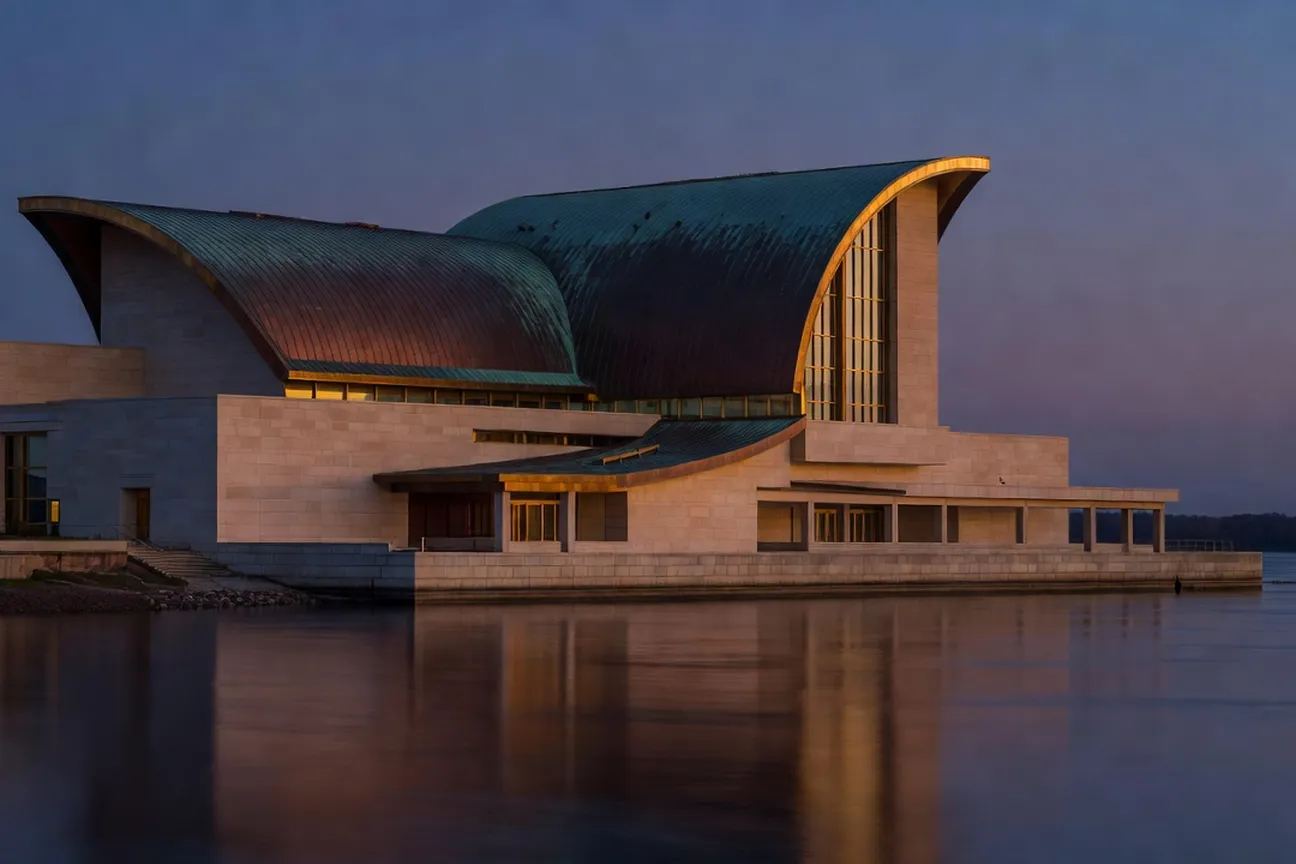
Across the river in Gatineau, the Canadian Museum of History stands as a counterpoint to Ottawa’s political narratives, focusing instead on the country’s social and cultural evolution. Opened in 1989 and redesigned in 2017, the museum’s sweeping copper roof and glass façade reflect the surrounding Gatineau Hills. Its Grand Hall features 15 towering totem poles from British Columbia’s coast, while the First Peoples Hall traces Indigenous histories from pre-contact to contemporary communities. A 20-minute light-rail ride (O-Train Line 3) connects the museum to Ottawa’s core.
The museum’s exhibits are arranged chronologically, beginning with archaeological finds from the Arctic and ending with modern multiculturalism. The Canadian Children’s Museum, housed within the same complex, offers interactive exhibits on global cultures. The museum’s research collection is extensive, though only a fraction of it is displayed at any time. Admission is CAD 20 for adults, with family passes available. The museum’s riverside location provides panoramic views of Parliament Hill, framing the capital’s dual identity as both a political and cultural centre.
#9 Rideau Canal UNESCO guide
Designated a UNESCO World Heritage Site in 2007, the Rideau Canal is the oldest continuously operating canal system in North America, completed in 1832 under the direction of Lieutenant-Colonel John By. Stretching 202 kilometres from Kingston to Ottawa, its 47 locks and 23 lockstations were engineered to bypass rapids on the Rideau and Cataraqui rivers, reducing travel time between Montreal and Kingston. Today, the canal serves as a recreational waterway in summer and the world’s largest skating rink in winter, when 7.8 kilometres of ice between Carleton University and the Ottawa River freeze solid.
Visitors can explore the canal’s southern section via walking or cycling paths, including the 7.1-kilometre Colonel By Drive route. Guided boat tours depart from the canal’s visitor centre near the Hartwells Mills lockstation, offering insights into the canal’s engineering and military history. In summer, the Rideau Canal UNESCO guide also hosts the annual Ottawa Dragon Boat Festival, one of North America’s largest dragon boat events. The canal’s management by Parks Canada ensures its preservation, with ongoing restoration projects to maintain its stone locks and embankments. Winter skaters can rent equipment at nearby rinks, including the outdoor ice surface at Dows Lake.
#10 Dominion Arboretum
Established in 1867 by the Ottawa Horticultural Society under the guidance of then-governor general Lord Monck, the Dominion Arboretum is a 26-hectare botanical garden adjacent to the Central Experimental Farm. Its collection includes over 1,500 plant species, with particular strengths in conifers, lilacs, and rare trees such as the dawn redwood and katsura. The arboretum’s design reflects 19th-century landscape gardening principles, with winding paths and a central pond that provide a serene counterpoint to the urban core just 5 kilometres away.
Visitors enter via the Arboretum Road gate, where a map outlines self-guided walking routes ranging from 30 minutes to two hours. The lilac collection, planted between 1902 and 1910, blooms in late May, while the conifer collection offers year-round greenery. The arboretum sits close to the Central Experimental Farm’s former Dominion Observatory grounds, a reminder of the site’s dual scientific and horticultural heritage. Admission is free, though donations are accepted. The site is a popular destination for botanists and photographers, particularly during the autumn foliage season, when its maples and oaks create a vibrant tapestry of reds and golds, a season covered in more detail in the outdoor adventures near Ottawa guide for visitors who want to pair the arboretum with a fuller day outdoors.
Ottawa’s attractions reveal a city where history is not confined to museums but woven into the fabric of daily life. The ByWard Market’s bustling stalls and the Dominion Arboretum’s quiet pathways both speak to a balance between heritage and contemporary living that defines the capital. It is this interplay—between the ceremonial and the communal, the monumental and the intimate—that makes Ottawa more than just a destination for political tourists.
To explore beyond this list is to discover Ottawa’s lesser-known rhythms: the winter skaters on the Rideau Canal, the lilacs at the arboretum in May, the war museum’s haunting memorial chamber. These are the moments that linger, the details that separate a visit from a true understanding of the place. And it is in these quiet intersections of time and space
Frequently asked
Parliament Hill is generally open to the public from 9:00 AM to 5:00 PM, although hours can vary during special events or holidays. Guided tours of the Centre Block are currently unavailable due to renovations, but you can explore the grounds and enjoy the Changing of the Guard ceremony from late June to late August daily at 10:00 AM.
The Canadian Museum of History offers a range of ticket prices: Adults (18-64) pay $21, Seniors (65+) $19, Youth (13-17) $16, and children (3-12) $13. Admission is free for children under 3. Tickets include access to the special exhibitions and are typically valid for a full day.
The best time to skate on the Rideau Canal is typically from January to late February, depending on weather conditions. Skating is free, but skate rentals are available at several locations along the canal, with prices starting around $20 CAD for two hours.
Yes, the National Gallery of Canada offers discounted admission on Thursdays after 5:00 PM, with entry priced at $10 CAD for the general public. Additionally, admission is free on the first Sunday of each month, providing access to the permanent collection and many temporary exhibitions.
To fully experience the Canadian War Museum, plan to spend at least 3 to 4 hours. The museum is extensive, covering multiple floors with diverse exhibits on Canada's military history. It is open daily from 9:30 AM to 5:00 PM (Thursdays until 8:00 PM) and offers guided tours included in the admission fee, which is $19 CAD for adults.