
The Royal Canadian Mint’s Ottawa headquarters is one of the few places in the world where you can watch a national mint at work: a 45-minute guided tour looks down on the production floor from a mezzanine, ends among Olympic medals and the famous Million Dollar Coin, and starts at $14 for adults as of October 2026. The turreted stone building at 320 Sussex Drive sits between the National Gallery and the ByWard Market, which makes it one of the easiest serious sights to fold into a downtown day. Here is what the tour covers, what it costs, and how to plan the visit.
What the Ottawa Mint Actually Makes
First, a clarification that surprises most visitors: the coins jingling in your pocket were not made here. Canada’s circulation coins, up to roughly two billion a year, are struck at the Mint’s Winnipeg plant, which opened in 1976 and also produces coins for other countries. The Ottawa facility, the original mint, concentrates on collector and numismatic coins, gold and silver bullion, refining, and medals.
That specialisation is exactly what makes the tour interesting. The displays lean into what Ottawa does that Winnipeg does not:
- Collector coins: the colour-printed poppy quarters, glow-in-the-dark toonies and Canada 150 pieces that made the Mint internationally famous all come from the numismatic side.
- Bullion and refining: the on-site refinery processes gold, and the gold and silver Maple Leaf bullion coins launched in 1979 remain among the world’s most traded.
- Medals: the Mint produced the 615 Olympic and 399 Paralympic medals for the Vancouver 2010 Winter Games here in Ottawa, along with military decorations and honours for the Department of National Defence.
The 2007 Million Dollar Coin, a 100-kilogram disc of 99.999 percent pure gold that briefly held the record as the world’s largest gold coin, is the single object most visitors photograph. It is displayed on the tour, and its sheer scale is hard to convey in words.
The collector-coin side of the business is also where the Mint’s technical showpieces live. It patented multi-ply plated steel coinage in 2000, struck the world’s first coloured circulation coin (the 2004 poppy quarter) and produced the first glow-in-the-dark circulation coin, the 2017 Canada 150 toonie whose northern lights shine turquoise in the dark. Several of these technologies appear in the tour galleries, which is why the visit interests design-minded travellers and not only coin collectors.
If industrial heritage is your thing, our self-guided Ottawa architecture walking tour from Parliament Hill to the ByWard Market pairs well with a Mint visit: the 1908 building is one of the city’s most distinctive pieces of federal architecture, deliberately castle-like in a style historians call Tudor-Gothic.
The 45-Minute Tour: What You Will Actually See
Every tour is led by a Mint guide and runs 45 minutes, in English or French. The route takes you along a mezzanine with a bird’s-eye view of the production floor below, through galleries on coin design and the numismatic striking process, and past the refinery technology display. The Mint’s own tour highlights include the design story behind its coins, a close look at the Vancouver 2010 medals, and of course the Million Dollar Coin.
A few honest caveats from the Mint itself:
- Live production is not guaranteed. Production schedules fluctuate, and the Mint warns that not every tour sees coins being struck. You will always see the floor and the equipment; the presses running is a bonus.
- Walk-up tours are first-come, first-served and often sell out, especially in summer and on holiday weekends. As of October 2026, online bookings were open for dates through the end of that month; after that, or for groups of 20 or more, the Mint asks visitors to email its Ottawa reservations desk.
- Arrive early. Space on each departure is limited, and security screening is part of the entry process.
Book ahead when you can: the Mint itself warns that walk-up tours frequently sell out. If your dates are not yet open online, email the reservations address listed on mint.ca rather than counting on a same-day walk-up slot, particularly for weekend visits.

Children tend to rate the tour higher than adults expect: the sheer weight of the gold on display, the story of the largest gold coin ever made, and the view down onto an actual factory floor carry more wonder than another glass-case museum. There are no interactive stations, though, so very young children may last 20 minutes rather than 45.
Tickets, Hours and the Best Time to Visit
Admission as listed on the Mint’s Ottawa page in October 2026:
| Category | Admission (CAD, taxes not included) |
|---|---|
| Adults (18+) | $14 |
| Children (5-17) | $10 |
| Seniors (65+) | $12 |
| Children 4 and under | Free |
| Family (2 adults + 2 children) | $30 |
Two honest notes on price. First, the Mint’s pages have shown different tariffs at different times (its general guided-tours page listed lower prices than the Ottawa-specific page when we checked in October 2026), and all prices are stated as subject to change; treat mint.ca as the source of truth on the day you book. Second, admission is free for Indigenous Peoples and for active and retired members of the Canadian military.
Opening hours follow a summer and winter rhythm:
- Summer hours (Victoria Day long weekend to Labour Day): boutique open seven days a week, 10 a.m. to 5 p.m.
- Winter hours (Labour Day to Victoria Day): boutique open Tuesday to Sunday, 10 a.m. to 5 p.m., closed Mondays.
A visit in late October, when this guide was written, falls under winter hours: plan for Tuesday to Sunday. The Mint also closes on statutory holidays; its posted 2026 calendar includes, among others, Thanksgiving on October 12 and Remembrance Day on November 11 (when it opens only from noon). Weekday mornings are the quietest slot; summer weekends are when tours sell out.
A Short History in Six Dates
The building rewards visitors who know a little of its story before they walk in. Six dates cover the essentials:
- 1908: The Ottawa branch of Britain’s Royal Mint opens on January 2, with Governor General Lord Grey striking the first coin, a 50-cent piece. The staff numbers 61.
- 1911: Gold refining begins on site, first by electrolysis; a faster chlorination process follows in 1915, part of the mint’s long association with refined Canadian gold.
- 1931: Control passes from London to Ottawa, and the institution becomes the Royal Canadian Mint, a branch of the Department of Finance.
- 1969: The Mint is reorganised as a Crown corporation, mandated to operate commercially without taxpayer support.
- 1976: The Winnipeg plant opens, taking over circulation coinage and leaving Ottawa to specialise.
- 1979: The Ottawa building is designated a National Historic Site, recognised both for its Tudor-Gothic architecture and for what it represents: Canada striking its own money on its own soil.
One more date worth knowing: 2007, when the Mint produced the 100-kilogram, million-dollar-face-value gold coin that headlines the modern tour. And a footnote for numismatists: the 1967 Centennial series, with Alex Colville’s now-famous rabbit, goose and wolf designs on everyday coins, remains the moment Canadian circulating coinage became a canvas for national art — a story the tour guides tell well.
The Boutique: Souvenirs, Bullion and a Word on Prices
Every tour ends, as the Mint intends, in the boutique. It stocks current collector coins and commemorative circulation sets, Mint-branded gifts, and Canadian souvenirs that run from inexpensive to very serious indeed. Bullion products, gold and silver Maple Leafs among them, can also be bought at the Ottawa and Winnipeg boutiques, subject to availability.
One regulation catches visitors off guard: because the Mint must comply with Canada’s Proceeds of Crime (Money Laundering) and Terrorist Financing Act, bullion purchases, particularly cash purchases or higher-value transactions, can require government-issued identification. Bring ID if a Maple Leaf is on your shopping list.
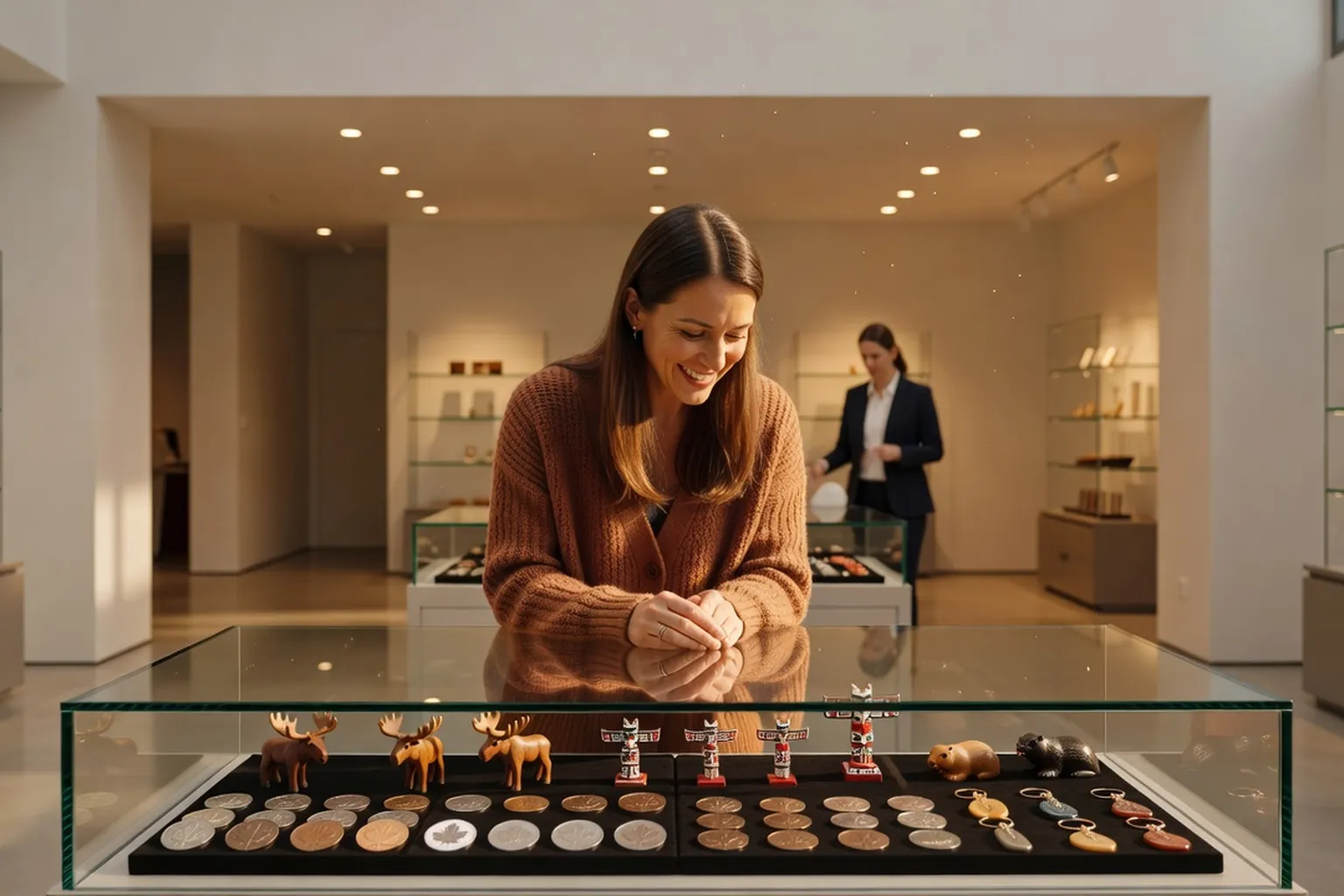
Is the boutique worth a stop even if you skip the tour? Yes. Collector coins at modest prices make genuinely local gifts, the kind of thing that is hard to find anywhere else in the city, and browsing costs nothing. If you are building a broader souvenir run, our shopping guide beyond the ByWard Market rounds up the independent shops within walking distance of Sussex Drive.
Getting There, Accessibility and What to Combine It With
The address is 320 Sussex Drive, on the traditional and unceded territory of the Anishinaabe Algonquin Nation. There is no Mint visitor parking; metered spaces line the adjacent streets, and the practical choice is the National Gallery of Canada’s underground garage at 380 Sussex Drive, next door. The site is wheelchair accessible by ramp and elevator, two wheelchairs are available for guests, and service animals are welcome.
The location is the real argument for visiting. Within a five-minute walk you have:
- The National Gallery of Canada, immediately adjacent, whose collection spans Canadian art to European masters.
- Notre-Dame Cathedral Basilica, across from the National Gallery on Sussex Drive.
- The ByWard Market, a few blocks east, for lunch and the city’s best people-watching; our ByWard Market food culture guide maps the stalls, bakeries and standbys worth your time.
- Parliament Hill, roughly a 15-minute walk west along Wellington Street.
A natural half-day is the Mint tour, the National Gallery, and a ByWard lunch. In a recent conversation with a National Gallery curator, our team heard how deliberately Canada’s national collections cluster within walking distance of each other on this side of the capital; the Mint fits the same logic as the National Gallery of Canada curator interview suggests, a working institution rather than a static one.
Six Practical Tips for a Smooth Visit
A handful of details, most of them straight from the Mint’s own visitor information, make the difference between a smooth visit and a frustrating one:
- Book online when your dates allow it. Online reservations were open through the end of October 2026 when we checked; walk-up tours are first-come, first-served and often sell out.
- Check the calendar before a shoulder-season visit. The facility closes on statutory holidays, opened only from noon on Remembrance Day 2026, and periodically closes for maintenance. The posted 2026 calendar also listed closures for the National Day for Truth and Reconciliation and Thanksgiving, among others.
- Arrive about 15 minutes early. Security screening is part of entry, and space on each departure is limited.
- Bring government-issued ID if you might buy bullion. Identification can be required for cash or higher-value purchases under Canada’s anti-money-laundering rules.
- Ask your guide about the photography rules on the day. Policies on the production floor can change with production schedules, so confirm before you raise your camera.
- Remember the winter Monday closure. Outside the summer season, the boutique and tours are dark on Mondays; a weekend or Tuesday-to-Friday visit is the safe bet from mid-September to late May.
Is the Royal Canadian Mint Worth a Visit?
For most visitors, yes, with one condition: go for the tour, not just the shop. The boutique is pleasant but small; what justifies the detour is looking down on an operating mint floor and standing in front of the Vancouver medals and the Million Dollar Coin. At 45 minutes and roughly $14 per adult, it is one of the better-value paid attractions in the capital, and it slots almost frictionlessly between the National Gallery and the ByWard Market.
Skip it if factory floors and industrial history leave you cold, or if your Ottawa list is already too long; it rarely makes anyone’s top three, but it reliably makes lists of the top things to see in Ottawa once visitors learn what is inside. Families with curious school-age children and anyone with an interest in coins, gold or the oddly fascinating business of making money will rate it higher than the reviews suggest.
Frequently asked
The guided tour lasts 45 minutes and is led by a Mint guide in English or French. You should still allow at least 90 minutes on site: time in the boutique before or after the tour is where most visitors spend the difference. Arrive 15 minutes early, because latecomers generally cannot join a tour that has already started.
As of October 2026, the Mint's Ottawa page lists admission at $14 for adults, $10 for children aged 5 to 17, $12 for seniors 65 and over and $30 for a family of two adults and two children, plus taxes, with children four and under free. Admission is free for Indigenous Peoples and for active and retired Canadian military. Tariffs have changed more than once in recent years, so confirm the current price on mint.ca before you go.
Yes, partially. The boutique, which sells collector coins, commemorative sets, bullion and Mint-branded souvenirs, can be browsed on its own during opening hours. The production floor, however, is only visited on the guided tour; there is no self-guided production access.
Sometimes, but not reliably. The Mint warns that production schedules fluctuate, and not every tour is guaranteed a view of live coin production. You will always see the production floor from above and the displays of presses, medals and the Million Dollar Coin, but treat live striking as a bonus rather than a promise.
The Mint itself has no visitor lot. Metered street parking is available on the adjacent streets, and the most practical option is the underground garage at the National Gallery of Canada next door at 380 Sussex Drive. On foot, the Mint is an easy walk from Parliament Hill, the National Gallery, Notre-Dame Cathedral Basilica and the ByWard Market.