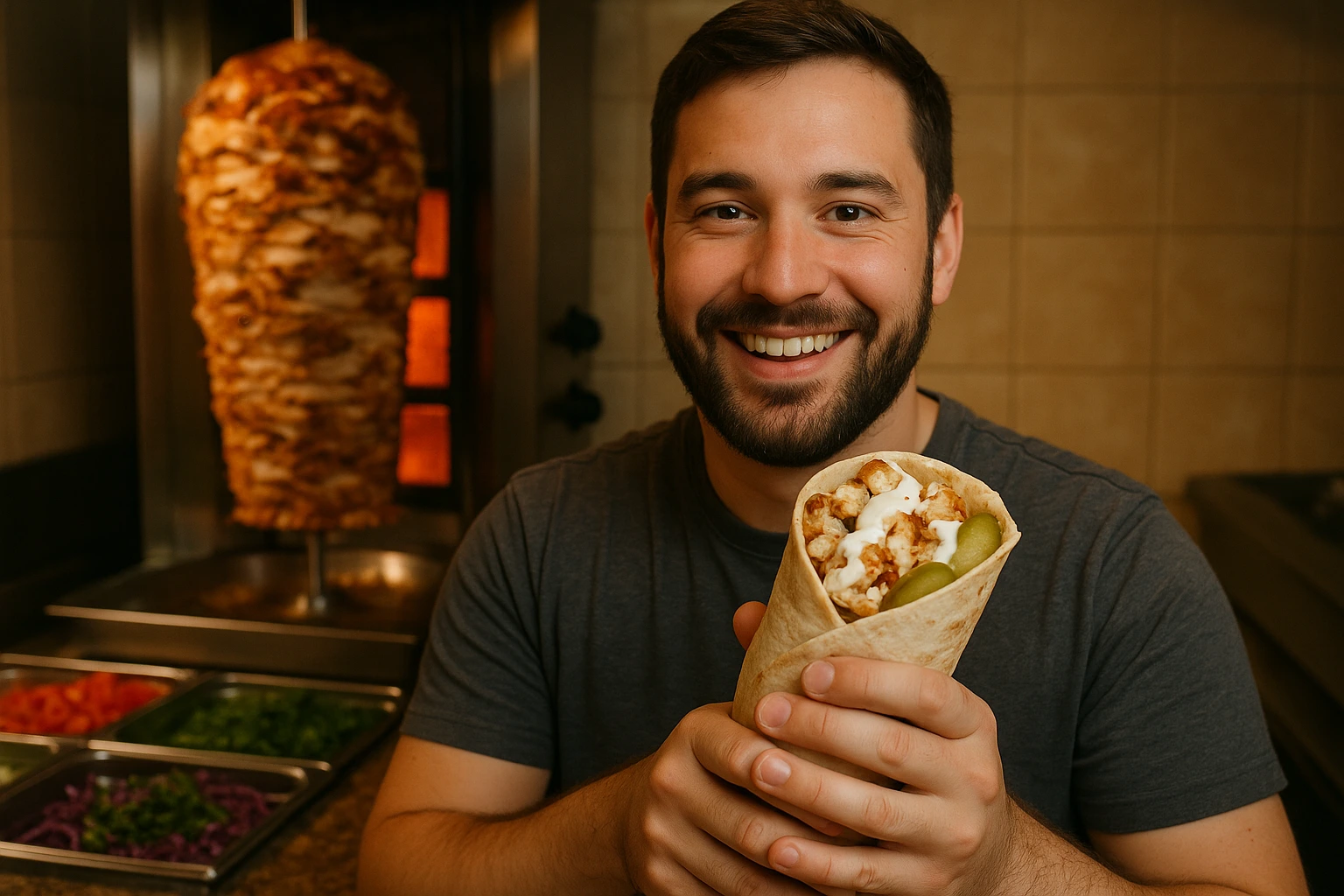
Ottawa has nearly 200 shawarma restaurants — more than any other Canadian city — and a reasonable claim to the title of shawarma capital of the country. This guide explains how a Levantine street food became the capital’s default meal, what distinguishes the Ottawa style, which shops anchor the scene, and what a first-timer should actually order.
Why Ottawa Became Canada’s Shawarma Capital
The short answer is immigration plus institutions. Ottawa received successive waves of Lebanese immigration from the 1970s onward, and the community did what food diasporas do: opened restaurants. The Ottawa Citizen traced the phenomenon back years ago with a simple observation that still holds — the capital has more shawarma shops than anywhere else in Canada, a direct product of that influx. By the time Tourism Ottawa started leaning into the idea, the count had climbed to nearly 200 shops, a density no other Canadian city comes close to matching.
The second ingredient is the federal government. Tens of thousands of public servants work within a few blocks of Rideau, Bank and Kent streets, and shawarma is the perfect bureaucrat’s lunch: fast, filling, cheap, and good enough to eat three times a week without boredom. CBC’s coverage of the scene quoted Shawarma Station owner Bassam Naanoua making the larger claim plainly: Ottawa, he said, offers some of the best shawarma in the world. Locals argue about individual shops with religious intensity; nobody argues about the city’s standing.
The result is a food scene where shawarma plays the role pizza plays in other cities — the default, the benchmark, the thing visitors get told to try before they leave. It also means the scene is remarkably democratic. You will find shawarma counters in food courts and strip malls from Kanata to Orléans, shawarma trucks parked near construction sites, and shawarma on the menu of Lebanese sit-down restaurants that do everything else from scratch. The through-line is the rotisserie itself: somewhere in the back, meat is stacked, seasoned and turned for hours, and that labour is the same whether the room seats eight or eighty. If you are working through the capital’s food identity more broadly, our guide to ByWard Market food culture covers the market stalls, bakeries and late-night windows where the shawarma scene overlaps with everything else edible downtown.
What Makes an Ottawa Shawarma
Order a chicken shawarma across the Middle East and you will get regional variations. Order one in Ottawa and you get a recognizably local construction that has barely changed in two decades:
- The bread: a thin, soft pita or markouk wrap, warmed on the grill before filling. Bread quality is where mediocre shops expose themselves.
- The garlic sauce: thick, white and assertive — closer to Lebanese toum than to anything out of a bottle. Ottawans treat garlic sauce ratios as a point of shop identity.
- The pickles: pickled turnips (the bright pink ones), standard pickles, and usually a few fries tucked inside the wrap itself.
- The meat: chicken dominates by a wide margin, sliced off the vertical spit to order. Beef and mixed wraps are the alternative, and falafel is the default vegetarian order everywhere.
A wrap runs in the low teens in Canadian dollars at the classic shops, which places shawarma comfortably inside our guide to Ottawa on a budget — one of the few filling meals in the downtown core you can buy with a twenty and get change.
The Classic Shops
Every Ottawan has a favourite, and loyalties are hereditary — people defend the shop they ate at in university decades after moving across town. For a visitor, a handful of names anchor the map:
| Shop | Area | Known for | Price signal |
|---|---|---|---|
| Shawarma Palace | Rideau Street (downtown) | The downtown institution; enormous portions | Single $ on Tripadvisor |
| Shawarma King | Bank Street (Centretown) | The other old guard name; garlic sauce | Budget tier |
| 3 Brothers Shawarma & Poutine | Multiple locations | Shawarma poutine; open late | Budget tier |
| Shawarma Station | Blossom Park area (south) | CBC-featured; suburban favourite | Budget tier |
| Neighbourhood counter shops | Bronson, Somerset, Carling, suburbs | The everyday rotation locals argue about | CA$12–16 typical wrap |
Treat the table as a starting map, not a verdict. The city’s shawarma quality is famously flat — the gap between the best and average shops is smaller than the argument volume suggests — so proximity beats pilgrimage for most visitors.
Shawarma Poutine and Other Local Orders
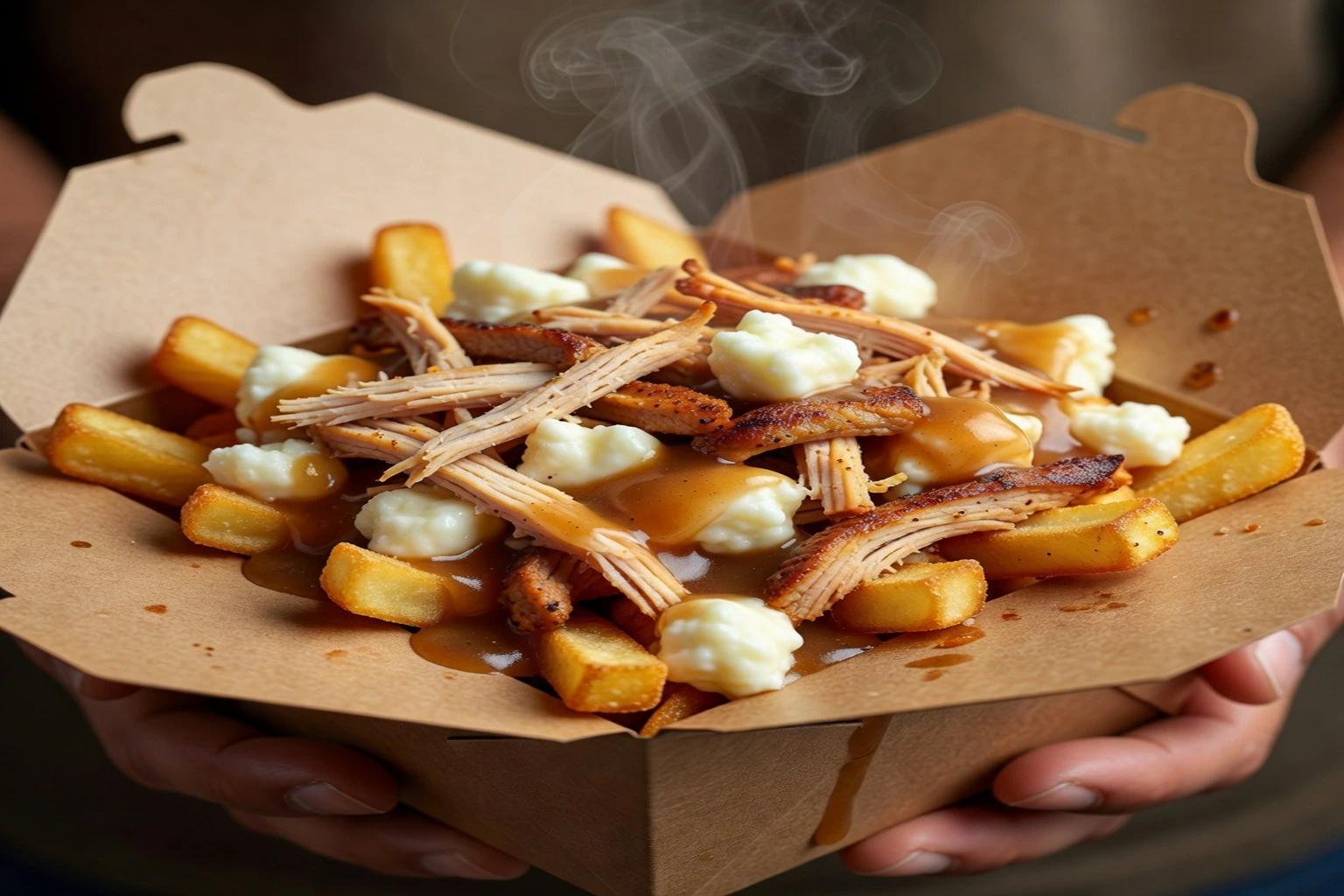
If shawarma is Ottawa’s adopted staple, shawarma poutine is its native child — fries, cheese curds and gravy under a pile of shaved rotisserie meat. Chains like 3 Brothers built their identity on the combination, and it appears on menus across the city. It should not work and it absolutely does: the gravy meets the garlic sauce, the curds melt into the fries, and the whole thing lands as comfort food engineered for February. The Quebec inheritance is worth acknowledging here, too — poutine itself comes from the province, and shawarma poutine is what happens when two immigrant food cultures meet on Quebec soil. Travellers continuing on to Montreal after Ottawa will find the same Levantine counter culture waiting there; our French-language partner site covers the city’s essentials in its weekend guide to Montreal.
Other orders worth knowing:
- The plate: meat over rice or fries with salad and sauces, for when a wrap feels insufficient.
- Falafel wrap: the standard vegetarian order, taken as seriously as the chicken at the good shops. The falafel should be fried to order, not sitting under a heat lamp — the colour tells you.
- Extra toum: regulars ask for extra garlic sauce without shame; portions allow it.
One more local habit: many shops run a small loyalty economy of their own, remembering faces and standing orders. It is not uncommon for the person behind the counter to start building a regular’s usual before the order is spoken. Visitors will not get that treatment on a first visit, but they will notice it happening, and it is the surest sign that a shop has crossed from business to institution.
How to Order Like a Local
First-timers sometimes hesitate at the counter, because Ottawa shawarma shops run on a compressed ordering grammar that regulars perform without thinking. The whole exchange takes thirty seconds once you know the shape of it. You pick a format (wrap or plate), a meat (chicken is the default; beef or mixed if you want it), and then the counter staff work down a fixed line of questions: rice or fries, salad toppings, pickles, and how much garlic sauce you want. The correct answer to that last question, for the record, is more than you think.
A few conventions separate visitors from regulars:
- “On the side” is normal: asking for garlic sauce and hot sauce on the side costs nothing and lets you calibrate. Some shops charge a nominal fee for extra cups; most do not.
- The plate beats the wrap for sharing: two people can split one plate and a second wrap and leave satisfied. One wrap per person is the default, not a rule.
- Lunch rush is 11:45 to 1:15: government lunch hours dominate downtown shops. Arrive at 11:30 or after 1:30 and the line shortens dramatically.
- Watch the spit: a shop that keeps a tall, fresh-looking chicken spit turning at noon is a shop that sells enough chicken to keep it fresh. The visual inspection locals perform instinctively is actually sound.
None of this is precious. The shops are fast, informal and forgiving — the point of the ritual is speed, not ceremony. But knowing the grammar means your first order looks like your fiftieth, and the counter staff will treat you accordingly.
Where the Shops Cluster
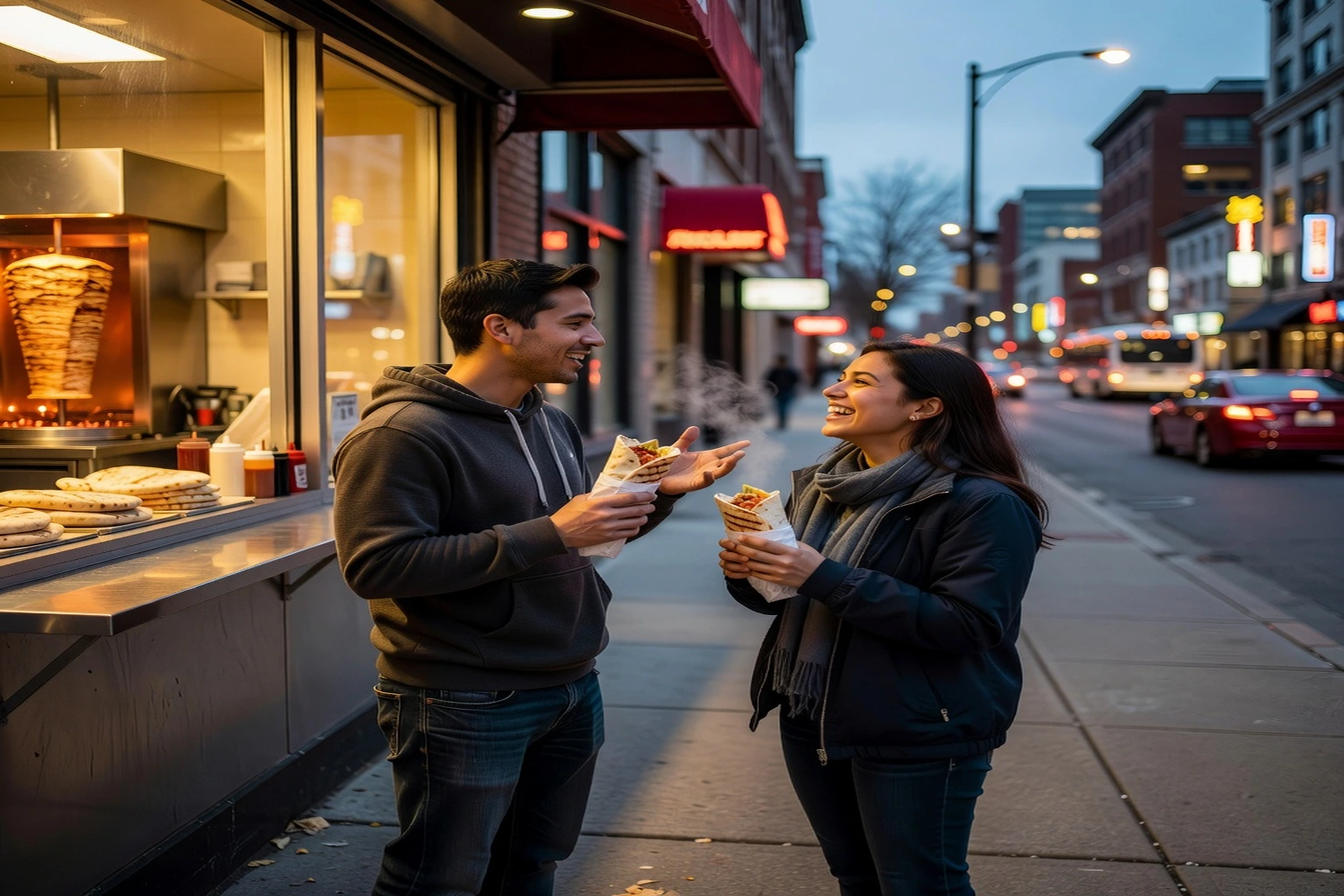
Downtown, the densest runs are along Rideau Street toward the ByWard Market — where late-night shawarma windows serve the bar crowd pouring out of the Market — and along Bank Street through Centretown. Bronson Avenue near the universities feeds the student trade, Somerset Street in Chinatown adds its own Vietnamese-Lebanese crossover energy, and the suburban arteries (Carling, Merivale, Innes) each sustain multiple shops within a few blocks. Visitors staying downtown rarely need to travel farther than a fifteen-minute walk for an excellent wrap; the suburban outliers matter more to locals than to anyone on a short visit. After dark, the Market corridor connects naturally to the nightlife circuit — the shawarma window at 1 a.m. is less an afterthought than a scheduled stop.
Prices, Portions and Practical Tips
Shawarma is the rare food scene where the advice section can be short. Prices are in the low teens for a wrap at the classic shops; a combo plate lands around CA$20 at current prices. Portions skew large — splitting is normal. Most counter-service shops are cashless-friendly, many keep late hours, and halal preparation is the default rather than the exception across the scene.
Two honest caveats. First, “best shawarma in Ottawa” is an unwinnable argument with no referee; pick the busy shop near where you are and you will eat well. Second, the scene changes constantly — shops open, close and change hands — so check current hours before a special trip. What does not change is the baseline: in Ottawa, a great shawarma is never more than a few blocks away, and it will cost less than the museum gift shop thought you would spend on lunch.
For visitors building a full food itinerary, the shawarma stop works best as the anchor of a cheap-eats day rather than a standalone pilgrimage. Our neighbourhoods guide maps the broader geography if you want to match a shawarma crawl to a walking day. Pair a late lunch wrap downtown with a walk through the ByWard Market’s food stalls, or pick up a plate before an evening along the canal. However you slot it in, treat the first order as reconnaissance: Ottawa rewards repeat visits to the same counter, and by your third wrap you will have a favourite, a standing order, and an opinion about garlic sauce that you did not arrive with. That, more than anything, is the local tradition.
Frequently asked
It has the strongest claim of any Canadian city. Tourism Ottawa puts the count at nearly 200 shawarma restaurants, which no other Canadian city matches, and the Ottawa Citizen has documented more shawarma shops in Ottawa than anywhere else in the country. The title is informal — no one has decreed it — but locals, cab drivers and visiting food writers all use it.
A genuinely local invention: french fries topped with cheese curds and gravy, then loaded with shaved rotisserie shawarma meat. Several Ottawa chains built their menus around it. It sounds like a stunt and eats like comfort food, and it exists in meaningful numbers essentially only in Ottawa.
Shawarma sits firmly in Ottawa's cheap-eats tier. A standard wrap or plate at the classic counter-service shops typically runs in the low teens in Canadian dollars, with a combo around CA$20 at current prices. Portions are generous by design — many regulars split one wrap between two people and still leave full.
The names every local knows are Shawarma Palace on Rideau Street and Shawarma King on Bank Street, both long-running institutions with hundreds of reviews. Beyond those, the scene is intensely neighbourhood-based: Bronson Avenue, Somerset Street, Carling Avenue and the suburbs each have their own fiercely defended favourite, and the honest answer is that the shop nearest your hotel is probably good.
Better than most street food, yes. Falafel wraps are a standard menu item at virtually every shop and get the same garlic sauce, pickles and turnip treatment as the meat versions. Several shops also do mushroom or mixed-veg shawarma-style wraps off the rotisserie. Vegans should ask about the garlic sauce specifically, as some versions are toum (oil and garlic, vegan) and others are mayo-based.