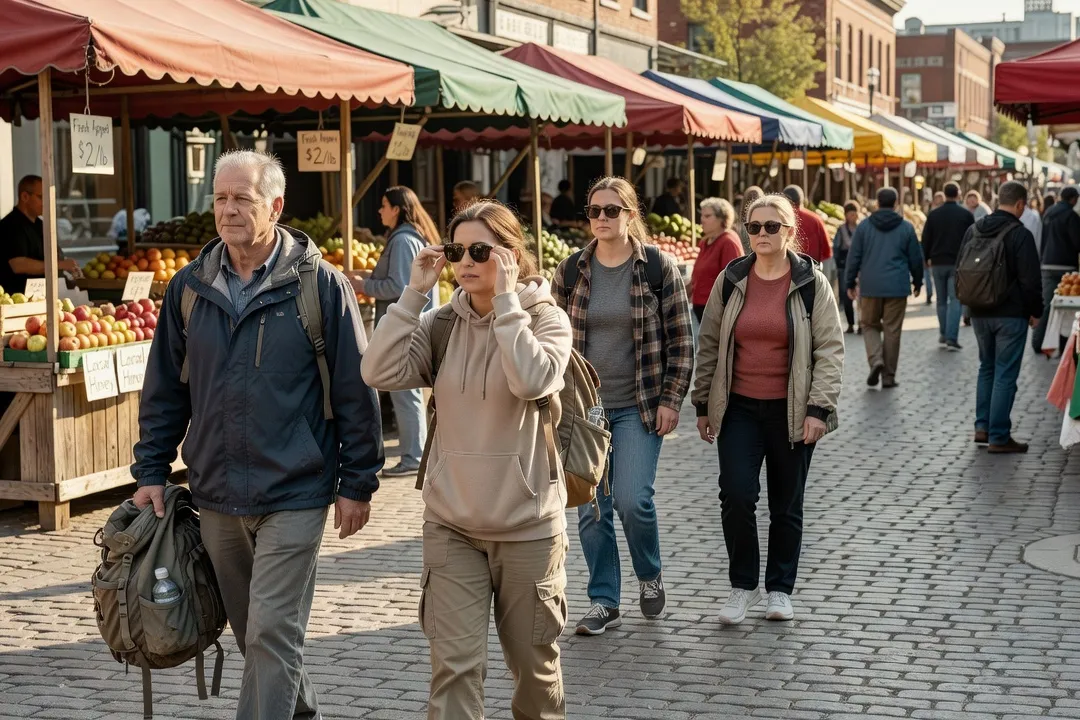
Ottawa has a reputation, largely undeserved, as an expensive federal city built around per-diem budgets and civil-service expense accounts. Visitors arriving with that assumption tend to overspend out of habit, buying the first ticket offered and eating at the first restaurant they pass near Parliament Hill. The truth is closer to the opposite: Ottawa is one of the more forgiving capital cities in the world for a traveller working with a tight budget, provided they know which doors open for free and which ones charge for something available elsewhere at no cost at all.
This guide is built around a simple premise. A visitor with three days and a modest budget can still see the Peace Tower, walk the locks of a UNESCO World Heritage canal, tour a national museum’s permanent collection, and eat well in one of the oldest market districts in Canada, without spending more than the cost of a single dinner out in a more expensive destination. What follows is a practical accounting of where the free experiences are, where the paid experiences are worth the money regardless, and how to stretch every dollar across food, lodging, and transit.
Why Ottawa is more affordable than it looks
Ottawa’s core tourist district is compact by design. The National Capital Commission, which has managed federal lands in the capital region since 1959, deliberately kept large stretches of the downtown core as public parkland, pedestrian promenades, and open plazas rather than ticketed attractions. Confederation Park, Major’s Hill Park, and the full length of the Rideau Canal pathway system are publicly maintained green corridors with no admission fee, no operating hours in the conventional sense, and no queue. A visitor can walk from the Château Laurier to Dow’s Lake, a comfortable stretch entirely within federally managed public land, and not spend a cent.
The second reason Ottawa is cheaper than its reputation suggests is structural: it is a government town, not a resort town. Hotel pricing in Ottawa tracks the parliamentary calendar and convention bookings rather than tourist demand in the way that, say, hotel pricing in Banff tracks summer hiking season. When the House of Commons is not sitting and no major convention has booked block rooms, rates in mid-range downtown hotels can drop by 30 to 40 percent from their peak-week levels. Visitors who time a trip around a parliamentary recess, typically in late June through early September and again around the winter holidays, often find themselves paying rates closer to a secondary Canadian city than a capital.
Finally, Ottawa’s national museums operate on a mandate that includes public access, not just revenue generation. As federally funded Crown corporations, institutions like the Canadian Museum of History, the Canadian War Museum, and the Canadian Museum of Nature are required to offer some form of free or reduced admission on a recurring basis. This is not a marketing gimmick; it is written into their public accountability frameworks. Combined with free federal parkland and a compact downtown core, the pieces are in place for a visitor to build an entire itinerary around no-cost or low-cost experiences without feeling like they are settling for less.
Budget note: A realistic daily budget for food, minor transit, and incidentals in Ottawa, excluding lodging, runs between CAD 40 and CAD 70 per person if you take advantage of the free attractions covered below and eat at least one market-stall meal per day.
Free museum nights and national institutions worth planning around
The single highest-value move for a budget-conscious visitor is planning around free museum evenings. The Canadian War Museum, at 1 Vimy Place along the Ottawa River, offers free general admission on Thursday evenings from 5pm to 8pm, a policy that has held consistently in recent years though visitors should always confirm current hours on the museum’s own site before building an itinerary around it. That three-hour window is enough time to walk through the museum’s chronological galleries from early colonial conflict through to modern peacekeeping missions, including the suspended Avro Lancaster bomber in the main hall and the outdoor LeBreton Gallery of tanks and artillery, which carries no separate admission fee regardless of the hour.
The Canadian Museum of Nature, housed in the castle-like Victoria Memorial Museum Building at the corner of McLeod and Metcalfe streets, follows a similar pattern with reduced or free evening admission on selected weeknights, particularly outside the peak summer season. The building itself, completed in 1912 in a Gothic Revival style with a distinctive turreted tower, is worth the visit as an architectural artifact even before reaching the dinosaur gallery and the Arctic exhibits on the upper floors.
| Institution | Free/reduced window | Typical regular adult price | What you see for free |
|---|---|---|---|
| Canadian War Museum | Thursday evenings, 5pm–8pm | Check official site for current rate | Full permanent galleries, LeBreton outdoor gallery |
| Canadian Museum of Nature | Select weeknight evenings (confirm current schedule) | Check official site for current rate | Dinosaur gallery, Arctic gallery, historic building |
| National Gallery of Canada | Thursday evenings after 5pm (reduced rate) | Check official site for current rate | Permanent collection, Group of Seven works |
| Canadian Museum of History (Gatineau) | Select community days, check seasonal calendar | Check official site for current rate | Grand Hall, First Peoples Hall |
It is worth reading our complete guide to Ottawa’s top attractions before finalizing which evenings to prioritize, since the ranking there explains which permanent collections reward a full visit versus which are better suited to a shorter, targeted pass during a free window. Not every museum’s entire footprint is covered by the free-evening policy; special ticketed exhibitions, such as touring blockbuster shows, typically require a separate paid ticket even during otherwise free hours, so it pays to check the fine print for whatever temporary exhibition is running during your visit.
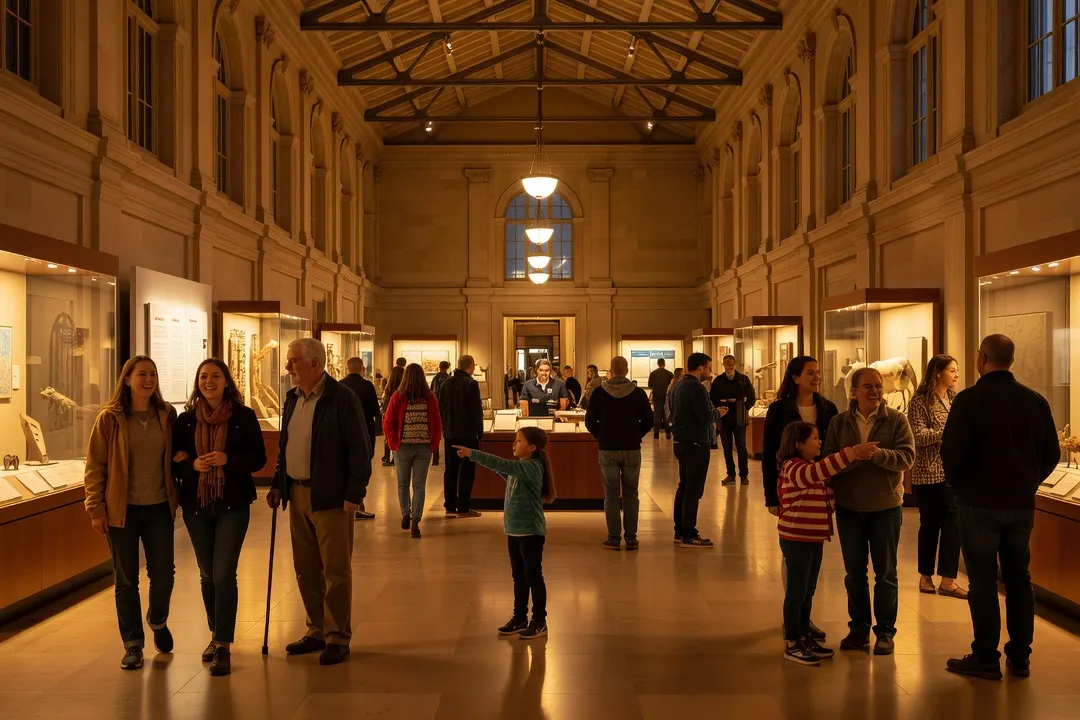
Beyond the marquee national museums, several smaller institutions maintain free admission year-round rather than just on select evenings. The Bytown Museum’s grounds and several Parks Canada interpretive panels along the canal require no ticket at all, and the Bank of Canada Museum has, at various points, offered no-charge general admission, though this policy is worth confirming ahead of a visit since institutional pricing does shift. The lesson for budget travellers is straightforward: never assume a national museum requires a ticket without checking, and never assume the evening hours are the same every day of the week. A five-minute check of each institution’s official hours page before departure can save a family of four upwards of CAD 60 to CAD 80 in admission fees across a single weekend.
Exploring Parliament Hill and the Rideau Canal at no cost
Parliament Hill itself costs nothing to visit. The grounds, the exterior architecture of the Centre Block, the Peace Tower silhouette against the river, and the Changing of the Guard ceremony performed on the lawn each morning in summer are all free public experiences, distinct from the guided interior tours, which are also free but require advance booking given renovation-related access limits currently in place. Visitors often assume that approaching Parliament Hill requires a ticket booth of some kind; it does not. Security screening at the main gate is required, but no fee changes hands at any point.
Tip: Arrive at Parliament Hill by 9:15am if you want unobstructed photographs before tour groups and school buses begin arriving around 10am. The lawn is at its quietest in the first hour after opening.
The Rideau Canal, a UNESCO World Heritage Site since 2007, offers an even richer set of free experiences depending on the season. In summer, the towpath along the canal’s Ottawa segment functions as a public pedestrian and cycling corridor with no restrictions on use. Walking the roughly 7-kilometre stretch from the Ottawa Locks near Parliament Hill down to Hartwells Locks near Carleton University costs nothing and passes some of the most photographed stonework in the city, all of it dating to the canal’s original construction between 1826 and 1832 under Lieutenant-Colonel John By. In winter, the same waterway becomes the Rideau Canal Skateway, and while renting skates carries a fee at rental kiosks along the ice, simply walking alongside the skaters, watching the BeaverTails stands do brisk business, and experiencing the atmosphere of the world’s largest naturally frozen skating rink costs nothing at all. Readers planning a winter visit should consult the Rideau Canal Skateway in winter for current ice conditions and safety guidance before assuming the ice is open, since the Skateway’s opening date shifts year to year with temperature.
A few additional no-cost stops worth building into a walking route around the parliamentary precinct:
- Major’s Hill Park, immediately east of Parliament Hill, offers unobstructed river views and is the traditional launch point for the Confederation Boat Line tours, which do carry a fee, though the park itself does not.
- The National War Memorial and the Tomb of the Unknown Soldier at Confederation Square, a short walk from the Château Laurier, is open to the public at all hours with no admission.
- The exterior grounds of Rideau Hall, the Governor General’s residence, are open to pedestrians daily, and the interior tour, while ticketed at a modest rate, is one of the cheapest paid attractions in the city relative to what it offers.
- The Ottawa Locks staircase, connecting the canal to the river below Parliament Hill, is a public stairway that doubles as one of the best vantage points in the city for photographing the Centre Block.
Budget-friendly eating in the ByWard Market
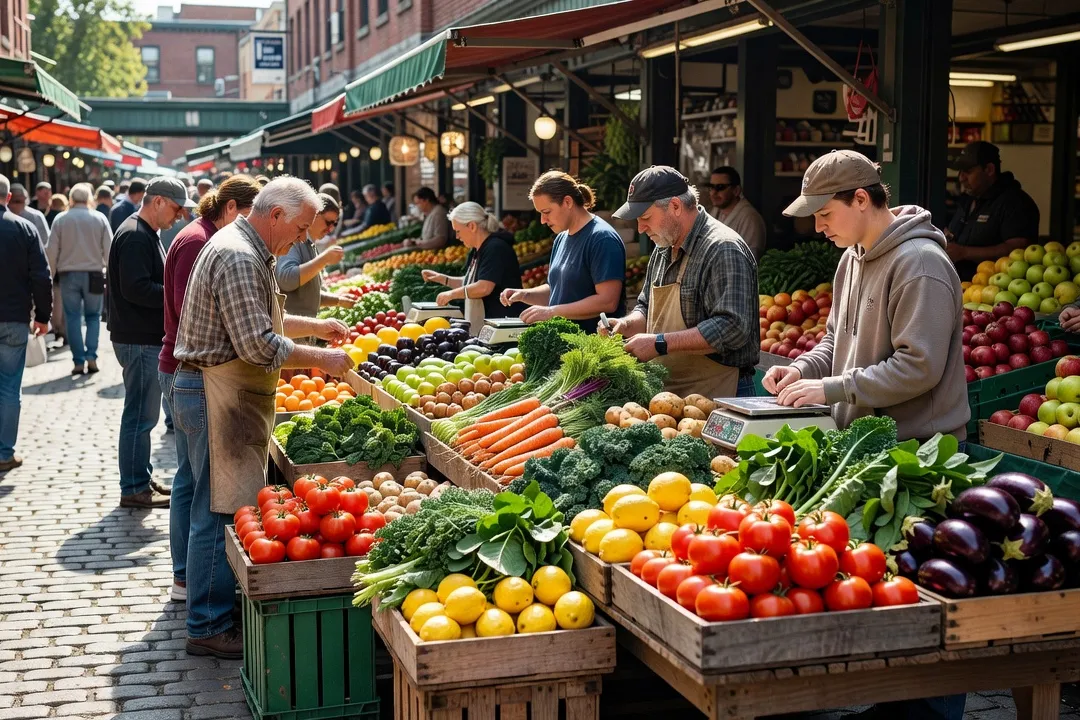
The ByWard Market district, established in 1826, remains the most reliable place in Ottawa to eat well without spending like it’s a special occasion. The permanent farmers’ market pavilion at 55 ByWard Market Square operates a covered stall system where produce, baked goods, and prepared foods run consistently below sit-down restaurant prices. A visitor buying a fresh baguette, a wedge of local cheese, and a portion of seasonal fruit can assemble an affordable picnic lunch for two people, then eat it for free in nearby Major’s Hill Park or along the canal towpath.
Heads up: Restaurant patios directly facing the market square charge a premium for the view. Walking one or two blocks toward York Street or Clarence Street typically finds the same quality of food at 15 to 20 percent lower prices, since those addresses carry lower rent than the square-facing storefronts.
Street-level food stalls and small counter-service shops scattered through the market offer some of the best value per dollar in the downtown core. BeaverTails, the fried-dough pastry chain that originated in the Ottawa region, remains a reasonably priced treat rather than a full meal; check current pricing at the kiosk, as it varies by topping and season. Shawarma counters along George Street and Rideau Street serve generous portions in the CAD 10 to CAD 14 range, enough to function as a full meal for most travellers. For a more substantial but still affordable sit-down option, several market-adjacent diners and pubs offer weekday lunch specials priced meaningfully below their dinner menus, a detail worth asking about directly since it is rarely advertised on the storefront.
| Meal type | Where | Typical cost per person (CAD) |
|---|---|---|
| Picnic lunch (market produce + bread + cheese) | Farmers’ Market pavilion | 8–12 |
| Shawarma or similar counter meal | George/Rideau Street stalls | 10–14 |
| BeaverTails pastry | Market square kiosks | 6–8 |
| Weekday lunch special at a pub | Market-adjacent streets | 14–18 |
| Grocery run for multi-day self-catering | Nearby supermarket | 25–35 for two days |
For visitors staying in accommodation with even a small kitchenette, a single grocery run at one of the supermarkets a short walk from the downtown core can cut food costs dramatically over a multi-day stay. Readers interested in the deeper culinary context of the district, including the vendors who have operated stalls for multiple generations, should see the ByWard Market’s food culture, which goes into more detail on which stalls are tourist-facing and which serve a genuine local clientele, a distinction that often correlates with better prices.
Affordable accommodation strategies for visitors
Lodging is typically the largest line item in any Ottawa itinerary, and it is also the most negotiable if a visitor is willing to adjust dates or neighbourhood. Hotels directly on or near Wellington Street, facing Parliament Hill, command the highest rates in the city and are priced accordingly for the view rather than the experience of the room itself. Moving even a ten-minute walk south, into the Centretown or Golden Triangle neighbourhoods, typically brings rates down by a meaningful margin while keeping walking access to the parliamentary precinct entirely intact.
Hostel-style accommodation exists in Ottawa, though the market is smaller than in cities like Montreal or Toronto, so booking further ahead matters more here than in those larger markets. University residence rooms at the University of Ottawa and Carleton University become available to short-term travellers during summer months when students are away, typically from May through August, and these rooms often undercut even budget hotel pricing while including basic amenities like shared kitchens and laundry facilities.
A short comparison of the main lodging categories and what a budget traveller should expect:
- Downtown hotel facing Parliament Hill or the canal — highest rates, premium for the view rather than the amenities; best value only during parliamentary recess weeks.
- Centretown or Golden Triangle hotel, 10–15 minute walk to the Hill — meaningfully lower rates for comparable room quality, still fully walkable to every major free attraction.
- University residence rooms (summer only) — among the cheapest options in the city, basic but functional, requires booking through the university’s conference-services channel rather than standard hotel platforms.
- Short-term rentals in Hintonburg or Old Ottawa South — slightly further from downtown but connected by frequent OC Transpo routes, often includes kitchen access that offsets food costs.
- Camping or RV sites at the edges of the Greenbelt — the most economical option for visitors with their own vehicle, though it adds a daily transit or driving cost into downtown.
Shoulder-season timing compounds these savings further. Late spring, particularly the weeks bracketing the Canadian Tulip Festival before the festival’s own peak weekend drives prices up, and early autumn after Labour Day but before the fall foliage rush, both tend to offer the lowest nightly rates of the year while still providing comfortable walking weather.
Free seasonal events and festivals
Ottawa’s calendar of free public events is dense enough that a visitor could plan an entire trip around them without ever paying an admission fee to a festival gate. Winterlude, held over three weekends in early February, centres its programming on the free-to-access Rideau Canal Skateway, ice sculpture displays at Confederation Park, and outdoor entertainment stages that do not charge admission, even though certain add-on activities like specific food vendors or skate rentals carry their own costs. The Canadian Tulip Festival, held in May around Dow’s Lake and Commissioners Park, is similarly free to walk through, with a large-scale display of tulip bulbs across the festival grounds, a tradition that traces back to a 1945 gift from the Dutch royal family in gratitude for Canada’s role in sheltering the Dutch monarchy during the Second World War.
Summer brings Canada Day celebrations on July 1st, centred on Parliament Hill and free to attend, though the most popular viewing spots along the lawn fill early and visitors aiming for a clear view of the main stage should plan to arrive well before the scheduled program begins. Throughout the summer months, the nightly sound-and-light show projected onto the Parliament buildings runs free of charge on the lawn, typically beginning around 9:30pm depending on sunset times, offering an evening activity that costs nothing beyond the walk to Parliament Hill itself.
A quick reference for the year’s major no-cost events:
- Winterlude (early February) — ice sculptures, canal skating atmosphere, outdoor stages at Confederation Park.
- Canadian Tulip Festival (May) — a large-scale tulip display on public view around Dow’s Lake and Commissioners Park.
- Canada Day (July 1) — free celebrations centred on Parliament Hill, fireworks in the evening.
- Sound-and-light show on Parliament Hill (mid-May through early October, nightly) — free outdoor projection show on the Centre Block façade.
- Changing of the Guard (daily in summer, 10am) — free ceremonial changing of the guard on the Parliament Hill lawn.
Getting around Ottawa without overspending
OC Transpo, the city’s public transit operator, offers day passes that make far more financial sense for visitors than paying single fares repeatedly across a multi-stop day. A day pass covers unlimited travel on both the bus network and the O-Train light-rail line, which connects the downtown core to Gatineau-adjacent stations and outlying neighbourhoods. For a visitor planning to cross the river to the Canadian Museum of History, or to reach Gatineau Park’s hiking trails, the day pass typically pays for itself after just two or three individual trips. Group day passes, valid for small groups travelling together on weekends, offer a further discount over buying individual day passes separately.
Budget note: Weekend group day passes on OC Transpo are among the best transit values in the city for families or small groups, since the per-person cost drops meaningfully compared to buying passes individually.
Beyond transit fares, the compact geography of downtown Ottawa means that walking remains entirely viable for most of the classic sightseeing route. The distance from the Château Laurier to the ByWard Market is under ten minutes on foot; from Parliament Hill to the National Gallery of Canada is a comfortable fifteen-minute walk along the river. Visitors who plan their day around a single downtown loop can often avoid transit costs entirely for that portion of the trip, reserving the day pass only for excursions across the river or out toward Gatineau Park. For a full breakdown of route numbers, fare structures, and which attractions genuinely require transit versus which are walkable, see getting around Ottawa without a car, which covers the practical logistics in more depth than a budget-focused overview can.
Cycling offers a third, often overlooked option. The city’s network of multi-use pathways, including the full length of the canal towpath, is free to use, and bike-share docking stations are scattered through the downtown core at a per-ride cost that is often cheaper than a single transit fare for short hops between attractions. Visitors staying more than two days may find that a multi-day bike-share membership works out cheaper than repeated single-ride bus fares, particularly in the warmer months when the pathway network is at its most pleasant.
A sample two-day budget itinerary
Bringing all of the above together, a realistic two-day itinerary built almost entirely around free attractions, with two low-cost meals and one museum evening, might look like this.
Day one begins with a free walk through Parliament Hill’s exterior grounds at opening, followed by the Changing of the Guard ceremony if the season allows. From there, the walk down to the Rideau Canal locks and along the towpath toward the ByWard Market costs nothing and takes roughly thirty minutes at an unhurried pace. Lunch at the Farmers’ Market pavilion, assembled from a few stalls, runs under CAD 15. The afternoon can be spent walking the market’s historic streets and visiting the free public grounds around Major’s Hill Park, before returning downtown in the early evening for the Canadian War Museum’s Thursday free-admission window, assuming the visit falls on the right day of the week.
Day two shifts toward the water and the green spaces further from the parliamentary core. A morning walk or bike ride along the canal towpath toward Dow’s Lake, free throughout, can be timed to the Canadian Tulip Festival if the visit falls in May. Lunch can again be assembled cheaply from a nearby grocery stop rather than a restaurant, eaten in Commissioners Park. The afternoon is well spent using a single OC Transpo day pass to cross toward Gatineau Park or the Canadian Museum of History, both of which offer either free exterior experiences or reduced-rate access depending on the day and season. The evening can close with the free sound-and-light show projected onto Parliament Hill, assuming the visit falls within the May-to-October operating window.
A rough tally for this two-day plan, per person, excluding lodging, lands somewhere between CAD 70 and CAD 110, depending on which museum evenings align with the visit and how much self-catering the traveller is willing to do. That figure compares favourably against nearly any other G7 capital city, and it does not require sacrificing any of the attractions that make Ottawa worth visiting in the first place; it simply requires knowing which door is free and which hour of the week it opens.
Travellers piecing together a wider Canadian itinerary on a similar budget will find complementary planning resources at voyage-canada.com, whose coverage of budget-friendly travel ideas across Canada extends well beyond the capital region. And for those looking to keep their footprint as light as their wallet, verygreentrip.com offers responsible, low-cost travel planning that pairs naturally with a walking-and-transit-based approach to a city as compact and well-served as Ottawa.
Ottawa rewards the patient, observant traveller more than the one who assumes every meaningful experience requires a ticket. The federal government’s own mandate to keep its capital accessible, combined with a downtown core small enough to cross largely on foot, means that a genuinely full experience of the city, its museums, its waterway, and its market district is available to almost any budget willing to plan a little ahead.
Frequently asked
Several national museums, including the Canadian Museum of Nature and the Canadian War Museum, offer free admission on specific evenings each month, typically Thursday nights after 5pm. Checking each museum's website for current free-entry schedules is essential before planning a visit.
Walking or cycling along the Rideau Canal pathway, exploring Major's Hill Park, watching the Changing of the Guard ceremony in summer, and strolling through the ByWard Market are all free. In winter, watching skaters on the Rideau Canal Skateway costs nothing even if you don't skate.
The ByWard Market has affordable food stalls and a farmers market with lower prices than sit-down restaurants. Grocery stores near downtown also offer picnic supplies for enjoying meals in parks rather than restaurants.
OC Transpo offers day passes that are considerably cheaper than repeated single fares, making it a cost-effective way to reach attractions like Gatineau Park or the Canadian Museum of History across the river.
Shoulder seasons like late spring and early fall typically offer lower accommodation rates than peak summer festival season or Winterlude, while still providing pleasant weather for sightseeing.