
Ottawa’s downtown core does the heavy lifting in most itineraries, and reasonably so: Parliament Hill, the canal, the National Gallery, and the ByWard Market form a compact, walkable cluster that rewards a first-time visitor within a single afternoon. But a city’s character rarely lives entirely in its ceremonial centre, and Ottawa is no exception. Cross the Queensway, follow a bus route west or east, and the texture changes—storefronts get smaller and more particular, the pace slows, and the conversations in line at the coffee counter tend to be about school pickup times rather than convention schedules. These are the neighbourhoods residents actually inhabit, and they repay a visitor’s attention in a currency downtown rarely offers: the sense of arriving somewhere lived-in rather than staged.
This guide covers four of them—Westboro, the Glebe, Hintonburg, and New Edinburgh—chosen because each has a distinct identity, a walkable main strip, and reasonable access from the downtown core without a car. We have also included a practical closing section on moving between them, since public transit and cycling infrastructure make a car largely unnecessary for this kind of exploration.
Why explore Ottawa beyond the downtown core
The case for leaving downtown is not that the core is uninteresting—it is that it represents only one register of the city. Downtown Ottawa is administrative and monumental by design: government buildings, national museums, and a canal built for transport and now used for recreation. It performs a version of Ottawa built for a national audience. The neighbourhoods that ring it were built for a different audience entirely—the people who actually live here—and that distinction shows up in small, cumulative ways: house-proud gardens, corner hardware stores that have outlasted three recessions, cafés where the owner remembers regulars’ orders.
Visitors who make the trip out tend to come away with a fuller picture of daily life in the capital, one that complements rather than replaces the postcard version. A few practical reasons to make the effort:
- Local commerce over chain retail. Independent bookstores, kitchen shops, and bakeries outnumber national chains in most of these strips, particularly along Wellington Street West and Bank Street south of the canal.
- Lower prices on food and coffee. Neighbourhood cafés and lunch counters generally charge less than their downtown-adjacent equivalents, without sacrificing quality.
- A different pace. Weekday mornings in these areas run on a residential clock—dog walkers, school drop-offs, joggers—rather than the commuter rush that defines downtown.
- Architecture and streetscape variety. Each neighbourhood below has its own building stock and layout, from Westboro’s mixed commercial-residential strip to New Edinburgh’s Victorian cottages.
Good to know: Most of these neighbourhoods are best explored on foot once you arrive. Budget two to three hours per visit if you want time to browse shops and sit down for a coffee or meal rather than simply walking through.
None of this requires abandoning a first-timer’s checklist of national museums and Parliament Hill; it simply argues for building in an afternoon or two for the surrounding city, ideally on a second day or a return visit. For a sense of how this might fit into a broader stay, a romantic weekend itinerary featuring New Edinburgh shows one way to combine the ceremonial core with a quieter residential detour.
Westboro: outdoor gear, boutiques, and cafe culture
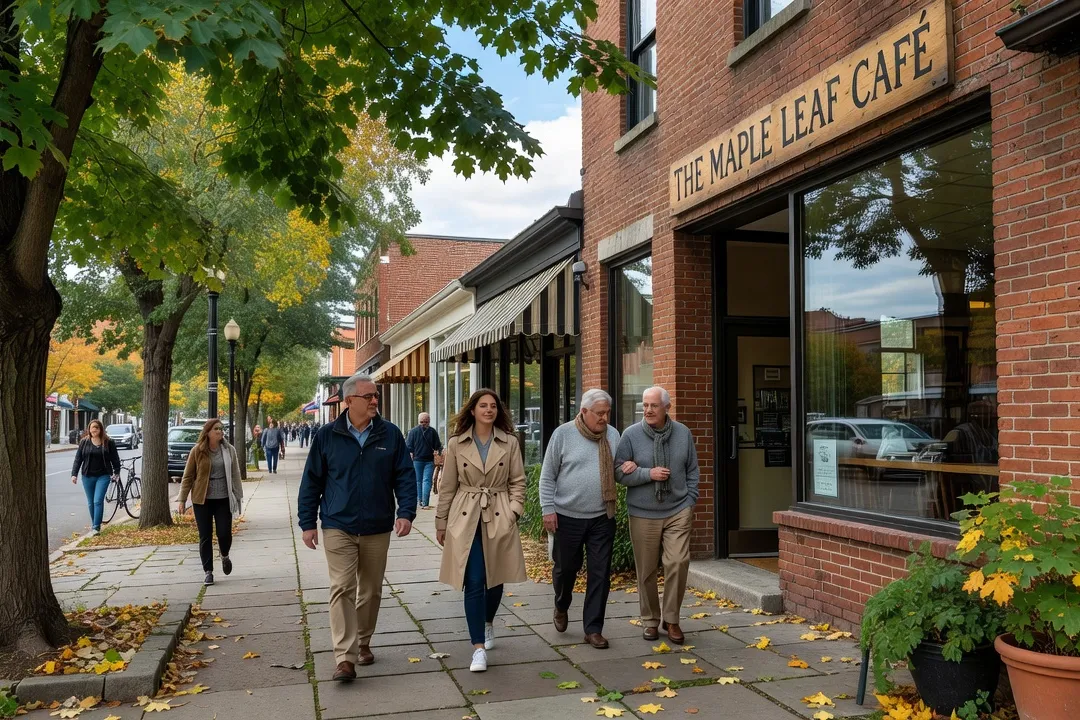
Westboro sits about five kilometres west of downtown along Richmond Road and Wellington Street West, and it has spent the last two decades building a reputation as Ottawa’s unofficial capital of outdoor gear. The strip is anchored by a cluster of hiking, paddling, and cycling retailers that draw shoppers from across the region, but the neighbourhood’s appeal extends well past gear shopping. Boutique clothing stores, home décor shops, and a dense concentration of cafés fill in the blocks between the outdoor retailers, and the overall effect is a strip that feels curated without feeling exclusive.
Weekday mornings here have a particular rhythm: joggers and cyclists returning from the nearby Ottawa River pathway stop for coffee before work, and the cafés along Richmond Road fill with laptops and conversation in roughly equal measure. Weekends bring a slower browsing crowd, families pushing strollers between shops, and lineups outside the more established bakeries. The neighbourhood’s proximity to the river also means a walk down to the water is only a few minutes from the main strip, making it easy to combine shopping with a stretch of riverside path.
A few practical notes for a first visit:
| What to know | Details |
|---|---|
| Main strip | Richmond Road and Wellington Street West, roughly 1.2 km of continuous storefronts |
| Best for | Outdoor gear, boutique shopping, weekend brunch |
| Peak times | Saturday mornings; weekday evenings after work |
| Nearby green space | Ottawa River pathway, a five-minute walk north |
Westboro is also one of the easier neighbourhoods to reach without a car, a point covered in more detail further down under getting around Ottawa’s neighbourhoods. Frequent bus service runs along Richmond Road and connects directly to downtown in roughly fifteen to twenty minutes depending on traffic.
The Glebe: walkable streets and community atmosphere
South of the canal and just beyond the university district, the Glebe organizes itself around Bank Street, a long, walkable commercial strip lined with independent shops, restaurants, and the kind of small services—shoe repair, tailors, specialty grocers—that have largely disappeared from busier commercial corridors elsewhere in the city. The neighbourhood’s residential streets, filled with early-twentieth-century brick homes, run perpendicular to Bank Street and reinforce the sense that this is a place built for walking rather than driving.
The Glebe’s defining feature for visitors is its proximity to Lansdowne Park, a mixed-use development combining a stadium, retail, and public plaza space that hosts farmers’ markets, sporting events, and seasonal festivals throughout the year. On market days, the plaza draws a crowd that spills onto Bank Street, and the neighbourhood takes on a genuinely festive energy distinct from its otherwise quiet, residential character.
What makes the Glebe worth the detour, in practical terms:
- A genuinely walkable main street. Bank Street between the canal and Fifth Avenue is dense enough with shops and cafés that a visitor can spend two hours without repeating a block.
- Lansdowne Park’s rotating programming. Farmers’ markets on weekends, occasional concerts, and sporting events at TD Place give the area a changing rhythm worth checking before a visit.
- Canal-side access. The Glebe’s eastern edge runs along the Rideau Canal, making it easy to combine a neighbourhood walk with a stretch of the canal pathway, particularly scenic in autumn.
Local tip: If you’re visiting on a Sunday, check whether the Ottawa Farmers’ Market is running at Lansdowne—it operates seasonally and is one of the better ways to sample the Glebe’s food culture in a single stop.
The Glebe pairs naturally with a stop at the ByWard Market’s central food scene if you are comparing Ottawa’s two most prominent market environments—one downtown and historic, the other residential and modern.
Hintonburg: creative energy and independent restaurants
East of Westboro along Wellington Street West, Hintonburg has undergone a visible transformation over the past fifteen years, shifting from an industrial and working-class district into one of Ottawa’s more consistently interesting neighbourhoods for food and small-scale creative business. The change has been gradual rather than wholesale, and the result is a strip that mixes older auto shops and warehouses with new restaurants, galleries, and design studios in a way that feels organic rather than manufactured.
Where Westboro leans toward outdoor retail and the Glebe toward a classic walkable main street, Hintonburg’s identity is built around food and creative production. Smaller, independently owned restaurants dominate the strip, often run by chefs who have opted out of the downtown restaurant scene in favour of lower rents and a more experimental menu. Art galleries and studio spaces occupy former industrial buildings, and the neighbourhood hosts periodic open-studio events that give visitors a look at working artists’ spaces.
A short list of what tends to draw repeat visitors to Hintonburg:
- Independent restaurants with rotating, seasonal menus, generally smaller and less expensive than comparable downtown options
- A concentration of art galleries and studio spaces in converted industrial buildings
- Specialty grocers and bakeries that supply many of the neighbourhood’s own restaurants
- A visibly less touristy atmosphere than downtown, with a slower, more local pace on weekday afternoons
Visitors who enjoyed budget-friendly ways to explore the city will find Hintonburg a natural extension of that approach—window shopping and casual meals here tend to cost noticeably less than equivalent options closer to Parliament Hill, without any real compromise in quality.
New Edinburgh: quiet heritage streets near Rideau Hall
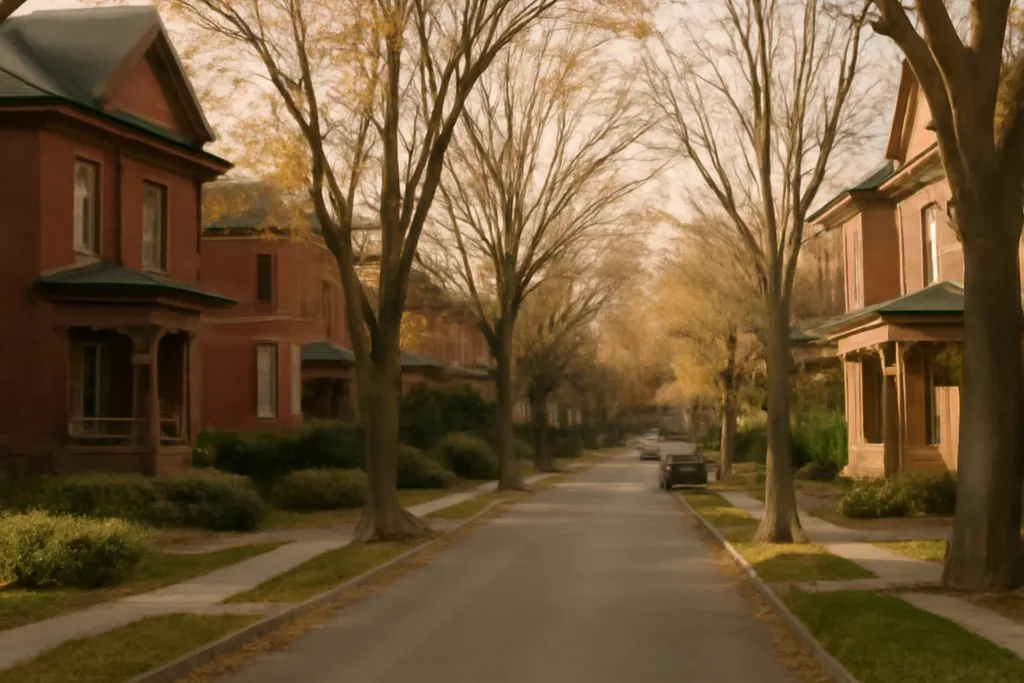
New Edinburgh sits northeast of downtown, across the Rideau River and adjacent to Rideau Hall, the official residence of Canada’s Governor General. The neighbourhood’s proximity to that institution has shaped its character over more than a century: tree-lined streets, well-preserved Victorian and Edwardian houses, and a general absence of commercial density that sets it apart sharply from Westboro, the Glebe, or Hintonburg.
Where the other three neighbourhoods on this list have working commercial strips as their organizing feature, New Edinburgh is defined instead by its residential fabric and its parks. MacKay Street and Beechwood Avenue carry what limited commercial activity the neighbourhood has—a handful of cafés, a bakery, a small grocer—but most visitors come here to walk rather than shop. The grounds of Rideau Hall are open to the public for much of the year and offer one of the more surprising green spaces in the city, with gardens, walking paths, and occasional public events on the property itself.
A quick comparison of what sets New Edinburgh apart from the other neighbourhoods covered here:
| Neighbourhood | Vibe | Best for | How to get there |
|---|---|---|---|
| Westboro | Active, outdoorsy | Gear shopping, cafés | Bus along Richmond Rd, ~15-20 min from downtown |
| The Glebe | Walkable, community-oriented | Main street browsing, markets | Bus or walk along Bank St, ~15 min from downtown |
| Hintonburg | Creative, food-forward | Independent restaurants, galleries | Bus along Wellington St W, ~15 min from downtown |
| New Edinburgh | Quiet, heritage | Walking, Rideau Hall grounds | Walkable from downtown, ~20-25 min on foot |
Local tip: Rideau Hall’s grounds host free public tours on select days, and the schedule changes seasonally—check ahead if the grounds tour is the main reason for your visit.
New Edinburgh’s pace makes it a natural fit for slower travel itineraries, and readers researching broader urban exploration itineraries across Canada will find its low-key, walkable character a useful template for how quieter capital-city neighbourhoods reward unhurried visits elsewhere in the country too.
Getting between neighbourhoods without a car
None of the four neighbourhoods above require a car, and most visitors staying downtown will find OC Transpo’s bus network, a bicycle, or simply a longer walk sufficient to reach all of them over the course of a stay. A few practical notes on logistics:
By bus. OC Transpo routes run frequently along the main corridors serving each neighbourhood—Richmond Road and Wellington Street West for Westboro and Hintonburg, Bank Street for the Glebe, and several routes crossing the Rideau River toward New Edinburgh and Rockcliffe Park. Trip times from downtown range from roughly ten to twenty minutes depending on the destination and time of day.
By bicycle. Ottawa’s network of segregated bike lanes and multi-use pathways makes cycling a genuinely practical option for reaching all four neighbourhoods, particularly Westboro and Hintonburg via the Ottawa River pathway, and New Edinburgh via the Rideau River path. Bike-share stations are available at multiple downtown points.
On foot. New Edinburgh is comfortably walkable from downtown for visitors accustomed to city distances—about twenty-five minutes at a relaxed pace. The Glebe is similarly close, particularly if you enter via the canal pathway. Westboro and Hintonburg are longer walks but manageable for visitors who enjoy covering a city on foot. Visitors piecing together a longer stay may also want to see how these neighbourhoods fit into the full list of Ottawa’s top attractions, since a day split between a neighbourhood and a major sight tends to balance a trip better than clustering either type of stop.
A short checklist for planning the logistics of a multi-neighbourhood day:
- Check OC Transpo’s live schedules before setting out, since frequency drops somewhat on evenings and weekends
- Pair a bus ride out with a walk back, or vice versa, to see more of the connecting streets
- Allow extra time in winter, when sidewalk conditions can slow a walking pace considerably
- Consider clustering Westboro and Hintonburg in one outing, since they sit along the same westward corridor, and treating the Glebe and New Edinburgh as separate excursions given their different directions from downtown
Travellers who enjoy comparing how different cities handle this kind of neighbourhood-hopping logistics may also find value in broader coverage of off-the-beaten-path travel circuits, which applies a similar lens to secondary neighbourhoods in other destinations.
Ottawa’s downtown core will always be the first stop for most visitors, and rightly so—it is where the country’s ceremonial life plays out and where the major national institutions sit within walking distance of one another. But a stay that never leaves that core sees only one layer of the city. Westboro, the Glebe, Hintonburg, and New Edinburgh each offer a different register of Ottawa life: active and outdoorsy, walkable and community-driven, creative and food-forward, or quiet and residential. Taken together, they round out a visit with the texture of a city actually lived in, not just visited.
Frequently asked
Westboro is known for outdoor gear shops, boutiques, and a strong cafe culture along its main strip, making it popular with both locals and visitors looking for a walkable shopping experience.
The Glebe combines a walkable main street with independent shops, restaurants, and proximity to Lansdowne Park, giving it a lively, community-oriented feel distinct from downtown.
Yes, Hintonburg has developed a reputation for its creative and food scene, with smaller independent restaurants and shops that reflect a more local, less touristy atmosphere.
New Edinburgh is a quiet heritage neighbourhood near Rideau Hall, known for tree-lined streets and a more relaxed pace compared to the busier downtown core.
Most are reachable by OC Transpo bus routes or a moderate bike ride, and some, like New Edinburgh, are within comfortable walking distance of the downtown core.