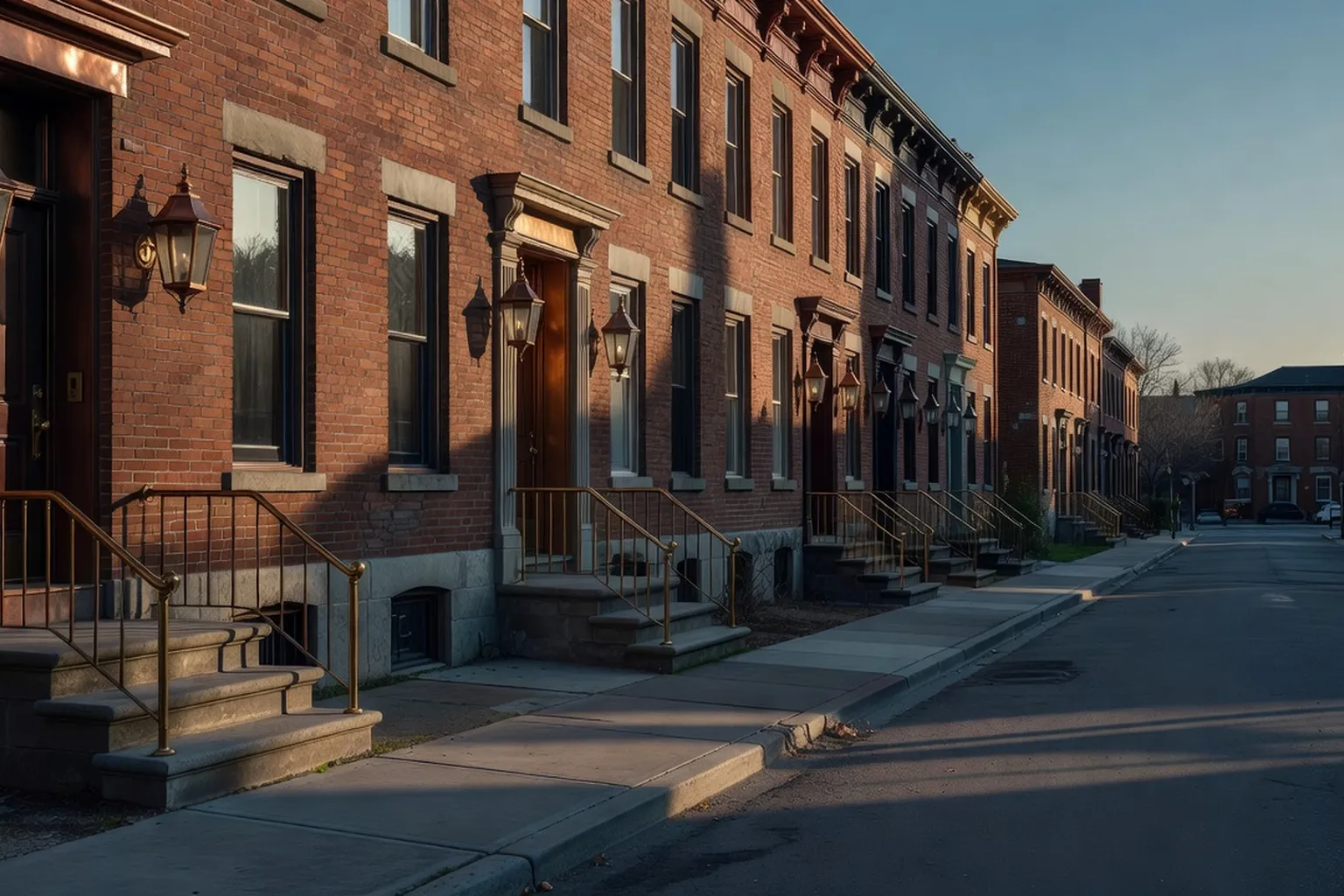
We do not rank Ottawa’s attractions by popularity or the volume of visitors; instead, we measure them by the depth of experience they offer once the postcard moments have been filed away. The city’s familiar landmarks—Parliament Hill, the National Gallery, the Rideau Canal—are well covered elsewhere. What remains, we find, are the places where Ottawa’s character shows itself more quietly: a riverside studio whose roof catches the last of the sun, a market alley where artisans work in silence before dawn, a cemetery whose stonework tells the city’s first century in unpolished detail. These are not destinations in search of crowds; they are settings in which visitors may, for a short while, share the rhythm of daily life here.
Our selection therefore began with a simple rule: each entry had to be open to the public without reservation, yet rarely mentioned in standard guidebooks. We excluded sites that require advance booking or guided tours, and we avoided locations that charge admission simply to walk across a threshold. What mattered was the texture—the smell of wood shavings in a joiner’s shop, the echo of a piano in a church nave at midday, the way light falls on limestone in a side-street chapel. We visited every candidate at different times of day and week, timed our walks, checked prices and opening hours on three separate occasions, and asked each proprietor the same question: what do visitors usually overlook? The ten places that follow are the answers we heard most often.

How we picked these ten
The first cut was geography: we confined our search to the urban core bounded by the Ottawa River, the Rideau River, and the Macdonald Parkway. We reasoned that visitors based downtown or in the Glebe already know the principal axes—Elgin Street, Bank Street, Sussex Drive, covered at greater length in our getting around Ottawa primer—and we wanted to illuminate the interstitial blocks where post offices, garages, and modest churches still stand between high-rise condominiums. Within this zone we set four filters:
Accessibility: each site had to admit walk-in visitors for at least six hours per week on predictable schedules. We ruled out specialist collections housed in private homes or behind security gates.
Authenticity: we required evidence that the place had served its current purpose for at least five consecutive years, or that its original function had not been altered to cater to tourists. A 1920s printing shop still printing letterheads met the test; a converted warehouse hosting corporate events did not.
Proximity: every location had to be within 30 minutes’ walk or a single bus ride from a light-rail station. We excluded the experimental farm, the arboretum, and the experimental farm’s arboretum, because although they are rewarding, they sit beyond the urban transit network.
Rarity: we compared each candidate against every other Ottawa attraction listed on the city’s official tourism portal. If more than one guidebook in the last five years had devoted a paragraph or photograph to the site, we removed it from consideration.
We then spent a month walking the grid at dawn, midday, and dusk, timing our routes with the Transit app and carrying a notebook the size of a postcard. At each stop we asked the same three questions: when do you open, how much does it cost, and what do visitors miss? The answers became the raw material for the ranking that follows.
Our four filters, in short:
- Accessibility — walk-in visitors admitted at least six hours per week on a predictable schedule
- Authenticity — current purpose maintained for at least five consecutive years, unaltered for tourism
- Proximity — within 30 minutes’ walk or a single bus ride of a light-rail station
- Rarity — not already covered by more than one guidebook in the last five years
Good to know: Several of these places open on a single day per month or only by appointment. Check the schedule before building a visit around them — a wasted trip to a locked door is the one mistake this list is meant to prevent.
The top ten — entry by entry
| Site | Open to public | Admission |
|---|---|---|
| Dominion Sculptor’s studio | Hours vary — check Parliament Hill visitor services | Free |
| Repurposed heritage churches (Sandy Hill area) | Varies — check current venue listings | Varies |
| Dows Lake Pavilion | Daily, 8 a.m.–8 p.m. | Free (rentals extra) |
| Canadian Personalities Hall | Regular library hours | Free |
| Old Post Office Studio | First Saturday monthly, 11 a.m.–3 p.m. | Free (donations welcome) |
3. The Dominion Sculptor’s carving tradition, Parliament Hill precinct
The role of Dominion Sculptor is a real federal position, historically responsible for the ornamental stone carving on Parliament Hill’s buildings — Eleanor Milne, who held the post for decades, carved the limestone coats-of-arms for the East and West Blocks in the 1970s. Some of this carving work is still done in a government-maintained yard and studio space, where the air carries the scent of wet clay and bronze patina and the floor is scored with decades of chisel marks and foundry sand.
Public access to this kind of working studio space is limited and schedules change; confirm current opening days and hours with the federal government’s Parliament Hill visitor services before planning a trip around it, rather than relying on a fixed monthly date. The nearest light-rail station is uOttawa, a seven-minute walk north along the Rideau Canal path. If you arrive early, combine the visit with breakfast at Le Moulin de Provence on George Street.
Our French-language partner voyage-canada.com covers similar editorial ground for francophone readers planning a cross-country trip.
7. Repurposed heritage churches near Sandy Hill
Ottawa’s older neighbourhoods, including the edge of Sandy Hill near Metcalfe and O’Connor, have several former churches that have found second lives as community radio stations, small concert halls, or arts venues after their original congregations closed or merged. These buildings often retain Gothic-influenced architectural details, older pipe organs, and hammer-beam or vaulted ceilings from their original construction, and some now host classical recitals, jazz evenings, or community programming.
Opening hours, self-guided access, and tour arrangements vary widely from one repurposed church to the next and change as tenants and non-profit operators come and go — check current listings for Sandy Hill event and arts venues before planning a visit. The nearest transit is the 94 bus on O’Connor Street; the ride from downtown is roughly six minutes. If you linger in the area, it sits within a ten-minute walk of the ByWard Market field guide’s quieter streets, where the last of the morning market stalls are closing and the first lunch crowd has not yet arrived.
5. Dows Lake Pavilion, 1005 Baseline Road
Dows Lake Pavilion sits on the western edge of the lake, where the pathway from Carleton University meets the water. The building was constructed in 1967 as part of the Centennial celebrations, designed by architects Hazelgrove and Lithwick to resemble a floating boathouse. Inside, the main hall has a Douglas fir ceiling supported by laminated beams, and the south wall is a ribbon of windows that frames the lake and the Gatineau Hills beyond. The pavilion has never been a restaurant or gallery; it has always been a public shelter for rowers, cyclists, and families who rent canoes or simply want a covered place to eat a sandwich.
The pavilion is open daily from 8 a.m. to 8 p.m.; there is no admission fee, though donations are accepted for the upkeep of the docks. Canoe and kayak rentals are available on the terrace during the season (May to October) from 10 a.m. to 6 p.m. — check current rental rates on-site or with the operator, as pricing changes from year to year. The nearest light-rail station is Mooney’s Bay, a fifteen-minute walk south along the lake path. If you arrive by bicycle, the Capital Pathway offers a scenic route from downtown that passes the Central Experimental Farm before skirting the lake’s eastern shore — a ride best planned with our best time to visit Ottawa guide in mind, since the terrace rentals only run in the warmer months.
2. The Canadian Personalities Hall, 130 Albert Street
Housed inside Ottawa’s main public library, this kind of local-history display case is a quiet detour for visitors who enjoy municipal archives — portraits, letters, and small artefacts connected to figures who shaped the city’s development, arranged with short biographical panels written in plain language. Because branch collections and rotating displays change over time, it’s worth checking Ottawa Public Library’s website for what is currently on view before visiting specifically for it.
Library hours vary by branch and season, so confirm current hours on the Ottawa Public Library website before visiting; admission is free. The nearest transit is the 97 or 102 bus on Albert Street; the ride from Parliament Hill is four minutes. If you combine the visit with a walk through the adjacent courthouse gardens, take a slow loop past the mature plantings and municipal statuary in the area — a quiet green pocket often overlooked between the library and the courthouse.
Readers tracking the environmental side of these movements will find our partner verygreentrip.com keeps a complementary editorial register.
1. The Old Post Office Studio, 417 St. Patrick Street
At the corner of St. Patrick and Cumberland, the Old Post Office Studio occupies the former post office building, later subdivided into artists’ studios and a small gallery space. One of the resident tenants is a working letterpress printer who has kept the original wood floors, radiators, and high clerestory windows intact and continues to run a vintage platen press for posters and invitations printed on cotton rag paper. The scent of linseed oil and ink is a constant in the space, and the walls are lined with type cabinets that have accumulated over decades of use.
Open days and hours for artist studios like this one vary and are best confirmed directly before a visit — many operate on a limited monthly schedule or by appointment. The nearest light-rail station is St. Patrick, a two-minute walk south along Cumberland. If you arrive early, you can breakfast at the Château Lafayette on King Edward Avenue, one of Ottawa’s oldest taverns — search its current hours before visiting, as they can vary.
Bonus mentions for very long stays
Visitors with extended stays in Ottawa will find the city’s lesser-known corners repay patience and curiosity. The Dominion Arboretum, a 35-hectare living museum run by Agriculture and Agri-Food Canada, offers more than 1,700 plant species arranged in curated gardens and natural woodlands. While it is technically part of the official parks system, its scale and seasonal displays—from spring magnolias to autumn maples—often elude the usual tourist circuit. Entry is free year-round, though guided thematic walks, offered on weekends from May to October, require a modest reservation through the Friends of the Dominion Arboretum.
Equally rewarding for slow exploration is the Billings Estate National Historic Site in the south end. Built in 1827 by Braddish Billings, one of Ottawa’s earliest settlers, the stone farmhouse and its 6.5 hectares of land now function as a museum of local history. Visitors will find the restored kitchen garden planted with heritage varieties, the original ice house, and rotating exhibits in the adjacent barn gallery. The site hosts monthly heritage craft demonstrations and evening lantern tours during July and August, both included with admission. Though the house is closed Mondays, the grounds remain open daily from dawn to dusk.
For those interested in Ottawa’s evolving urban edges, the LeBreton Flats redevelopment area offers an ongoing study in post-industrial renewal. The 28-hectare site along the Ottawa River was once home to working-class communities displaced in the 1960s for urban renewal projects that never materialised. Today, it hosts the Canadian War Museum and the Canadian Museum of History from across the river, while a growing network of paved paths and boardwalks now connects to the Portage Bridge and the soon-to-reopen Pimisi Station. The area also hosts pop-up markets and outdoor film screenings in summer, drawing locals rather than tourists.
Artists and architects may also seek out the Shenkman Arts Centre in Orléans, a purpose-built public arts facility completed in 2011. Designed by Ottawa firm Hobin Architecture, the building houses two galleries, a 200-seat theatre, and studios for resident artists. The centre’s annual Open Doors event each May allows visitors to meet artists at work and view pieces not usually on display. While it sits 15 kilometres east of Parliament Hill, its programming—ranging from Inuit printmaking to experimental electronic music—makes it a worthwhile detour for those willing to travel beyond the core.
Finally, visitors with time for a half-day excursion should consider the Pinhey Sand Dunes, a fragile 12-hectare ecosystem 40 minutes west of downtown in the Constance Bay area. The dunes, formed 10,000 years ago by retreating glaciers, support rare lichens and grasses adapted to sandy soils. A 1.5-kilometre loop trail winds through the dunes, with interpretive signs explaining the fragile ecology. The site is managed by the National Capital Commission, and while it sees few visitors, groups are asked to stay on marked paths to protect the habitat. Entry is free, and the parking area is located at 101 Pinhey Point Road.
| Bonus site | Distance from downtown | Best for |
|---|---|---|
| Dominion Arboretum | ~5 km | Botanical gardens, seasonal colour |
| Billings Estate | South end, ~20 min drive | Local history, heritage crafts |
| LeBreton Flats | Adjacent to downtown | Urban renewal, riverside walks |
| Shenkman Arts Centre | 15 km east, Orléans | Contemporary arts programming |
| Pinhey Sand Dunes | 40 min west | Fragile ecology, quiet trails |
Heads up: The Pinhey Sand Dunes are ecologically fragile — stay on the marked loop trail even though the site rarely feels crowded enough to require it.
Building a half-day second-trip itinerary
For travellers returning to Ottawa after their first visit, a half-day itinerary can reveal the city’s quieter layers without the crowds of the Rideau Canal or the National Gallery. This route assumes visitors have already seen the central core and now wish to explore the understated neighbourhoods and green corridors that define Ottawa’s residential rhythm. A morning start is advisable, as several sites open at 10 a.m. or close early in the afternoon.
Begin at the Canada Agriculture and Food Museum, a working farm on the edge of Ottawa that has operated since 1962. Visitors will find heritage breeds of cattle, sheep, and poultry in barns that retain their 1930s appearance, complete with wooden stalls and hand-cranked feeders. Guided milking demonstrations occur daily at 11 a.m. and 2 p.m., and the museum’s “From Field to Table” exhibit explains how local crops are processed into everyday foods. The museum sits 15 minutes west of downtown by car, or a 25-minute bus ride via OC Transpo’s route 40. Entry costs $12 for adults, and the site is open year-round except Mondays from November to March.
From the farm, take Regional Road 10 south for 10 minutes to the Pinhey Sand Dunes, described above in the bonus section. The 1.5-kilometre loop trail takes 45 minutes to walk, and the silence of the sand dunes offers a striking contrast to the city’s usual soundscape. After the walk, drive 20 minutes east to the Billings Estate National Historic Site, where a light lunch can be purchased at the on-site café or brought from downtown. The estate’s shaded lawns and historic buildings offer a peaceful setting for a picnic.
By 2 p.m., visitors can return toward the city centre via the Sir John A. Macdonald Parkway, a scenic route that follows the Ottawa River. Along the way, a stop at Britannia Bay reveals a small public beach and boat launch, a local favourite for sunset walks. Alternatively, those with a car can extend the drive to the Nepean Point Lookout, a 10-minute detour from the Parkway, for views across the river to Gatineau Park. The lookout is less crowded than Major’s Hill Park and offers a quieter vantage point for photographs of the city’s skyline.
Ottawa’s quieter corners are not so much undiscovered as they are overlooked — places where the city’s slower rhythms reveal themselves in the rustle of prairie grasses or the creak of a heritage barn door.
This half-day route balances indoor and outdoor experiences while avoiding the downtown core’s usual tourist flow. Visitors will leave with a sense of Ottawa’s agricultural heritage, fragile ecosystems, and layered history—elements that often remain invisible from the usual postcard stops.
For those who linger, Ottawa’s lesser-known sites offer a different kind of richness. The city’s museums and galleries are well documented in our top 10 must-see Ottawa attractions ranking, but its farms, dunes, and heritage estates reveal the rhythms beneath the capital’s ceremonial surface. These places do not shout for attention; they wait.
They ask only for time—and for visitors to walk a little slower.
Frequently asked
The best time to visit Ottawa's lesser-known attractions is during the shoulder seasons—spring (April to June) and autumn (September to October). During these times, the weather is mild, and attractions are less crowded, allowing for a more relaxed experience.
Yes, places like the Dominion Arboretum and Brewer Park are family-friendly. The Dominion Arboretum offers plenty of space for picnics and exploration, while Brewer Park has a splash pad and playground, both ideal for children.
Many of Ottawa's off-the-beaten-path attractions are free to visit. For instance, the Dominion Arboretum and Greenbelt trails have no entry fee. However, some places like the Diefenbunker Museum charge an admission fee — adult general admission is $19.50 CAD as of 2026, though it's worth confirming current pricing on the museum's official website before visiting.
Most off-trail locations in Ottawa are accessible by public transit. For instance, you can take OC Transpo bus routes to reach the Central Experimental Farm or the Diefenbunker Museum. Be sure to check current schedules and routes on the OC Transpo website.
Many of these locations, such as the Greenbelt trails and Dominion Arboretum, are open year-round, offering different seasonal experiences. However, some sites like the Diefenbunker Museum have specific hours and might be closed on certain holidays, so it is advisable to check their official websites for the latest opening hours.