Ottawa’s tourism board leads with a specific word when it talks about the city’s queer community: it says visitors can “exist openly, joyfully, and without apology,” while also acknowledging that progress in the city is not finished. That framing is unusually direct for an official tourism page, and it sets a more honest tone than the generic “welcoming to all” language most destination guides default to. The short version for a traveller deciding where to spend a Pride week or just a quiet weekend: Ottawa has a real, walkable queer district with more than a decade of formal civic recognition behind it, a legally protected status under Canadian law, and a calendar built around one of the country’s longer-running Pride festivals.
None of that means Ottawa is a queer capital on the scale of Montreal’s Gay Village or Toronto’s Church-Wellesley. It is smaller, quieter, and shaped by its identity as a government town — which has its own advantages: shorter walks between venues, a strong daytime historical-tour option, and a Pride festival that closes an entire downtown street without the crowd density of a bigger city’s parade.
Why Ottawa calls itself queer-friendly
The claim rests on three separate things, not one. First, Canada’s federal equal-marriage and anti-discrimination law applies nationally, so Ottawa — as the seat of that federal government — sits at the literal source of the legal framework rather than at its edge. Second, Ottawa Tourism holds Rainbow Registered accreditation, a Canadian standard for tourism businesses and destinations that meet specific training and inclusion criteria for queer and trans visitors. Third, the city runs a visible network of community infrastructure: the Proud City campaign once listed close to 60 participating shops, restaurants and offices committing to inclusive practices, and organisations such as Kind Space continue to operate as dedicated 2SLGBTQ+ community hubs.
That combination — legal backing, formal tourism accreditation, and an actual business network — is what separates a city that genuinely built queer-friendly infrastructure from one that simply says the right things during Pride month. It’s also worth being direct about the limits: Ottawa is not immune to the same tensions other Canadian cities face, and threads on forums like r/transontario show community members giving nuanced, mixed reports on day-to-day comfort depending on neighbourhood and context. Treat official messaging as a starting point, not a guarantee, and read on for where the community actually concentrates.
The Village: Bank Street and Somerset
Ottawa’s queer district doesn’t have a single official boundary, but Destination Canada’s travel guide and the Bank Street BIA both describe the same rough footprint: Bank Street through Centretown, extending from around Nepean Street down to James Street, with Somerset Street West and Queen Street as connecting corridors. It’s compact enough to walk end to end in about fifteen minutes, which matters practically — you can cover the whole district on foot in an evening rather than needing transit between venues.
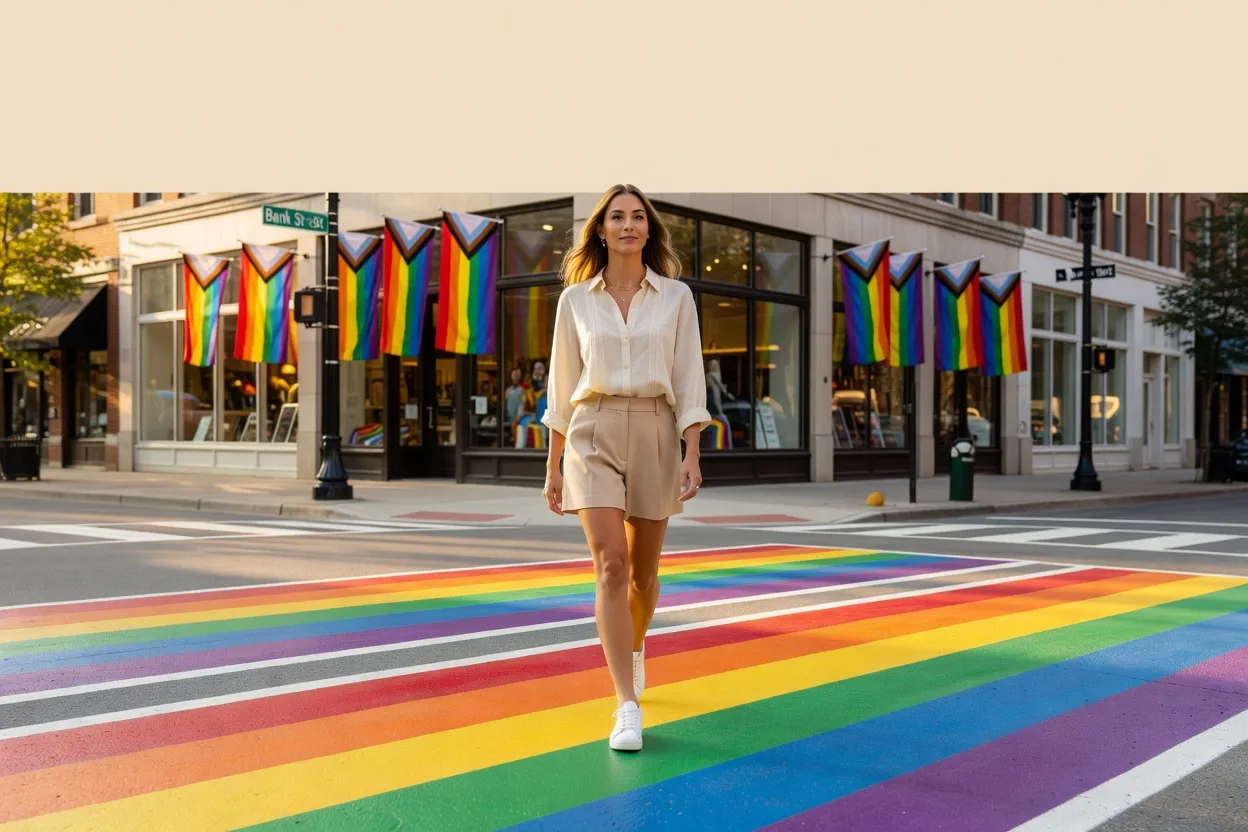
The area was formally recognised with rainbow street signage installed along Bank Street in 2011, following advocacy tied to the Village Legacy Project. A rainbow crosswalk was added at the intersection of Bank and Somerset in 2016, and it now functions as the most-photographed marker of the district. Independent, queer-owned and queer-friendly retail sits alongside the district’s bars: Bridgehead Coffee, a lesbian-owned chain with a location in the Village, is one of the more consistently cited daytime stops in current guides.
| District marker | What it is | Why it matters for visitors |
|---|---|---|
| Bank St. rainbow signage | Installed 2011, Bank St. corridor | Marks the district boundary on foot |
| Rainbow crosswalk | Bank & Somerset intersection, added 2016 | The most photographed landmark in the Village |
| Bridgehead Coffee (Village location) | Lesbian-owned coffee chain | Daytime meeting spot, consistently recommended |
| Village Legacy Project | Bank Street BIA initiative | Self-guided walking tour of queer history sites |
Unlike Montreal’s Gay Village, which runs for roughly a kilometre and closes to traffic each summer, Ottawa’s district stays open to vehicles year-round and reads more like a mixed residential-commercial strip than a dedicated entertainment zone. That’s not a weakness — it means the Village is lived-in daily rather than activated only on weekends, and daytime visitors will find it as functional as evening ones.
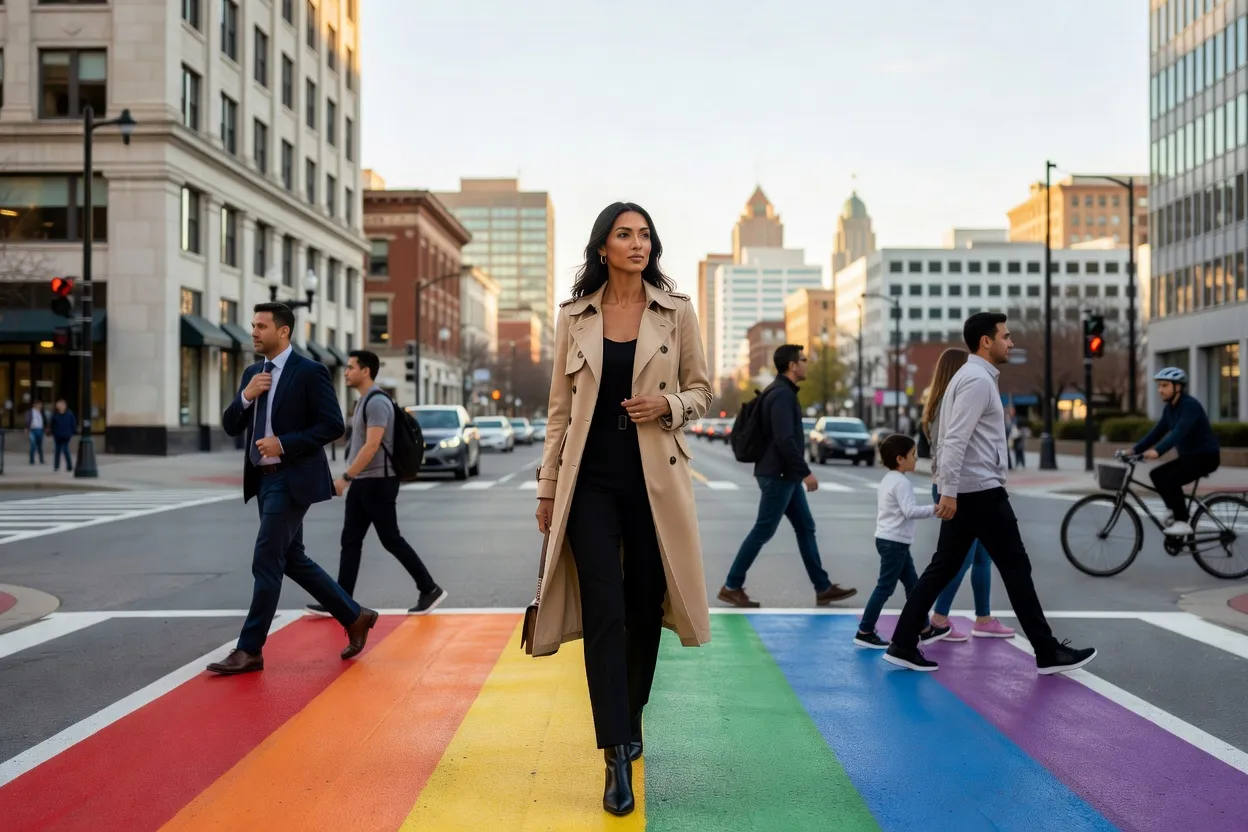
Good to know: the Village doesn’t shut down outside Pride week – Bank Street’s rainbow signage, the crosswalk at Bank and Somerset, and the core bars operate year-round, so a quiet-season visit still delivers the full district experience.
Capital Pride 2026: what to expect
Capital Pride 2026 runs from August 22 to August 30, a nine-day festival window that’s longer than many North American Pride events, which tend to compress into a single weekend. The street festival itself takes over Bank Street on August 29 and 30, from noon to 8 p.m., and the Pride Parade is scheduled for August 30 at 1 p.m. These are the dates and times published by Capital Pride’s own event calendar as of this writing — confirm the final route and any last-minute programming changes on capitalpride.ca in the weeks immediately before the festival, since street closures and stage locations are typically finalised closer to the date.
Compared to Toronto Pride, which draws a much larger crowd and runs a wider network of satellite events across the city, Capital Pride is a more contained, walkable affair. Expect the street festival to concentrate almost entirely within the Bank Street Village footprint described above, which means hotel bookings in Centretown fill up fastest for the final weekend — book well ahead if the parade weekend is your target date.
A few practical notes that don’t always make it into festival marketing:
- Ottawa in late August runs warm and humid; the street festival has limited shade along most of the Bank Street closure.
- Public transit (OC Transpo) typically adjusts routes around the parade route on the Saturday; check the transit authority’s service alerts the week of the event rather than assuming normal routing.
- The parade route in past years has started near the Village and moved toward downtown government buildings — a symbolic route given the 1971 Parliament Hill protest history below.
Bars, nightlife and where to eat
Three venues form the backbone of Ottawa’s queer nightlife, and current listings and community reports consistently name the same three:
- The Lookout Bar, 41 York Street in the ByWard Market — widely described as Ottawa’s most established LGBTQ+ bar, running drag shows, dancing and karaoke nights on a rotating schedule.
- Swizzles, 246B Queen Street — a bias-free, all-welcoming bar known for drag, karaoke and trivia nights, closer to the Centretown core than the ByWard Market.
- T’s Pub, 323 Somerset Street West — one of the few remaining dedicated queer/bias-free pubs in the city, sitting right in the Village footprint.
Notice that The Lookout Bar sits outside the Village proper, in the ByWard Market a short walk or cab ride away — a useful thing to know if you’re planning a single-district evening versus a two-stop night that also takes in the Market’s restaurant scene. Beyond these three, venues like Babylon Nightclub on Bank Street and Mercury Lounge in the ByWard Market attract a mixed but queer-popular crowd, particularly on themed nights, though they don’t carry the same explicit LGBTQ+ branding as the core three.
For hotels, current sourcing is thinner than for bars — ARC THE.HOTEL OTTAWA is the clearest gay-friendly boutique option that comes up in current travel guides, and broader guidance points to the Centretown/Village area generally as the most comfortable base, without a single authoritative ranked shortlist. Booking a hotel within walking distance of Bank Street solves most of the practical planning question regardless of a specific brand recommendation.
History you can walk through
Ottawa’s queer history has a genuine national significance that’s easy to miss if you only think of the city as a modern Pride destination. On August 28, 1971, the We Demand demonstration took place on Parliament Hill — widely documented as the first organised public protest for gay and lesbian rights in Canada, predating Toronto’s first Pride events by several years. It’s a striking detail for visitors already planning to see Parliament Hill for its architecture and Changing of the Guard ceremony: the same lawn carries this earlier civic history too.
The Human Rights Monument on Elgin Street is the city’s central site of public remembrance for discrimination and activism, and it hosted Ottawa’s first Transgender Day of Remembrance vigil in 2003. Several other milestones trace the community’s development through the late twentieth century:
- 1986 — Ottawa’s first Pride event, a modest gathering in Strathcona Park.
- 1988 — Bruce House founded, providing support services during the AIDS crisis.
- 1989 — the killing of Alain Brosseau becomes a turning point in Ottawa’s hate-crime awareness and community-police coordination.
- 2003 — the city’s first legally recognised same-sex marriage.
- 2011 — Bank Street rainbow signage formally installed.
- 2016 — the rainbow crosswalk added at Bank and Somerset.
The Bank Street BIA’s Village Legacy Project turns this timeline into something you can actually walk: a self-guided tour connecting the Village’s key sites, people and events, developed with interpretive materials rather than just a plaque or two. It’s free, takes roughly an hour at an unhurried pace, and works well as a quiet daytime complement to an evening in the Village’s bars.
Where to stay and practical safety notes
Base yourself in Centretown or the ByWard Market if the Village and its nightlife are the priority — both put you within a fifteen-to-twenty-minute walk of the core venues listed above, and both sit close to Parliament Hill and the Rideau Canal for daytime sightseeing between Pride events or history stops.
On safety: Ottawa Tourism’s own messaging is candid that the city’s welcome, while real, isn’t absolute or uniform — a more honest position than blanket reassurance. Practical, unglamorous advice holds here as in most cities: the Village and downtown tourist core are consistently described as comfortable, visibility can vary more in less central neighbourhoods after dark, and checking current community guidance (Kind Space’s resources, or recent threads on r/ottawa and r/transontario) closer to your travel dates is worth the ten minutes it takes, since on-the-ground sentiment shifts faster than official tourism copy does.
Beyond the Village: year-round community
Pride week is the highest-visibility moment on the calendar, but Ottawa’s queer community infrastructure runs year-round. Kind Space operates as a dedicated 2SLGBTQ+ community centre with regular programming outside festival season. The Village Legacy Project’s walking tour is available any time of year, not just during Pride. And Ottawa Tourism runs periodic Queer History of Ottawa guided tours, distinct from the self-guided BIA route, for visitors who prefer a scheduled group experience over a solo walk.
For a first visit, a realistic two-day plan looks like: one afternoon on the Village Legacy Project walking route plus Parliament Hill’s 1971 protest site, one evening split between two of the three core bars, and — if timed to late August — the Capital Pride street festival and parade as the anchor event. Outside of Pride week, the same Village geography and history sites work just as well as a quieter, less crowded visit; nothing described here is Pride-exclusive except the festival itself.
For visitors who want a broader, community-run resource beyond tourism-board content, national organisations such as the Coalition des gais et lesbiennes du Québec publish ongoing advocacy and community information relevant to LGBTQ+ travel across Canada, including Ontario-Quebec border considerations for visitors combining an Ottawa trip with Gatineau or Montreal.
Getting around the Village without a car
Ottawa’s compact downtown works in a visitor’s favour here. The Village sits close enough to the Rideau O-Train station and the ByWard Market that a car is unnecessary for a Village-focused visit — most first-time visitors underestimate how walkable the core actually is compared to a sprawled North American downtown. OC Transpo’s O-Train Line 1 stops at Rideau, roughly a ten-minute walk from the Bank Street corridor, and the bus network’s Confederation Line connects further-out neighbourhoods like Westboro and the Glebe, both of which have their own smaller, quieter queer-friendly cafés and shops that don’t make the standard bar-crawl lists.
Combining a Village visit with the rest of a standard Ottawa itinerary is straightforward given the short distances involved. Parliament Hill, the National Gallery of Canada and the Rideau Canal are all within a twenty-minute walk of Bank Street, which means the 1971 protest history described above sits on the same walking route as the more conventional postcard sights — worth building into a single afternoon rather than treating queer history as a separate, bolt-on stop.
One more practical point worth flagging: Ottawa’s climate swings hard between seasons, and it changes what a Village visit looks like. Summer (June through August, overlapping with Pride) means the street festival and patio season along Bank Street; winter turns the same strip quieter and pushes activity indoors into the bars themselves, with the Rideau Canal Skateway offering an unrelated but popular cold-weather activity within walking distance for visitors extending their stay beyond the Village.
Frequently asked
Ottawa Tourism and Destination Canada both describe the city as welcoming, and the core tourist districts and the Village around Bank Street are presented as openly LGBTQ+-friendly in current travel guidance. As in any city, comfort can vary by neighbourhood and time of night, and community members on forums such as r/ottawa note the same nuance — the Village and downtown core are the most consistently comfortable areas after dark.
Capital Pride 2026 runs from August 22 to August 30. The street festival takes over Bank Street on August 29 and 30 from noon to 8 p.m., and the Pride Parade is scheduled for August 30 at 1 p.m. Confirm final routes and hours on capitalpride.ca closer to the date, since street closures and programming are finalised in the weeks before the festival.
Ottawa's Village is centred on Bank Street, roughly between Nepean and James streets, with Somerset Street West as a secondary hub. The area was formally marked with rainbow street signage in 2011 and a rainbow crosswalk was added at Bank and Somerset in 2016, making it easy to spot on foot.
The three most consistently cited LGBTQ+-friendly venues are The Lookout Bar at 41 York Street in the ByWard Market, Swizzles at 246B Queen Street, and T's Pub at 323 Somerset Street West. All three host regular drag, karaoke or trivia nights; check each venue's current schedule before visiting since programming rotates.
Yes. Parliament Hill was the site of the 1971 We Demand protest, Canada's first organised public demonstration for gay and lesbian rights. The Human Rights Monument on Elgin Street hosted Ottawa's first Transgender Day of Remembrance vigil in 2003. The Bank Street BIA's Village Legacy Project runs a self-guided walking tour connecting these and other sites — it's a free, well-documented way to see the history in a single afternoon.