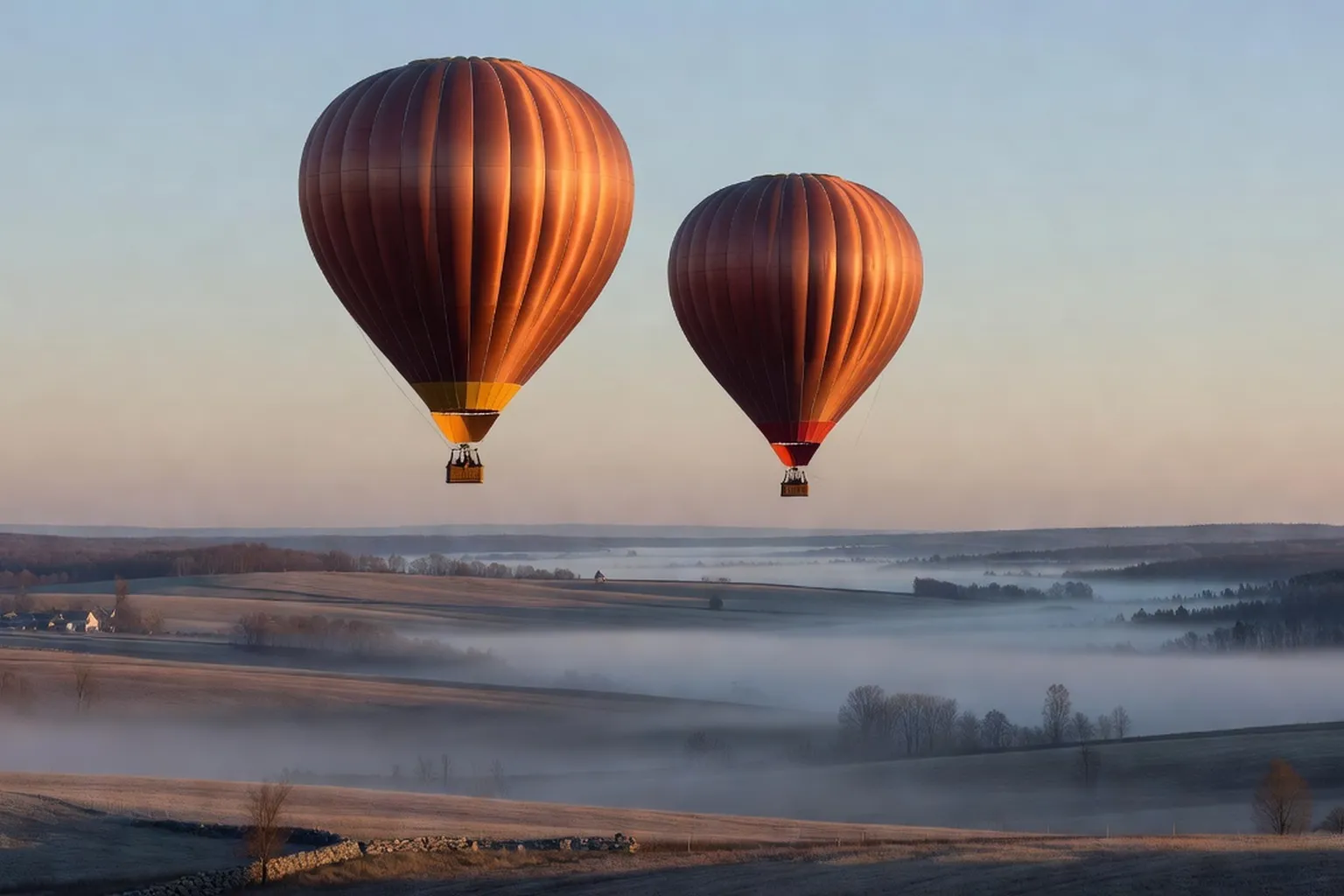
The Ottawa Valley presents itself most clearly in the first light of day, when low mist clings to the surface of the Ottawa River and the surrounding fields show the geometry of their drainage ditches. The air carries the scent of damp soil and cut hay, while the distant line of the Gatineau Hills remains sharp against a sky that shifts from slate to pale blue. Sound travels far in these conditions: the low hum of traffic on the Queensway mixes with the calls of red-winged blackbirds along the shore.
Balloon flights make this landscape accessible from above without the intrusion of engine noise. Passengers stand in the basket at roughly the same height as the tree canopy at launch and rise gradually into calmer air layers. The experience depends on careful preparation by licensed operators, suitable launch fields, and seasonal weather patterns that limit safe operations to a shoulder-season-through-summer window.
Operators and launch sites
Ballooning near Ottawa is run by a small number of licensed commercial operators rather than a large market, and the roster of who is actively taking passenger bookings changes from year to year. As of this writing, Sundance Balloons advertises passenger flights in the Ottawa area, and other regional operators serving eastern Ontario also periodically list Ottawa-area flights. Always verify directly on the operator’s own site that they are currently booking public passenger flights — some companies that appear in older articles or directories are chartered, seasonal-only, or no longer flying the public, and we do not repeat unverified operator names here.
Both current and seasonal operators typically fly small groups per basket, with a ground crew following by vehicle to recover the balloon after landing. Advance booking is required for essentially all operators, and same-day bookings are rare because final go/no-go decisions depend on a wind and weather check made close to departure time.
Launch sites are chosen on the morning or evening of the flight based on wind direction and surface conditions, typically on private agricultural land arranged in advance with the landowner. Passengers should expect to arrive at least 30 minutes before the scheduled departure for a safety briefing and to help with basket setup.
Those planning day trips from Ottawa should ask their chosen operator whether transport from downtown hotels is available — some do offer this as an add-on, but it is not universal, so confirm before assuming it is included.
Before you go: same-day bookings are rarely accepted, since final weather confirmation typically happens close to departure — reserve at least several days ahead and expect the possibility of a weather-driven reschedule, which is standard practice across the industry, not a sign of a disorganized operator.
Dawn versus sunset flights
Morning departures begin very early, timed to launch close to sunrise when winds are calmest and the air is most stable — a pattern common to hot air ballooning everywhere, not specific to the Ottawa Valley. Evening flights launch a few hours before sunset, once the day’s thermal turbulence has settled. Both windows are chosen because mid-day heating typically produces winds too strong or too erratic for safe ballooning.
Passengers on dawn flights should expect cooler air, even in summer, and should dress in layers regardless of season. Evening flights trade the cooler temperatures for occasional late-day cloud that can affect scheduling. Either way, build a buffer into your morning or evening plans, since flights can be postponed or rescheduled on short notice if conditions are not right at departure time.
- Dress in layers regardless of which flight you book
- Confirm your exact meeting time the night before — it shifts with sunrise and sunset dates through the season
- Expect the possibility of a short delay or reschedule if wind conditions are marginal at the planned departure time
The spring-to-fall weather window
Ballooning near Ottawa runs roughly from spring through fall, when average winds are calm enough at dawn and dusk to permit safe flight; winter is generally excluded because of higher and less predictable winds along with cold-weather operational constraints. Exact season start and end dates vary by operator and by year — check directly with the company you are booking rather than assuming a fixed calendar.
Weather cancellation is a normal and expected part of booking a balloon flight anywhere, not just in the Ottawa Valley: wind, low visibility, or approaching weather systems can all trigger a delay or reschedule with little notice. Operators build this into their booking and refund policies, so read the cancellation terms before you pay, and build flexibility into your itinerary if a balloon ride is the centrepiece of your visit.
Fall flights add the additional appeal of autumn colour across the valley floor, echoing the seasonal draw covered in our Gatineau Park fall foliage guide — but fall also tends to bring more variable weather, so build in a spare morning if the foliage view is the main reason for the trip.
What the flight is actually like
A typical hot air balloon flight begins before dawn or a few hours before sunset at a launch field outside the city, arranged by the operator based on wind conditions that day. Ground crew unroll the envelope, a fan fills it with cold air, and the burner is fired in controlled bursts until the balloon stands upright and the basket can be boarded.
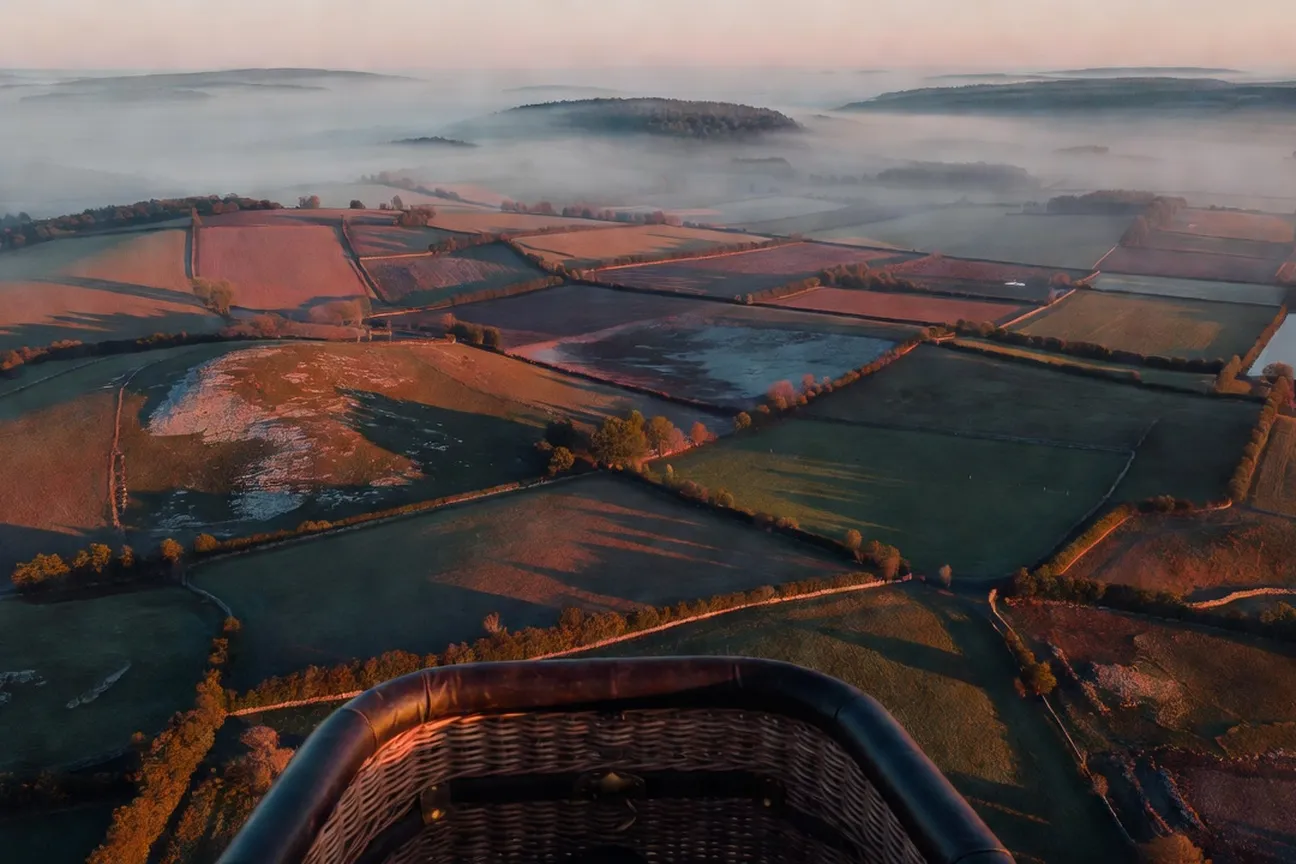
Boarding happens with the basket tipped on its side; passengers step over the rim and brace until the pilot signals for the burner to lift off. The initial ascent is close to silent apart from occasional burner bursts. From altitude, expect wide views over farmland, forest and waterways, with the Gatineau Hills visible on a clear day — a slower, ground-level version of similar terrain is covered in our Rideau River cruise guide.
Descent involves a series of controlled burns to lose height gradually, and passengers are briefed on the landing position before touchdown. A chase vehicle typically meets the balloon at the landing field, and most operators mark the end of the flight with a small celebratory gesture — confirm with your operator what, if anything, is included. Plan to be back in the city with time to spare for breakfast or other morning plans, many of which are listed under things to do in Ottawa.
Booking, pricing and gift packages
Pricing for a standard flight, private charters, and any gift packages varies by operator and season — always check current rates on the operator’s own booking page rather than relying on older third-party listings, which are frequently out of date. Most operators require full or partial payment at booking, with a weather-based cancellation or reschedule policy rather than a simple no-refund rule; read this policy carefully before paying, especially if the flight is a gift for a specific date.
Gift certificates for a future flight are commonly available and are a practical option when the exact flying date can’t be pinned down in advance — the recipient books their own slot once weather allows. Group and corporate bookings may be available through some operators; ask directly, since this is not standardized across the industry.
Further details on seasonal planning appear in the seasonal guide. Additional information for francophone travellers can be found at voyage-canada.com.
Heads up: minimum age, weight limits, and health restrictions vary by operator — confirm these directly before buying a flight or gift package, particularly for children or larger groups.
Photographing from the basket
Cameras and phones are generally permitted throughout the flight, though most operators ask that straps stay around your wrist to prevent a drop during landing. Morning or evening light — the same conditions that make these windows good for flying — also tend to produce the most flattering light for photography, with long shadows that pick out field patterns and river bends. A mid-range zoom lens covers both wide valley views and closer details as the balloon passes over farmsteads or waterways.
Tripods are impractical inside a basket; resting elbows on the padded rim is the more workable approach. Because the balloon envelope blocks much of the sky overhead, most usable images look outward or slightly downward rather than up. Charge batteries and clear memory cards the night before, since there is no opportunity to do so once the flight begins.
Visitors who combine the balloon ride with day trips from Ottawa often schedule a second morning on the ground to revisit the same landscape from a different vantage point.
The Ottawa Valley balloon experience fits naturally into a broader pattern of seasonal travel through the region, from spring green-up through summer haze to autumn colour — each offering a different look at the same fields and waterways below.
Frequently asked
Operators generally fly from spring through fall, weather permitting, since stable low-wind conditions are required for a safe launch. Flights are typically scheduled for early morning or early evening, when winds are calmest. Confirm exact seasonal dates with the operator you book, since conditions vary year to year.
Pricing varies by operator, flight length, and whether you book a shared or private basket. Check current pricing directly on the operator's official site before budgeting, since rates change between seasons and are not standardized across companies.
The flight itself usually runs under two hours, but plan for a longer outing overall — check-in, a safety briefing, the flight, and the post-flight wrap-up (often including a small landing toast) can add up to a half-day commitment.
Dress in layers and wear comfortable, closed-toe shoes suitable for walking through a field, since you may cross uneven or wet ground at both the launch and landing sites. Mornings can be cool even in summer.
Most operators set a minimum age and a requirement that passengers can stand for the flight duration; policies vary by company, so confirm directly with your chosen operator before booking, especially for children, pregnant travellers, or anyone with a heart condition or mobility limitation.