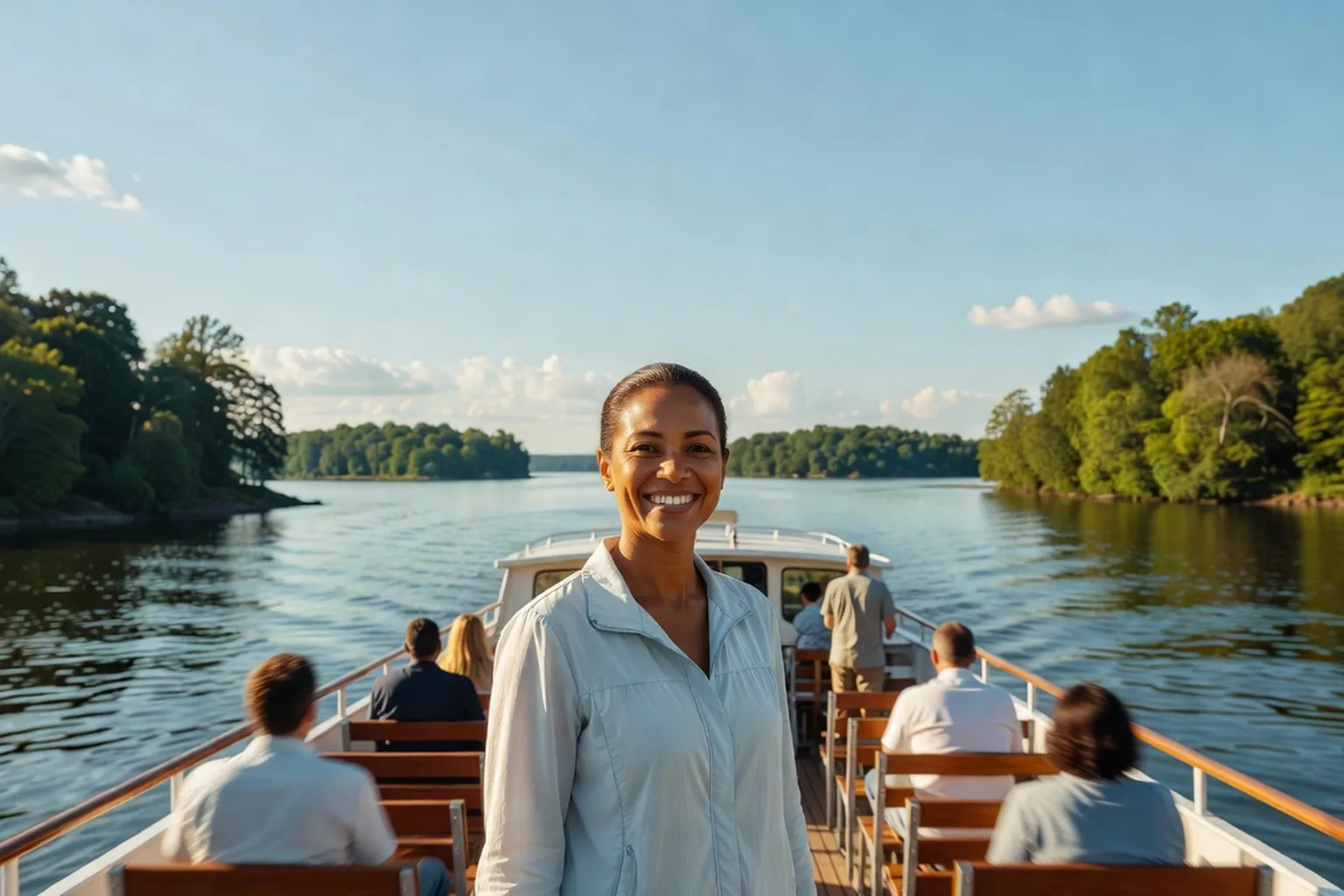
The Thousand Islands region of the St. Lawrence River is one of the best day trips from Ottawa: a one-hour-plus sightseeing cruise among 1,864 forested islands, a fairy-tale castle on the water, and a waterfront theatre town, all reachable in about 90 minutes by car. This guide covers where to board, what the cruises cost, the Boldt Castle border question, and how to structure a realistic one-day visit. If you are comparing regional escapes, our pillar on day trips from Ottawa places the islands alongside the other excursions worth considering.
How Far Are the Thousand Islands from Ottawa
The island chain stretches for roughly 80 km along the St. Lawrence River between eastern Ontario and northern New York State. The region is closer to Ottawa than most visitors assume: the town of Gananoque, the classic cruise base, lies about 130 km south of downtown and takes roughly 90 minutes to two hours to reach by car via Highway 416 and Highway 401. Kingston, the other Canadian cruise hub, is about two hours west of Ottawa.
The journey is an easy one by Canadian standards, but it is still a genuine drive, not a hop. That has practical consequences for a day trip. You will want to leave Ottawa by mid-morning at the latest, book a cruise with a fixed departure time rather than drifting into town and hoping for space, and accept that this is a full-day commitment from breakfast to dinner. Travellers deciding whether to rent a vehicle for their stay should read our companion piece on getting around Ottawa with and without a car: the Thousand Islands is precisely the kind of excursion that argues for having one.
A few orientation points help the region make sense before you arrive:
- Gananoque sits almost in the middle of the Canadian island chain and has the largest concentration of cruise operators.
- Ivy Lea, a small waterfront community a short drive east of Gananoque, is where the popular short one-hour and two-hour City Cruises depart.
- Rockport, farther east near the edge of the archipelago, is a smaller, quieter departure point listed by Parks Canada as a gateway to Thousand Islands National Park.
- Kingston, at the western end of the region, combines cruising with a full historic city on the Lake Ontario shore.
Choosing Where to Board Your Cruise
The single most important decision in planning a Thousand Islands day trip is where you board. Each departure point offers a different balance of driving time, scenery and cruise length. Parks Canada, which administers the scattered islands of Thousand Islands National Park, lists Canadian operators by location, including 1000 Islands & Seaway Cruises in Brockville and Rockport Cruises in Rockport, alongside the large City Cruises Gananoque operation.
The practical comparison looks like this:
| Departure point | Drive from Ottawa | Typical cruise options | Published price signal |
|---|---|---|---|
| Ivy Lea (City Cruises port) | About 1 h 40 | 1-hour and 2-hour sightseeing cruises past Boldt Castle views | 2025 listings showed roughly CA$35 for one hour and CA$45 for two |
| Gananoque (City Cruises) | About 1 h 30 | 1-hour to 3-hour cruises; the 3-hour sailing views Boldt Castle up close | Around CA$50 published for the 3-hour cruise in 2025 |
| Rockport (Rockport Cruises) | About 2 h | Smaller-boat cruises toward the national park islands | Varies by operator and season |
| Kingston (Kingston 1000 Islands Cruises, 248 Ontario St.) | About 2 h | Sightseeing and dining cruises on the St. Lawrence and Lake Ontario | Varies by cruise type |
Treat the prices above as planning benchmarks rather than quotes. They reflect 2025 published listings from tourism and operator pages, and both schedules and fares change season to season. The reliable habit is to check the operator’s official site shortly before your trip.
For most Ottawa visitors, the Gananoque or Ivy Lea options win on driving time and choice. The one-hour Ivy Lea cruise is the easiest fit inside a packed day; the two-hour version earns consistently better reviews for reaching more of the island scenery; and the three-hour Gananoque sailing is the one that properly enters the heart of the chain and circles Boldt Castle.
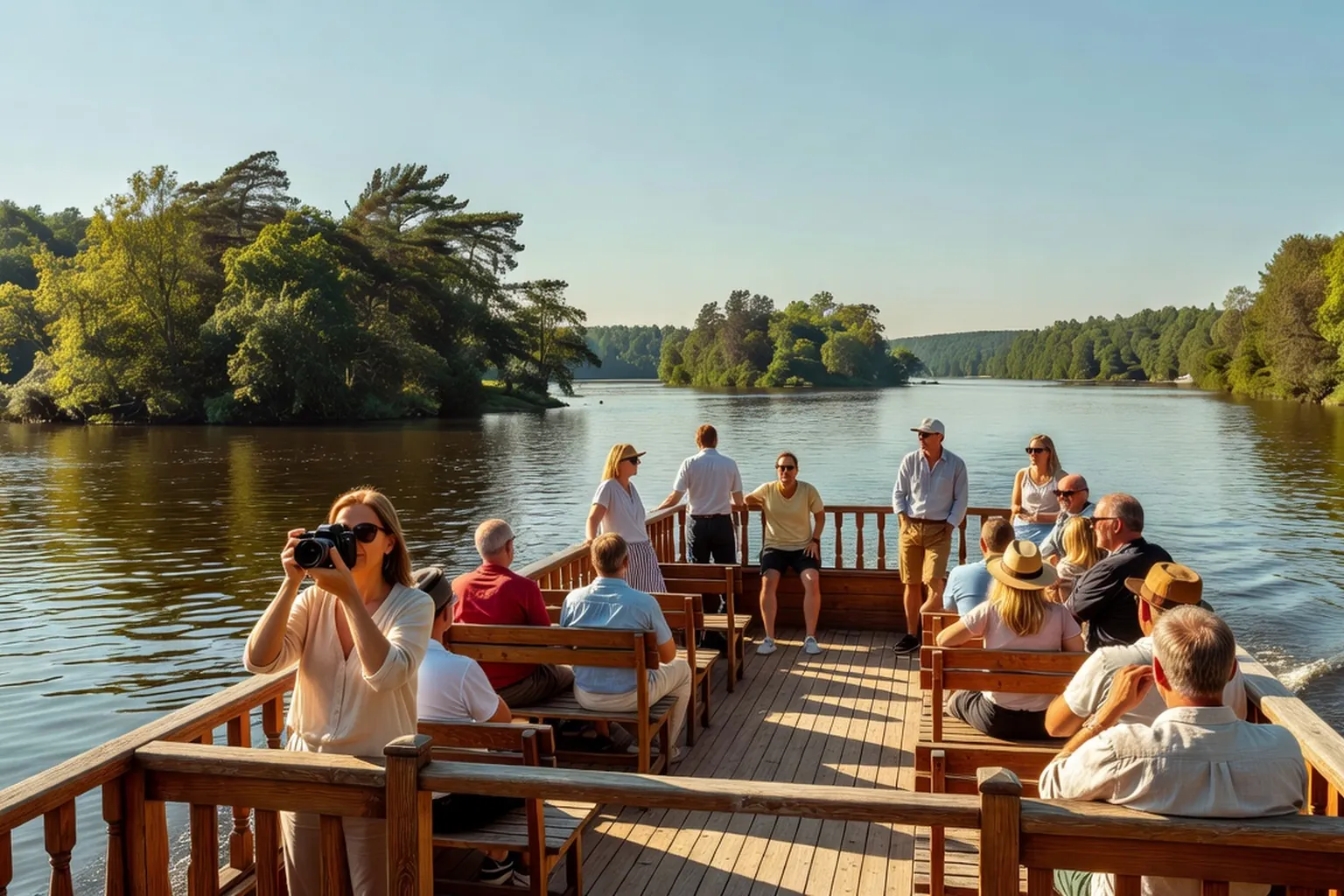
How the cruises differ in feel
The big Gananoque boats are stable, narrated and family-friendly, with enclosed lower decks for questionable weather. Rockport’s smaller vessels get closer to the shoreline and the national park islands, which suits photographers and birders. Kingston cruises fold the islands into a broader water itinerary that includes the historic harbour and, on some sailings, views of Fort Henry. There is no universally best option, only the one that matches your driving tolerance and how much of the day you want on the water.
Boldt Castle and the Border Question
Boldt Castle is the region’s marquee sight: a six-storey Rhineland-style mansion begun in 1900 by hotel millionaire George C. Boldt on Heart Island, then left half-finished for decades after his wife’s death and finally completed as a visitor attraction. Its towers rise directly from the water, which is why nearly every cruise route is drawn toward it.
Here is the point that surprises many first-time visitors: Boldt Castle is in the United States. Heart Island is American territory, even though most of the sightseeing fleet sails from Canadian ports. That creates two distinct ways to experience the castle:
- View it from the water. The standard Canadian sightseeing cruises pass Heart Island at close range without anyone leaving the boat. No passport is involved and no border is crossed.
- Land and tour it. Some cruises and shuttle boats offer the option to disembark on Heart Island for a self-guided tour of the castle and grounds. This means entering the United States: you need a valid passport, you clear US Customs and Border Protection on the island, and you must also satisfy US entry rules for your nationality.
If you are an international visitor whose Canadian visa or status does not cover the United States, the landing option may simply not be available to you, whatever the cruise brochure says. Check your own eligibility before booking anything involving a stop on Heart Island, and confirm with the operator whether a given sailing actually lands or only passes.
Even without landing, the castle views from the water justify the trip. The building’s scale, its suspension bridge to a small neighbouring island, and the improbability of a full-sized castle on a private island make it the single most photographed subject in the region.
The 1000 Islands Tower and the River Parkway
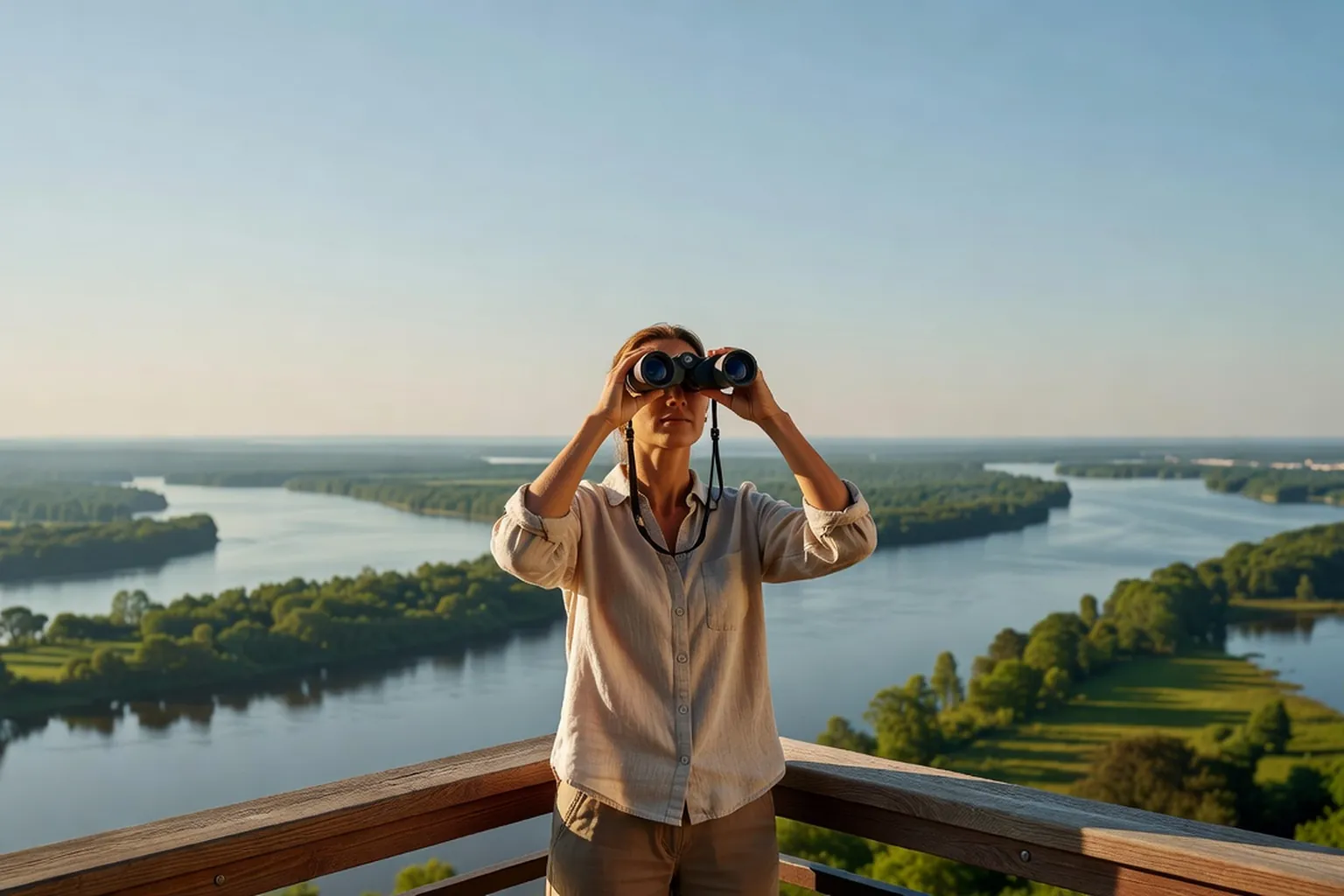
If you would rather see the archipelago from above than from the deck, the 1000 Islands Tower on Hill Island is the established viewpoint. The tower, formerly known as the 1000 Islands Skydeck, rises about 120 metres above the river and offers three observation decks; its elevator reaches the top in roughly 40 seconds. It stands beside the spans of the 1000 Islands International Bridge, and reaching it involves crossing that toll bridge from the mainland.
The panorama explains the region better than any map. From the top deck you can see the islands scatter across the St. Lawrence in every direction, trace the shipping channel, pick out Boldt Castle, and watch the international boundary run improbably through cottages, docks and a single island here and there. It is the ideal complement to a morning cruise: water-level scale first, aerial geography second.
Allow half an hour to an hour for the tower itself, plus driving time. Note that access is seasonal, and because it sits on the bridge route toward the United States, keep identification handy even for a quick visit. The riverfront stretch of the Thousand Islands Parkway between Gananoque and the bridge area is also worth the drive itself, with picnic spots and short walking trails along the water.
Gananoque Beyond the Boat
Gananoque rewards travellers who stay past the final sailing. The compact downtown climbs up from the river with independent shops, cafés and patios, and the waterfront promenade is an easy stroll between the boat docks and the town beach. It is a low-key place, more cottage country than resort, and that is precisely its charm after a few days in the capital.
Two additions stand out. The first is the 1000 Islands Playhouse, a professional summer theatre housed in a converted boathouse-style venue on the waterfront; its 2026 season announced by regional tourism included crowd-pleasers such as Jersey Boys, The 39 Steps and Murder for Two. An evening show turns the day trip into a genuinely full day. The second is simply dinner: several waterfront restaurants in town handle the local specialty, river-caught perch and pickerel, and a table with a view of the boats coming in is the right way to end the excursion.
French-speaking readers planning a wider Ontario circuit can pair the islands with the French-language guide to Ontario travel on our sister publication, which covers the province beyond the capital region.
A Realistic Day Trip Itinerary from Ottawa
The failure mode of this excursion is underestimating the clock: the drive, the cruise schedule and meal times stack up quickly. A workable summer day looks like this:
- 8:30 a.m. Leave Ottawa. Stop in Smiths Falls or Merrickville if you want a coffee break; Merrickville’s main street of craft shops is a pleasant 20-minute detour and pairs naturally with the route home.
- 10:30 a.m. Arrive in Gananoque or at the Ivy Lea port. Collect tickets, walk the waterfront and board a late-morning cruise.
- 11:00 a.m. to 1:00 p.m. Cruise. Choose the two-hour sailing if you want the best scenery-to-time ratio; the three-hour sailing if Boldt Castle up close is the point of the trip.
- 1:15 p.m. Lunch in Gananoque, or a picnic on the riverfront if the weather cooperates.
- 2:45 p.m. Drive to the 1000 Islands Tower for the aerial view, or skip the tower and explore the Parkway trails instead.
- 4:30 p.m. Coffee or early dinner in town, or depart for Ottawa.
- 6:30 p.m. Back in Ottawa with time for an evening along the canal.
This is deliberately structured like the other classic one-day loops from the capital, such as the Wakefield covered-bridge village trip or the Château Montebello excursion: one anchor activity, one secondary stop, and no attempt to cram in everything.
Families with young children can compress the day further: a one-hour Ivy Lea cruise, lunch in Gananoque, an hour on the town beach, and home by mid-afternoon. Travellers without a car face a harder proposition. There is no simple direct public transit from Ottawa to the cruise docks for a day return, so consider an organized excursion from the capital if driving is not an option.
Season, Budget and Booking Tips
The cruise season generally runs from spring through fall, peaking from late June to Labour Day. July and August bring the most departures, the fullest decks and the highest accommodation prices in Gananoque. Early fall, from mid-September to Canadian Thanksgiving in mid-October, is the connoisseur’s choice: the hardwood shoreline turns colour, the heat drops out of the day, and the boats are less packed. Schedules thin sharply after Thanksgiving, and some operators close for the season entirely.
A sensible per-person budget, excluding gas, looks like this: CA$35 to CA$50 for the cruise itself based on 2025 published prices, CA$15 to CA$30 for lunch, and an optional CA$15 or so for the tower. Confirm every figure on official sites before travel, as fares and opening dates change.
Booking tip: Summer weekend sailings out of Gananoque and Ivy Lea can sell out, especially the midday departures. Reserve online a few days ahead for weekend trips between late June and August, and check in at the dock at least 30 minutes before departure. Weekday and shoulder-season visitors can usually book with much less lead time.
Three final habits make the day smoother. Dress a layer warmer than the Ottawa forecast suggests, because the river is always windier than the city. Bring sun protection for the open upper deck. And plan the drive home before dinner: Highway 401 traffic toward Ottawa thickens on Sunday afternoons and holiday evenings, and the return leg is the part of this otherwise easy day trip most likely to run long.
Frequently asked
Gananoque, the most popular cruise base, is roughly 90 minutes to two hours by car from downtown Ottawa, depending on the route and traffic. Kingston, which also offers cruises, sits farther west at about two hours. There is no practical direct public transit link for a day trip, so this excursion works best with a car.
For a sightseeing cruise that stays on the water, no. Cruises that simply pass Boldt Castle never enter the United States, so Canadian visitors do not cross the border. If your itinerary includes landing at Boldt Castle on Heart Island, which is American territory, you must carry a valid passport and clear US Customs and Border Protection. Confirm the landing rules with the operator when booking.
Gananoque is usually the better choice: it is closer to Ottawa, it sits at the scenic heart of the island chain, and it offers the broadest choice of cruise lengths, including short one-hour sailings from the Ivy Lea port. Kingston suits travellers who want to combine the cruise with a historic city visit, its waterfront and Fort Henry, and who do not mind the longer drive.
Published 2025 prices ranged from about CA$35 for a one-hour cruise out of Ivy Lea to roughly CA$45 for two hours and about CA$50 for the three-hour Gananoque sailing that views Boldt Castle. Prices change season to season, so treat these figures as a planning benchmark and confirm current rates and schedules on the operators' official websites before your trip.
The main cruise season runs from spring through fall, with summer offering the most frequent departures and the liveliest waterfront atmosphere. Early fall is a strong alternative: the water is still navigable, summer crowds thin out, and the shoreline hardwoods turn colour. Some operators reduce their schedules sharply after Canadian Thanksgiving in October.