In Ottawa, the early morning light catches on the frozen surface of the Rideau Canal, where skaters move in slow circles beneath the bare branches of maples. The air carries the faint scent of woodsmoke from nearby chimneys, and the distant hum of traffic along Wellington Street blends with the call of crows overhead. By mid-morning the Parliament buildings stand clear against a pale sky, their stone surfaces still holding the overnight chill.
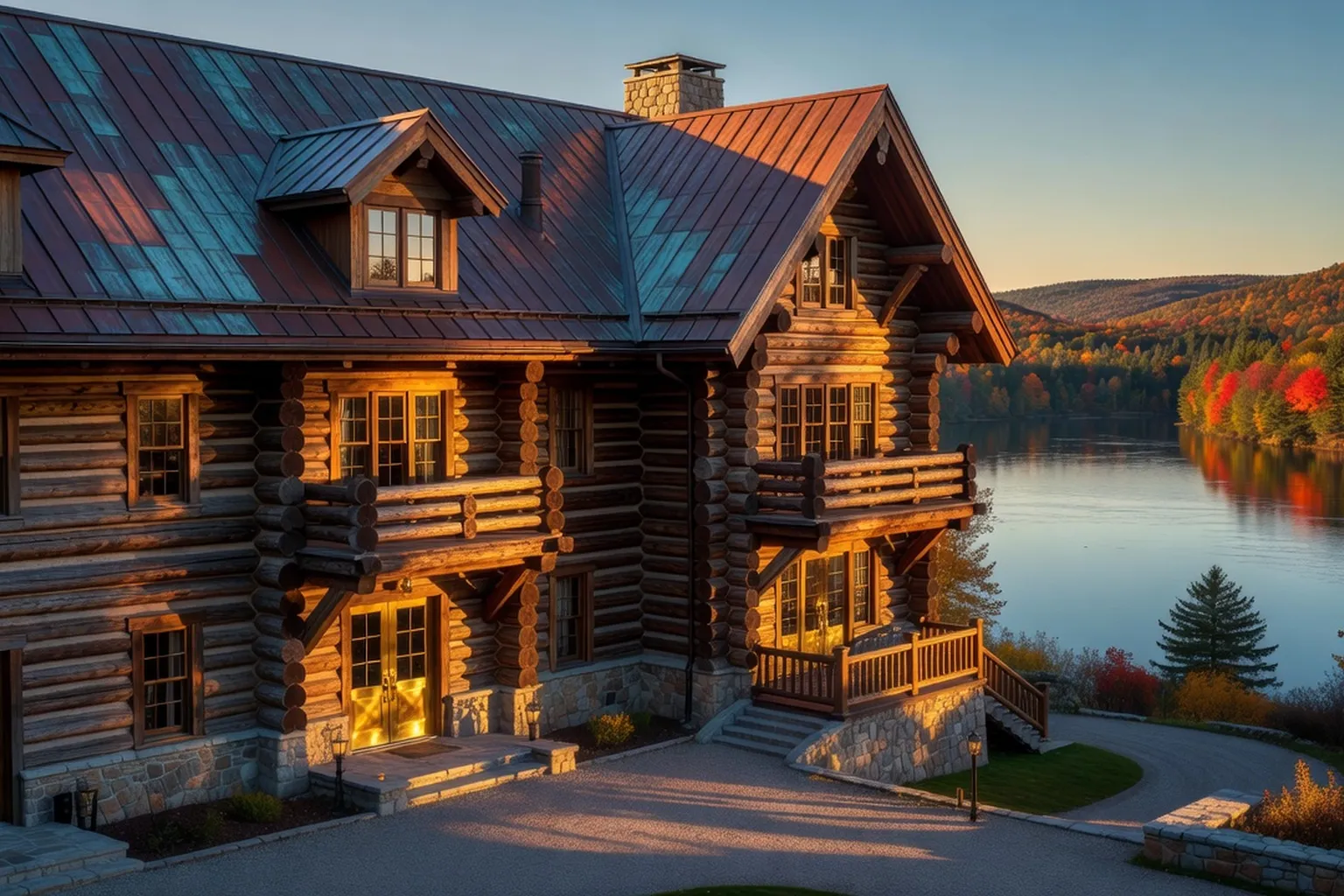
This setting makes clear why many residents seek short excursions beyond the city limits. The Chateau Montebello stands roughly 85 kilometres east, reachable in under two hours by car under normal conditions. Built in 1930 as a private retreat for railway executives, the structure remains one of the largest log buildings in the world, its cedar logs joined with traditional dovetail notches and set on a stone foundation above the Ottawa River. Visitors who arrive on a weekday outside peak summer months will find the surrounding grounds quiet enough to observe the original layout without crowds.
Why the Chateau Montebello earns the drive
The decision to travel to the Chateau Montebello rests on its preserved scale and documented history rather than any single feature. The main building measures 75 metres in length and contains more than 200 rooms arranged around a central hexagonal lobby. Construction records show that 3,500 cedar logs were floated down the river and assembled in four months under the direction of engineer Henri C. L. de Martigny. The logs, each between 30 and 40 centimetres in diameter, were treated with creosote on the exterior faces only, leaving the interior surfaces exposed and darkened by decades of wood smoke from the central fireplaces.
The property occupies 105 hectares of mixed forest and open meadow that slope gently toward the river. Walking paths follow the original service roads built in 1930, passing stands of white pine and sugar maple that predate the hotel. In winter the same paths are groomed for cross-country skiing, with track widths set at 4 metres to accommodate both classic and skate techniques. Summer visitors can follow the shoreline trail for 2.8 kilometres before it meets a public boat launch maintained by the municipality of Montebello.
Rates for day access to the grounds and common areas begin at 25 CAD per adult when purchased at the front desk before 11 a.m.; this fee covers use of the outdoor terraces and the lower-level museum corridor but excludes guest-room floors. The museum corridor displays photographs dated 1930 showing the arrival of the first guests by private rail car on a siding that once extended directly to the rear of the building. A separate display case contains the original guest register from the opening weekend, listing 47 names, most of them senior officials of the Canadian Pacific Railway.
The building’s location on the north shore of the Ottawa River places it within the historical route used by voyageurs in the eighteenth century. Local records note that the site served briefly as a landing point for timber rafts before the land was purchased in 1929. This continuity of use explains why the surrounding forest still contains mature eastern hemlock and yellow birch, species that regenerate slowly after selective logging.
Travelers who combine the visit with other excursions will note that the Chateau Montebello lies on the same axis as several smaller villages along the river corridor. One such option appears among established day trips from Ottawa, where routes are listed by total driving time rather than by theme. The chateau itself does not require an overnight stay for a meaningful visit; the public areas remain open from 8 a.m. to 10 p.m. daily, with last entry to the museum corridor at 8 p.m.
Insider tip: Arrive before 11 a.m. to pay the lower 25 CAD day-access rate at the front desk — the fee covers the terraces and museum corridor, and later arrivals may face different pricing at busier periods.
| Detail | Figure |
|---|---|
| Distance from Ottawa | About 85 km, under two hours by car |
| Built | 1930 |
| Main building length | 75 metres, more than 200 rooms |
| Grounds | 105 hectares of mixed forest and meadow |
| Day-access rate (before 11 a.m.) | 25 CAD per adult |
| Public area hours | 8 a.m. to 10 p.m. daily |
| Museum corridor last entry | 8 p.m. |
The route - Highway 50 from Ottawa
Highway 50 begins at the eastern edge of Ottawa where it intersects Highway 417, the Queensway. The first 12 kilometres run through the suburb of Orleans, passing light-industrial zones before the road narrows to two lanes in each direction and the median changes from concrete barrier to grass. Speed limits remain posted at 100 kilometres per hour until the interchange with Highway 148, after which the limit drops to 90 for the remaining distance.
After crossing the Ottawa River on the Long-Sault Bridge, drivers enter Quebec and the road becomes Autoroute 50. The surface remains divided, with frequent wildlife-crossing signs for white-tailed deer. The first exit of note is at Masson-Angers, 22 kilometres from the bridge; beyond this point the highway passes through agricultural land planted mainly in soy and corn. In late September the fields show the pale yellow of mature stalks, and the air carries a faint dust from harvest activity.
At kilometre 48 the highway reaches the junction with Route 323. A left turn here leads directly into the village of Montebello after 4 kilometres. The road surface changes from asphalt to a mixture of asphalt and chip seal, with visible patches where winter frost heaves have been repaired. Parking at the chateau is provided in two lots: one for day visitors on the south side of the main building and one for overnight guests nearer the river. Both lots charge 8 CAD for the first four hours; payment is made at automated kiosks that accept credit cards and Canadian currency.
For a French-side cross-border perspective on Canadian travel, our partner site timetours-voyages.fr keeps a parallel editorial inventory.
Alternative routes exist but add time. The older Route 148 follows the river more closely and passes through the village of Rockland, yet it includes two sets of traffic lights and a seasonal ferry crossing that operates only from May to October. Most drivers therefore remain on Highway 50 for predictability. Fuel is available at the Masson-Angers exit and again at the Montebello exit; prices in late 2023 averaged 1.48 CAD per litre for regular unleaded.
Travelers who prefer to avoid driving can consult getting around Ottawa for current intercity bus schedules, though service to Montebello remains limited to one round trip on weekdays operated by a regional carrier. The bus departs Ottawa’s central station at 9:15 a.m. and arrives at the Montebello municipal stop at 10:50 a.m., returning at 4:30 p.m.
What to actually see inside the chateau
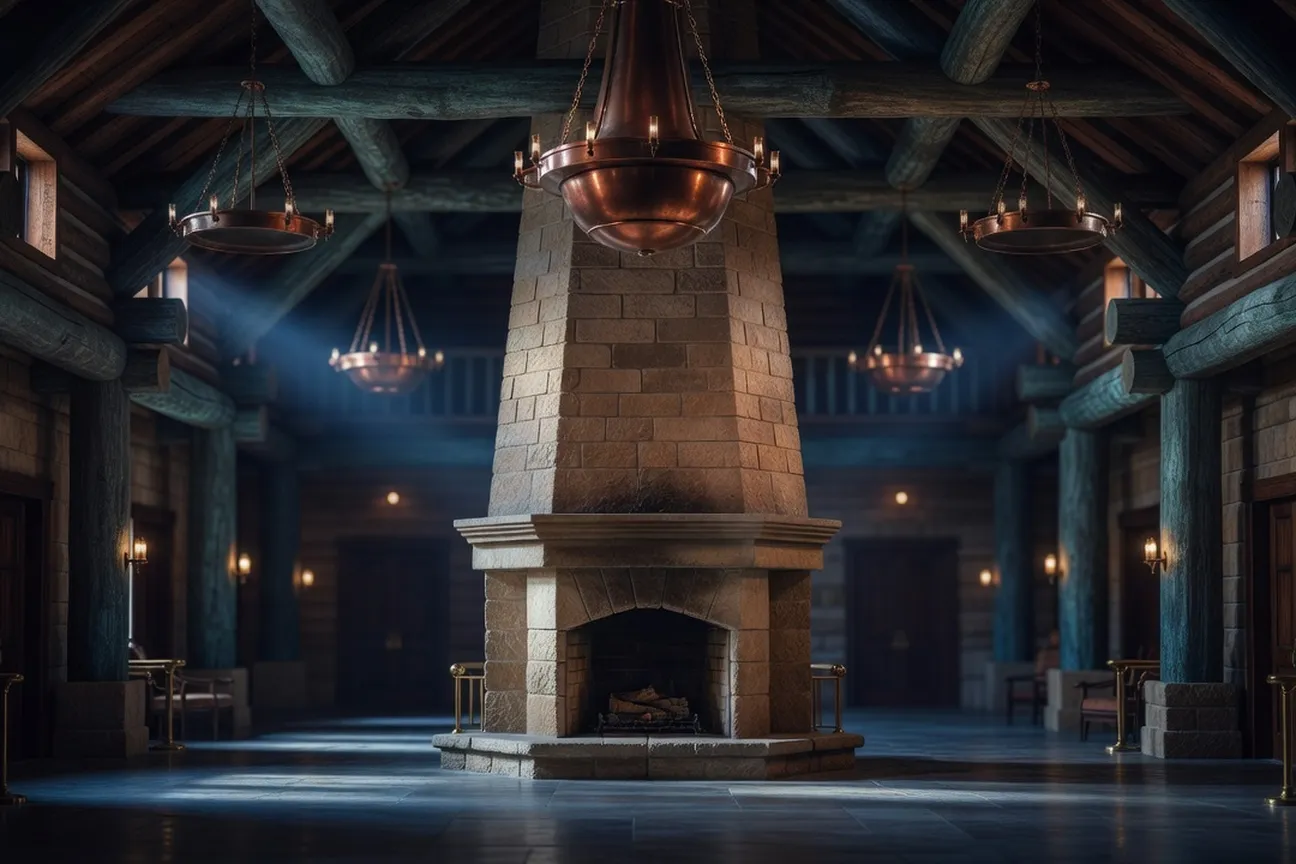
The interior layout centres on a hexagonal lobby whose ceiling rises 18 metres to a cupola fitted with clerestory windows. The floor is laid with 15-centimetre-wide white oak planks finished with tung oil; these planks were replaced in 1998 after water damage from a roof leak. Around the lobby stand six massive cedar pillars, each 12 metres tall and 80 centimetres in diameter, supporting the roof trusses. The original electric chandeliers, installed in 1930, remain in place and are cleaned twice yearly by lowering them on counterweighted cables.
To the east of the lobby lies a former billiard room, now used as a lounge, retaining birch panelling that contrasts with the darker cedar logs elsewhere in the building. Adjacent to this space is a small library area open to day visitors.
The lower level contains a small museum corridor with exhibits on the building’s log-construction techniques and its history, including its 1970 conversion from private club to public hotel. The property has been expanded with additional guest room wings since then, built to match the original cedar-log construction style.
The main dining room occupies part of the ground floor with river-facing windows in the original steel casements. Check current breakfast and dining hours directly with the property, since these vary by season.
Further details on regional travel options, including connections to nearby villages, appear on the site voyage-canada.com.
For a day visitor with limited time, the interior highlights worth prioritising are:
- The hexagonal lobby with its tall cupola and period chandeliers
- The former billiard room and adjoining library area
- The museum corridor’s log-construction exhibit and history of the 1970 conversion
- The dining room’s river-facing windows
Lunch, dinner and the spa option
The chateau’s main dining room, Aux Chantignoles, serves table-service meals focused on regional ingredients such as Quebec pork, lake fish and seasonal vegetables — check current hours and reserve ahead, since walk-in seating is limited on weekends. The property’s other dining and lounge venues have changed over time (some have closed or been renamed), so confirm what is currently open directly on chateau-montebello.com rather than relying on older listings, this one included.
Exact pricing for meals, the spa circuit, and treatments changes regularly — check current rates and book directly through the Fairmont or Château Montebello site rather than budgeting from a fixed number, since these figures are not stable year to year.
The property maintains a separate spa wing with a thermal circuit of saunas, steam rooms and whirlpools, along with massage and facial treatments. Same-day spa availability can be limited, particularly for the thermal circuit, so reserve ahead if a spa visit is part of the plan. Robes, towels and slippers are typically supplied — confirm current inclusions when booking.
Resources such as voyage-canada.com provide additional regional planning context. Visitors who combine a meal with a spa circuit often schedule the treatment in the late afternoon so that dinner follows without interruption. The hotel does not impose a strict dress code beyond “smart casual,” though most diners lean toward collared shirts or equivalent rather than athletic wear.
Heads up: same-day spa availability is often limited, especially for the thermal circuit — reserve your circuit pass before you leave Ottawa if a spa visit is part of the plan.
Combining with Plaisance National Park
Parc national de Plaisance lies approximately 22 kilometres west of the chateau along Route 148, a drive of 18 to 22 minutes depending on traffic at the Ottawa River bridge. The park protects a stretch of floodplain forest and shallow bays that attract waterfowl, particularly during spring and autumn migrations. Entry costs 9.00 CAD per adult for a single day; an annual pass is also sold. The visitor centre at the Pointe-Noire sector opens at 09:00 and supplies trail maps, binoculars on loan, and a modest exhibit on local bird species.
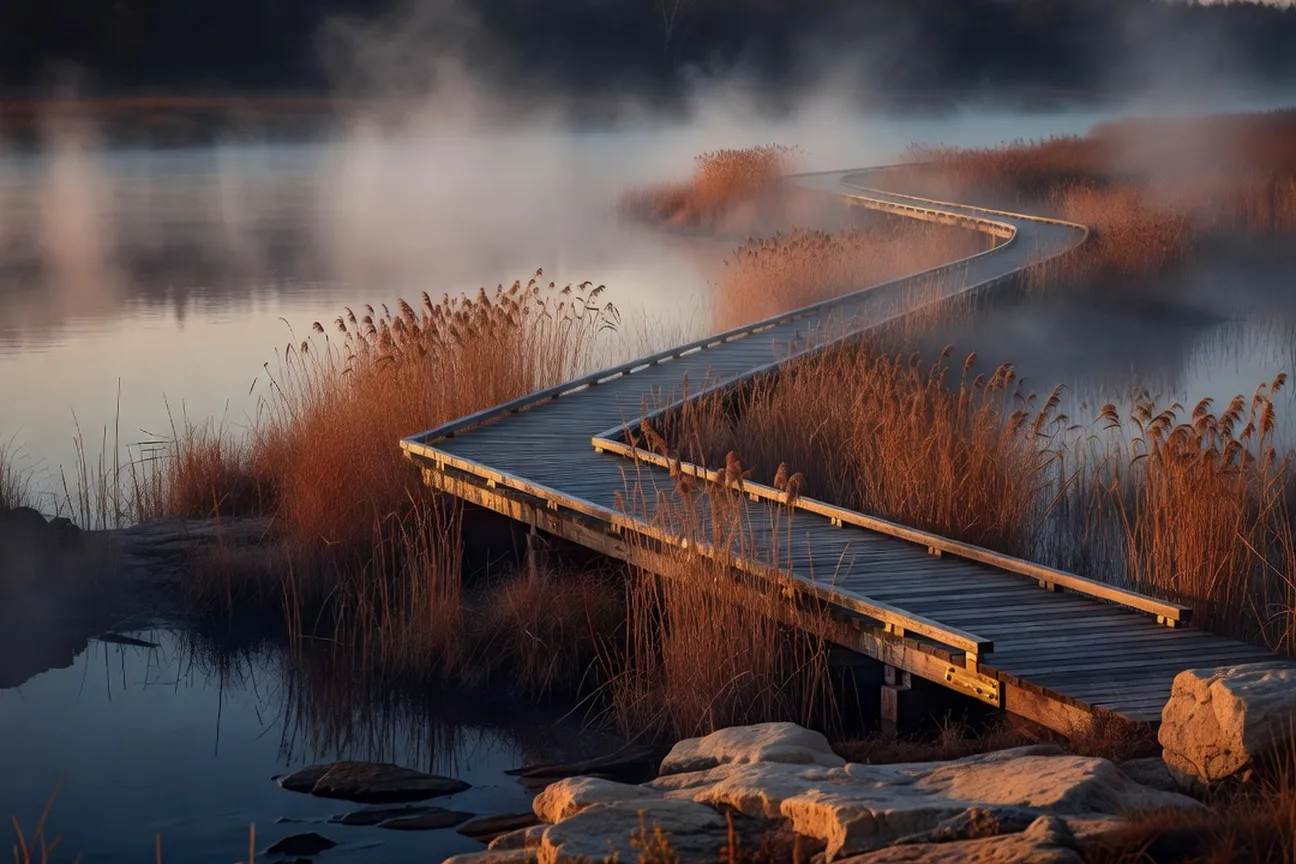
Two short interpretive trails begin at the centre: the 1.8-kilometre Sentier des Îles crosses boardwalks through cattail marshes, while the 3.2-kilometre Sentier des Plaines follows an old agricultural dike. Both remain level and suitable for most mobility levels. A third, longer route, the 7.5-kilometre loop to the Baie Noire lookout, requires sturdier footwear and takes roughly two and a half hours. Picnic tables are located near the centre and at the end of the boardwalk; visitors must carry out all waste. Motorboats are prohibited in the park’s core zone, which keeps noise levels low and favours canoe or kayak travel on the protected bays.
| Trail | Distance | Terrain | Time needed |
|---|---|---|---|
| Sentier des Îles | 1.8 km | Level boardwalk through marshes | 30-45 minutes |
| Sentier des Plaines | 3.2 km | Level, old agricultural dike | 45-60 minutes |
| Baie Noire loop | 7.5 km | Sturdier footwear required | About 2.5 hours |
The park’s hours run from dawn to dusk year-round, though the visitor centre closes at 17:00 outside peak summer months. Combining a morning at the chateau with an afternoon at Plaisance requires careful timing because the chateau’s spa and dining reservations cannot be held indefinitely. One workable sequence places lunch at the chateau, a 45-minute drive to the park, two hours on the trails, and an early dinner upon return. Public transport does not serve the park directly, so travellers rely on private vehicles or arranged transfers.
Further options for extending a Montebello stay appear under the heading of day trips from Ottawa. The flat terrain around Plaisance also lends itself to cycling; bicycle rentals are available at the visitor centre on weekends from May to October at 18 CAD for a half-day. Insect repellent is advisable from June through September because of mosquitoes near the water’s edge.
The measured rhythm of a single day spent between the chateau and the park reveals more about the Ottawa River valley than a longer itinerary rushed through multiple stops.
Practical: parking, day-pass and timing
The chateau offers both self-parking and valet options, with day-use parking rates that have varied over time — check current pricing directly with the property before you go rather than assuming a fixed fee, since parking rates at hotels change without much public notice. EV charging availability and pricing should also be confirmed directly if that matters for your trip.
A day pass for the chateau grounds themselves is not required; the property is generally open to the public for restaurant and spa access, while overnight guests get further access to upper floors and private terraces. Visitors who wish to walk the formal gardens without a meal or treatment can typically do so, though hours and access policies are set by the property and worth confirming ahead. The adjacent golf course operates separately with its own green fees — check current rates directly. For travellers weighing Montebello against other options east of the city, our Calabogie Peaks day trip covers a comparable half-day escape in the opposite direction.
Travel time from central Ottawa runs roughly 60-75 minutes via Highway 50 and Route 148 under normal traffic, longer during peak commuter hours or if there are delays at the Gatineau-area bridges. Public washrooms and a small convenience store sit at the Plaisance visitor centre; plan accordingly if travelling the direct route between the two sites.
getting around Ottawa information remains useful for those extending the trip into the evening. Cellular coverage is reliable along the highway corridor, yet the park interior may drop to a single bar; offline maps downloaded in advance prevent navigation issues. Most restaurants at the chateau accept reservations up to 30 days ahead, while same-day spa bookings are rarely available after 11:00 on Saturdays.
The day trip therefore functions best when framed as two distinct segments rather than a continuous circuit. Arriving at the chateau by 10:00 allows time for a garden walk before the first lunch seating, while an exit from Plaisance by 16:30 keeps the return drive within daylight hours during autumn and winter.
The chateau and the park together illustrate the layered character of the Ottawa River corridor: one site shaped by deliberate architecture and hospitality routines, the other by seasonal water levels and migratory patterns. A visitor who moves between them on a single day encounters both the controlled interior of the resort and the open, changeable terrain of the floodplain without needing additional overnight accommodation. The distance remains short enough that the same vehicle can serve both locations, yet the contrast in setting supplies a clear change of pace.
Frequently asked
The Montebello Chateau, officially known as Fairmont Le Château Montebello, is a luxurious resort located in Montebello, Quebec. It is renowned for being the largest log cabin in the world and offers a unique architectural style. The chateau was built in 1930 and is nestled amidst a 300-acre forested area, providing a picturesque setting for visitors.
Montebello Chateau is approximately 90 kilometres from Ottawa and can be reached by car in about 1.5 hours. The most straightforward route is via Highway 50 East, which offers scenic views along the way. Alternatively, visitors can take a guided day tour from Ottawa that includes transportation.
Montebello Chateau offers a wide range of activities for day-trippers. Visitors can enjoy guided nature walks, cycling, and canoeing in the summer, while winter activities include ice skating and cross-country skiing. The chateau also features an indoor pool and a spa for relaxation.
Aux Chantignoles is the chateau's main dining room, focused on regional ingredients. Other on-site dining and lounge venues have changed over time — some have closed or been renamed — so confirm current options and hours directly on chateau-montebello.com before you go, rather than relying on any single source, including this one.
There is no admission fee to visit the grounds of Montebello Chateau for a day trip. However, certain activities and dining experiences may require reservations and additional costs. It's advisable to check availability and book in advance, especially during peak tourist seasons.