
Touring Ottawa’s two universities is straightforward if you plan ahead. uOttawa offers student-ambassador tours lasting 45 to 60 minutes, meeting in the Learning Crossroads lobby; scheduled departures begin at 9 a.m., with the last at 3:15 p.m. Carleton’s student-led tours take about two hours and must be booked through its online events calendar, with check-in at the Tour Centre in Pigiarvik. The campuses are on different O-Train lines, so travelling between them requires a transfer; check OC Transpo’s trip planner rather than relying on a fixed travel time.
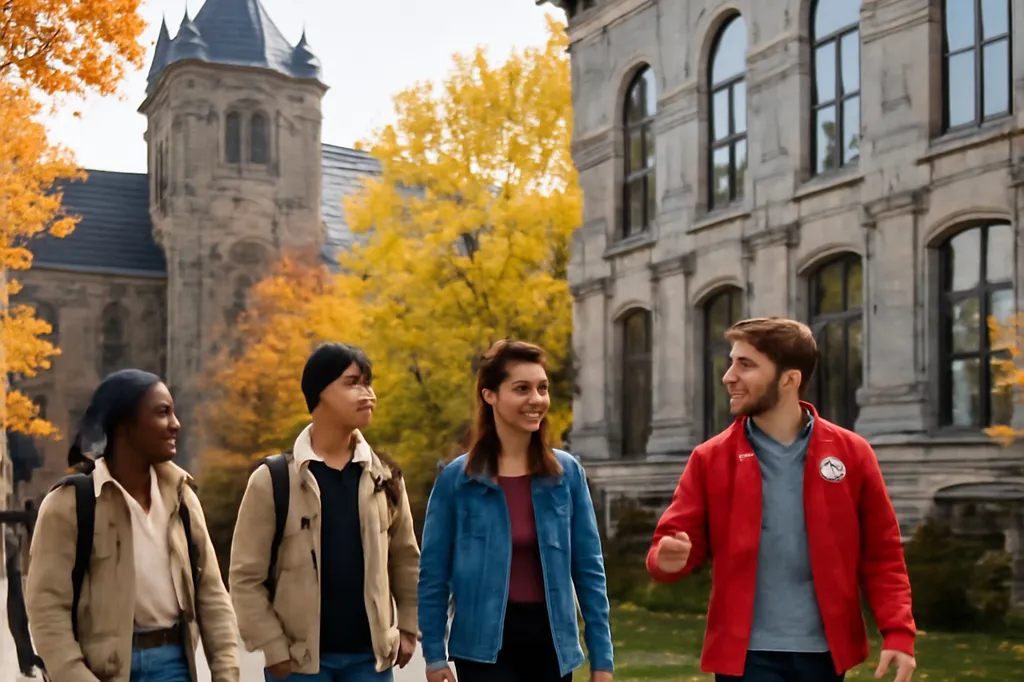
What is the essential booking information for each university?
Start with the official tour pages. At uOttawa, tours are led by student ambassadors and run for 45 to 60 minutes. Regularly scheduled departures begin at 9 a.m., and the final departure is at 3:15 p.m. The meeting point is the lobby of the Learning Crossroads, usually identified by its building code, CRX. Consult the official uOttawa campus-tour page for available dates and current registration instructions.
At Carleton, reserve a place online through the university’s official events calendar. Tours last approximately two hours and are conducted by current student guides. Visitors meet at the Tour Centre, room 209 in the Pigiarvik building — formerly Robertson Hall — at 1125 Colonel By Drive.
| University | Official tour length | How to arrange it | Meeting point | Group-tour planning |
|---|---|---|---|---|
| uOttawa | 45-60 minutes | Check the official campus-tour page for dates and instructions | Learning Crossroads (CRX), lobby | Contact uOttawa for current group arrangements |
| Carleton University | About 2 hours | Book online through the official events calendar | Tour Centre, room 209, Pigiarvik, 1125 Colonel By Drive | Organized groups must submit a request at least 7 business days ahead |
Because schedules and building access can change, recheck the relevant university page shortly before travelling.
What should I make a point of seeing at uOttawa?
The essential architectural stop is Tabaret Hall, at 550 Cumberland Street. Opened in 1905, this Greek Revival-style heritage building is one of the university’s principal landmarks. Its columned exterior provides a clear visual anchor when you are orienting yourself around campus.
Inside, the Rotunda displays a collection of contemporary Indigenous art. Tabaret is open to visits, making it more than an exterior photo stop, although it is still sensible to observe any signs or access instructions in effect on the day.
A compact uOttawa checklist would be:
- Learning Crossroads: Begin here if you are joining an official tour.
- Tabaret Hall: Look at the heritage architecture and use it as a central campus reference point.
- The Rotunda: Allow time for the contemporary Indigenous artworks.
- The surrounding streets: Notice how the campus meets Sandy Hill and the nearby central-city districts.
Prospective students should use the guided walk to look beyond individual buildings. Ask where classes in your intended subject usually take place, then examine the walking route between those facilities and the services you expect to use. Parents may want to focus on how easily a first-time student can recognize landmarks and navigate between stops.

And what are the main Carleton landmarks?
Begin with Dunton Tower, the most prominent vertical landmark on the Carleton campus. The 22-storey tower is approximately 77 metres tall, dates from the early 1970s and is the university’s tallest building. Even if you do not enter, its exterior helps you understand your position as the tour moves around campus.
Pigiarvik is also important in practical terms because that is where official tours meet. Remember that older directions may call it Robertson Hall; the current name is Pigiarvik.
The MacOdrum Library may also interest prospective students and curious visitors. It is generally accessible for a quick visit, but check the current visitor policy before counting on entry. University libraries are working academic spaces, and access arrangements can vary.
For a focused first visit, prioritize:
- The Tour Centre in Pigiarvik.
- Dunton Tower as a visual reference point.
- Buildings connected with your intended program.
- The library, subject to the visitor policy in effect.
- Carleton O-Train station, which is located in the centre of campus.
Carleton reports 30,675 students: 24,847 undergraduates and 5,828 graduate students. That total includes 2,935 international students representing more than 160 countries. Those figures help explain why seeing the campus in person — not merely one faculty building — is useful.
How do I travel between uOttawa and Carleton?
Do not plan around claims of a direct five-minute train ride. The campuses are served by different O-Train lines: uOttawa station is on Line 1, the Confederation Line, while Carleton station is on Line 2, the Trillium Line. A journey between them requires a transfer.
Rather than quoting a fixed duration, use OC Transpo’s official trip planner shortly before departure. Current service conditions, connections and your precise starting building all affect the practical journey. Our guide to getting around Ottawa can help you place transit within the rest of your visit.
Build in a generous buffer between tours. At uOttawa, you still need time to return from the tour route to the station or your chosen pickup point. At Carleton, allow time to find Pigiarvik and room 209 rather than treating arrival at the campus station as the same thing as checking in.
Can both universities realistically be visited in one day?
Yes, provided the available tour times fit together and you avoid an overly tight transfer. Carleton’s two-hour tour usually deserves to be treated as the day’s main fixed appointment. Place the shorter uOttawa visit around it, then verify the journey through OC Transpo.
Practical example 1: the one-day applicant visit. Book Carleton online first. Next, select a uOttawa departure that leaves a substantial, uncommitted interval between tours — perhaps one of the earlier departures beginning at 9 a.m. if your Carleton booking is later. On the morning of the trip, check the transit planner again. Add lunch or other things to do in Ottawa only after the two campus commitments and transfer buffer are secure.
Practical example 2: the parent focused on facilities. Instead of compressing both standard tours into one day, attend uOttawa’s Open House on October 25, 2026. That event provides access to laboratories, residences and dining spaces, as well as opportunities to meet students and professors. Tour Carleton on a separate day, or consult its official events page for its current event schedule. No 2026 Carleton Open House date should be assumed until the university publishes one.
A separate day for each campus also makes it easier to compare impressions while they are still fresh, rather than remembering only the fatigue of a tightly scheduled itinerary.
What should prospective students and parents ask the guides?
Student guides can add context that a building list cannot. Prepare questions that relate to your likely routine rather than asking only for general opinions.
Useful prompts include:
- Which buildings would a student in my intended program use most often?
- What should I see today that is not normally included in the tour?
- Where should a future student go with questions about admissions or campus services?
- Which landmark is easiest to use when learning the campus layout?
- Can visitors currently enter the library, residences or specialized facilities?
- Are there upcoming events that offer access beyond a standard walking tour?
- Where should an organized school group check in?
Ask permission before photographing people, classes or working spaces. If a particular laboratory, residence or library is central to your decision, confirm access in advance rather than assuming it forms part of a standard tour.
Tip: uOttawa and Carleton sit on different O-Train lines. Check OC Transpo’s official trip planner shortly before travelling instead of assuming a fixed transfer time.
Where should visitors stay, and which surrounding areas are worth seeing?
Choose accommodation based on your first appointment and the rest of your Ottawa itinerary; the two campuses are not on the same rail line. Our guide to where to stay in Ottawa provides a broader planning overview.
For local orientation, Sandy Hill directly borders uOttawa and lies between the ByWard Market, Rideau Canal and Rideau River. A secondary student-housing guide estimates that Centretown is about a ten-minute walk or five-minute bicycle ride from uOttawa, though visitors should confirm their own route. The Glebe is commonly treated as a nearby area for Carleton and is also reachable by public transit from uOttawa.
These descriptions are useful for trip planning, but they are not official university definitions. Consult our Ottawa neighbourhoods guide when deciding where a campus visit might fit with dining, accommodation and general sightseeing.
Frequently asked
Carleton's standard campus tour is booked online through its official events calendar. For uOttawa, consult the official campus-tour page for current dates and registration instructions. Even when regular departures are listed, checking ahead prevents confusion about availability, operating days or special events.
Both official tours are student-led. uOttawa identifies its guides as student ambassadors, while Carleton tours are conducted by current student guides. That makes the visit a useful opportunity to ask practical questions about navigating campus, but admissions decisions and program requirements should still be confirmed through official university channels.
Yes. Schools and other organized groups must submit Carleton's online group-tour request form with at least seven business days' notice. Because that is a minimum rather than a guarantee of a particular slot, submit the request earlier when possible. Contact uOttawa directly for its current group-visit arrangements.
Tabaret Hall is open to visits, and its Rotunda contains contemporary Indigenous artworks. The MacOdrum Library is generally accessible for a quick visit, but verify Carleton's current visitor policy before relying on entry. Follow posted instructions and remember that academic buildings remain active university spaces.
uOttawa has confirmed an Open House for October 25, 2026, including opportunities to see laboratories, residences and dining spaces and to meet students and professors. For Carleton, check the university's official events page for the current Open House date rather than relying on an unconfirmed 2026 listing.