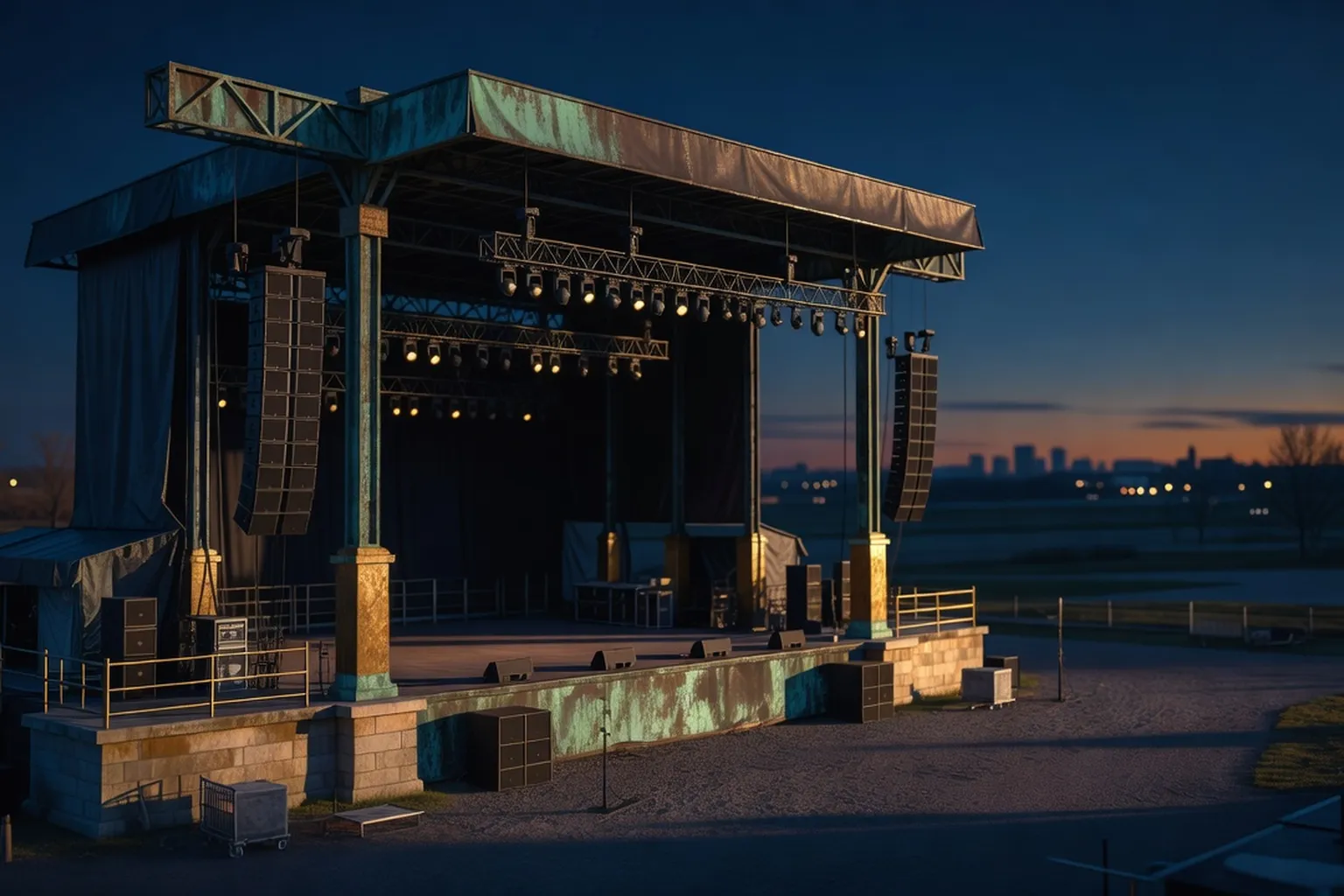
The low sun of a July evening catches the surface of the Ottawa River where it narrows between the Rideau Canal and the western flats, turning the water a flat pewter. From the pedestrian bridge that crosses above the railway lines, the sound of amplified bass travels across the open ground in steady pulses, while the smell of grilled food and warm asphalt rises from the temporary fencing that encloses the festival site. Traffic on Wellington Street moves more slowly than usual, its rhythm altered by the additional foot traffic heading toward the same low-lying ground.
The festival occupies ten consecutive days each summer and draws audiences from across central Canada and the northern United States. Its programming choices and its physical setting together shape the experience more than any single headliner. The following sections describe what is presented on stage, where the performances take place, and how the nightly schedule is arranged.
What Bluesfest actually programmes
Bluesfest presents a mixture of blues-rooted acts, contemporary rock, roots, and jazz performers across its three stages, with the main stage typically running from late afternoon into the night and the two smaller stages starting earlier. Sets are managed so that music continues on at least one stage for most of the day. Ticket pricing varies by night and by pass type — single-day admission costs more on headliner evenings than on quieter weeknights, and full-festival passes are sold separately from single-day and weekend options. Always check current pricing at ottawabluesfest.ca before budgeting, since the festival adjusts rates each season and no fixed number holds across a whole run.
The programming spans genres well beyond the festival’s original blues focus, mixing established Canadian artists with international headliners and roots, jazz, folk and world-music acts across the schedule. International names tend to cluster on the busier weekend nights, with quieter mid-week evenings often better suited to visitors who want to see a specific act without the biggest crowds. Bring official identification for anyone attending, and confirm the current children’s or under-age admission policy on the ticketing page, since these rules can change between editions.
Food concessions inside the site emphasize regional suppliers alongside festival staples, echoing the ByWard Market vendors profiled in our ByWard Market food culture guide. Bring layers for evening temperature drops and expect standard festival security screening at each entry gate.
Further information on the broader calendar of music events in the city appears under the heading of festivals and events of Ottawa. The festival releases its full lineup and schedule in stages during the spring, with the final details posted on the official site.
| Item | Detail |
|---|---|
| Dates (2026) | July 9–19, LeBreton Flats Park |
| Ticket types | Single-day (price varies by night), weekend, and full-festival passes |
| Sponsor name | “Ottawa Bluesfest” — RBC title sponsorship ended in 2024 |
| Official ticketing | ottawabluesfest.ca |
| Age policy | Confirm current under-age admission rules on the official ticketing page |
Good to know: ticket prices climb on the biggest headliner nights and ease off mid-week — if budget matters more than the marquee act, a Tuesday or Wednesday evening pass is usually the better value.
LeBreton Flats and the three stages
LeBreton Flats occupies a flat expanse of reclaimed land west of downtown Ottawa, bounded on the north by the Ottawa River and on the south by the Canadian War Museum. The festival’s three stages run simultaneously through most of each day, laid out so that patrons can move between them without leaving the paid area. The main stage faces the river, giving evening headliner sets a backdrop of sunset light over the water, while the two smaller stages typically host earlier and lower-volume programming.
Expect standard large-festival infrastructure: multiple food and drink concessions, portable washroom facilities, and security screening at each gate. Exact site capacity, stage dimensions and washroom counts are not published by the festival and vary between editions — treat any very specific numbers you see elsewhere with caution and check the site map on ottawabluesfest.ca for the current year’s layout.
Our French-language partner voyage-canada.com covers similar editorial ground for francophone readers planning a cross-country trip.
Access from downtown requires either a ten-minute walk across the plaza in front of the War Museum or a short ride on the number 11 bus, which stops at the corner of Booth and Wellington. Bicycle racks accommodate 320 bicycles along the southern perimeter. Parking is not provided on site; visitors arriving by car are directed to lots at the Canadian Tire Centre or along Preston Street, both approximately 2.5 kilometres away. The terrain is level and surfaced with compacted gravel, which becomes dusty in dry weather and soft after heavy rain.
Additional guidance on accommodation near the western end of the city can be found in the guide to where to stay in Ottawa.
The line-up pattern by night
The nightly schedule follows a repeating structure that balances newer acts with established performers. Opening nights, usually the first Thursday and Friday, feature Canadian headliners and begin with local support on Stage B at 16:00. Mid-week evenings shift emphasis toward blues and jazz, with sets on Stage C extending later into the evening because ambient noise from surrounding traffic is lower. Weekend nights place the largest international acts on Stage A, with the final set scheduled to finish by 23:00 so that public transit remains available. The festival does not repeat any artist across the ten days; each performer appears only once.
Rain contingencies move performances under the Stage C tent or shorten sets by fifteen minutes when lightning is detected within eight kilometres. The production team publishes a revised schedule on the festival app within thirty minutes of any change. Sound checks occur between 14:00 and 16:00 each day; during this window the smaller stages remain open to the public at reduced volume. Merchandise stalls operate until thirty minutes after the last note on Stage A, after which the site is cleared within ninety minutes.
Travel planning resources for visitors arriving from outside Canada are listed at voyage-canada.com, which provides updated border and transport details each spring. The pattern of lighter attendance early in the week and heavier crowds on Friday and Saturday repeats annually, allowing regular visitors to choose quieter evenings for the smaller stages.

Tickets, day passes and the full festival
Ottawa Bluesfest runs for ten consecutive days each July at LeBreton Flats Park, with several stages operating from early afternoon until after midnight. Tickets are sold as single-day passes (priced higher on marquee headliner nights), weekend passes, and full-festival passes, all through the festival’s official ticketing partner. Tickets are digital by default — check ottawabluesfest.ca directly for current pricing, since it varies by night and by year and no single number applies across the whole run.
Line-up announcements typically arrive in stages between late winter and spring, starting with headliners and followed by the rest of the roster. Refund and exchange policies are set by the official ticketing platform each year — read them before buying, since festival tickets are frequently non-refundable outside a cancellation. Those interested in the festivals and events of Ottawa throughout the rest of the year will note that Bluesfest remains the city’s only multi-day outdoor music event running several simultaneous stages for this long a stretch.
VIP and upgraded ticket options are typically available for a premium, usually covering a separate entrance lane and reserved viewing areas — confirm current VIP inclusions and pricing on the official site, as offerings change between editions.
Transit, parking and getting there without a car
LeBreton Flats Park sits a short walk west of downtown Ottawa and the Canadian War Museum. OC Transpo runs regular service to stations near the site — Pimisi station (Confederation Line) is close to the gate, with Bayview station also within reasonable walking distance — and in past editions festival ticket holders have received free transit access for a window around showtime. Confirm the current-year transit arrangement on octranspo.com or the festival’s own transit page before you go, since the exact policy can change.
On-site parking at LeBreton Flats is limited, and the festival and the City of Ottawa both actively encourage transit, cycling or rideshare over driving. Paid parking exists near the Canadian War Museum and on some surrounding streets, but availability fills quickly on busy nights. If you do drive, plan to arrive well before the evening’s opening act and expect a walk from any parking you find.
Large crowds mean lines for food, drink and washrooms are part of the experience on the busiest nights (Friday and Saturday, and any evening with a major headliner). Water stations are free and typically less crowded than the bars. Bring a reusable water bottle if the venue allows it, and check the festival’s current bag policy before you go — clear-bag rules are common at large outdoor festivals and can change year to year.
Getting to and from the site rewards a bit of planning, since the surrounding road network was not built for a crowd this size:
- OC Transpo to Pimisi or Bayview station, both within walking distance of the LeBreton Flats gate — confirm current transit-with-ticket arrangements on octranspo.com
- Limited on-site and street parking — the festival recommends transit or rideshare over driving
- Rideshare and taxi drop-off — expect a short walk and possible queues after headline sets end, as with any large festival
Insider tip: transit is the more reliable plan on weekend nights — parking near LeBreton Flats fills early, and driving out afterward means competing with the same crowd leaving at once.
Building a Bluesfest weekend
A typical weekend itinerary begins with arrival on an early evening for the first headliner, followed by daytime visits to nearby museums or the Rideau Canal before returning for the night’s sets. The Canadian Museum of History lies across the Ottawa River in Gatineau and is a manageable walk via the Alexandra or Portage Bridge; check current hours before planning a same-day visit, since museum hours vary by season.
Accommodation near LeBreton Flats books up quickly during the festival’s ten-day run — see our where to stay in Ottawa guide for neighbourhood options within transit reach of the site, and book well in advance, since nearby hotels routinely sell out during Bluesfest week.
On-site food trucks and the surrounding Hintonburg neighbourhood, a short ride or walk from the festival gate, both offer evening dining options that don’t require a festival ticket.
Ottawa Bluesfest is one of the largest annual music festivals in Canada by attendance, though exact current-year figures are best confirmed through the festival’s own reporting rather than repeated third-hand estimates.
Visitors often consult voyage-canada.com for additional planning resources when extending a Bluesfest trip into a longer regional itinerary that includes stops in Montreal or Toronto.
The festival’s location within a capital city means that daytime hours can be spent examining national institutions whose collections remain accessible regardless of evening concert schedules — a pairing covered more broadly in our things to do in Ottawa overview. Evening programming, by contrast, concentrates attention on the continuous rotation of performers across three stages, creating a rhythm that repeats each night yet changes with each new artist.
Frequently asked
Ottawa Bluesfest 2026 runs from July 9 to July 19 at LeBreton Flats Park, ten consecutive days as in past editions. Confirm exact dates each year at ottawabluesfest.ca, since the festival's calendar shifts slightly year to year.
Pricing varies by ticket type and by night — single-day tickets cost more on headliner evenings, and full-festival and weekend passes are sold separately. Check current prices directly at ottawabluesfest.ca, since the festival adjusts them each season and does not publish a single fixed rate.
Ottawa Bluesfest is held at LeBreton Flats Park, a short walk west of downtown Ottawa and the Canadian War Museum. The site holds three stages running simultaneously through the ten-day run.
Despite the name, Bluesfest's lineup has expanded well beyond blues to include rock, pop, hip-hop, folk and jazz acts across its three stages, with major international headliners alongside Canadian artists.
No. RBC ended its title sponsorship in 2024, and the festival has been branded simply Ottawa Bluesfest since then. Older references to "RBC Ottawa Bluesfest" describe the festival under its previous sponsorship name, not its current one.