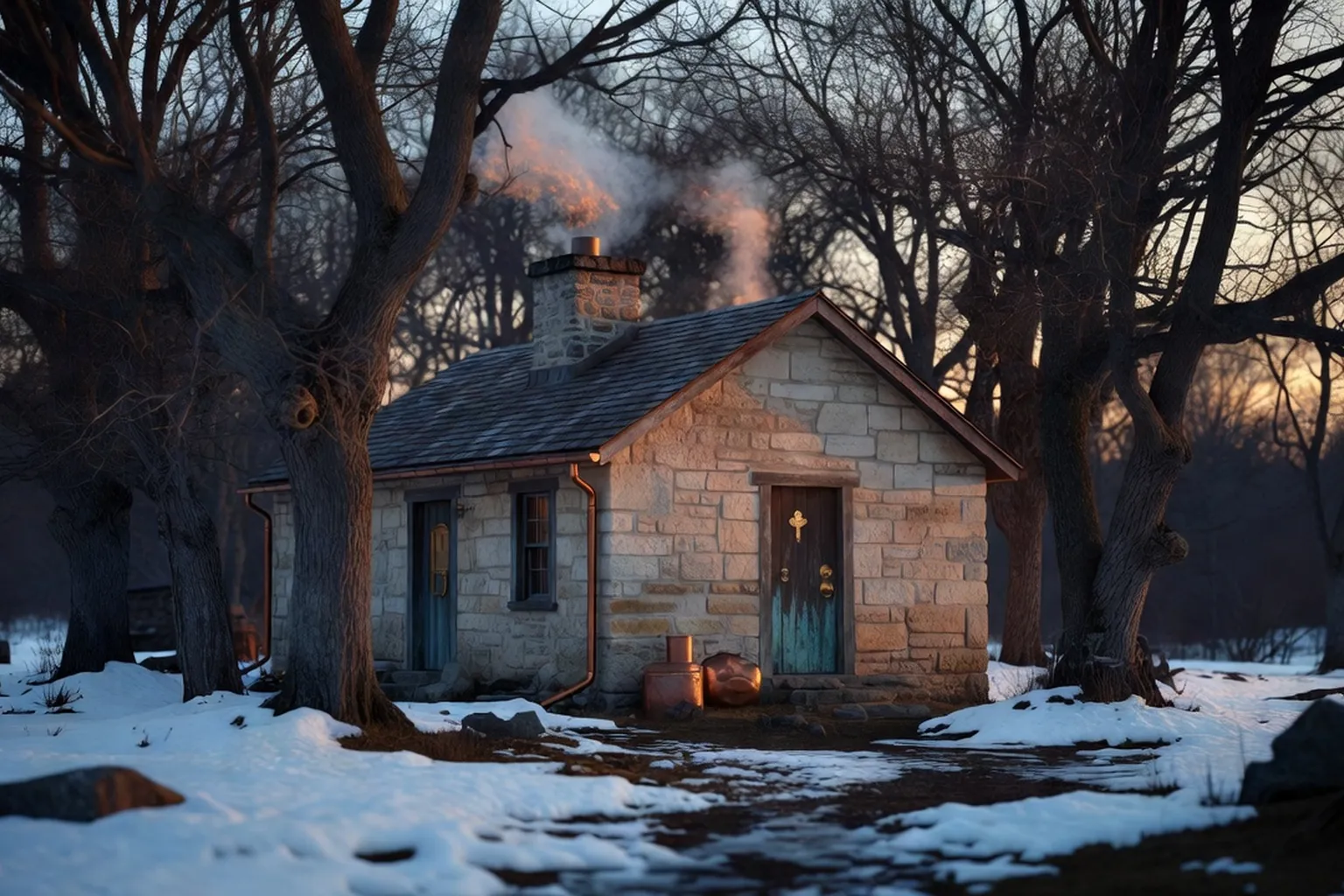
In the hills of Quebec’s Outaouais region, a short drive from Ottawa, family-run sugarbushes continue a tradition of maple syrup production that in many cases spans three or more generations. For this piece, we spoke with a producer who manages a mid-sized commercial sugarbush in the region, on condition that the specific operation not be named, to walk through how a modern sugar shack actually runs — from the boil ratio to the grading scale to what a visit involves. Many sugarbushes of this size rely on reverse-osmosis equipment to concentrate sap before boiling, a method that has become standard across much of the province’s commercial maple industry.
The conversation focused on operational routines rather than promotional descriptions of the landscape. Visitors planning excursions from the national capital will find sugar shacks throughout the Outaouais and Gatineau Hills along routes commonly included in day trips from Ottawa.
Meet a sugarbush operator in the Outaouais
Our source has worked in the sugarbush for most of their career and now oversees day-to-day operations at a commercial-scale maple operation with several thousand taps. Like many producers in the region, they started by helping with tubing repairs and sap collection before moving into full-time management as the operation modernised.
Question: How does a sugarbush typically grow from a small family operation into a commercial-scale one?
Producer: It usually happens over decades and multiple generations. An early generation installs the first mainline network, replacing buckets with tubing across the property. A later generation adds an evaporator and starts selling syrup in bulk, often through a co-operative. Eventually reverse-osmosis equipment gets added to pre-concentrate the sap before boiling, and the tap count grows in stages as adjoining woodlots become available. Most producers in Quebec are members of the Fédération des producteurs acéricoles du Québec, which sets standards for the industry and requires calibration and reporting for concentration and grading equipment.
Question: Which regulatory or technical changes have most altered daily procedures at commercial sugarbushes in recent years?
Producer: The move to mandatory syrup grading based on light transmission changed how carefully every batch has to be tested — most operations our size now use a spectrophotometer and test each batch before it goes into storage. The Fédération has also shifted toward electronic submission of production data, which replaced older paper reporting. Both changes added record-keeping time during the season, but they’ve made the grading system more consistent across producers.
Staffing at a sugarbush of this size typically includes a small full-time crew during the February-to-April season, plus additional help brought on for tubing installation and maintenance work in the fall. Anyone handling pest-management tasks needs a current pesticide-applicator certificate, since the Fédération can request that documentation during audits.
The sugaring window - February to early April
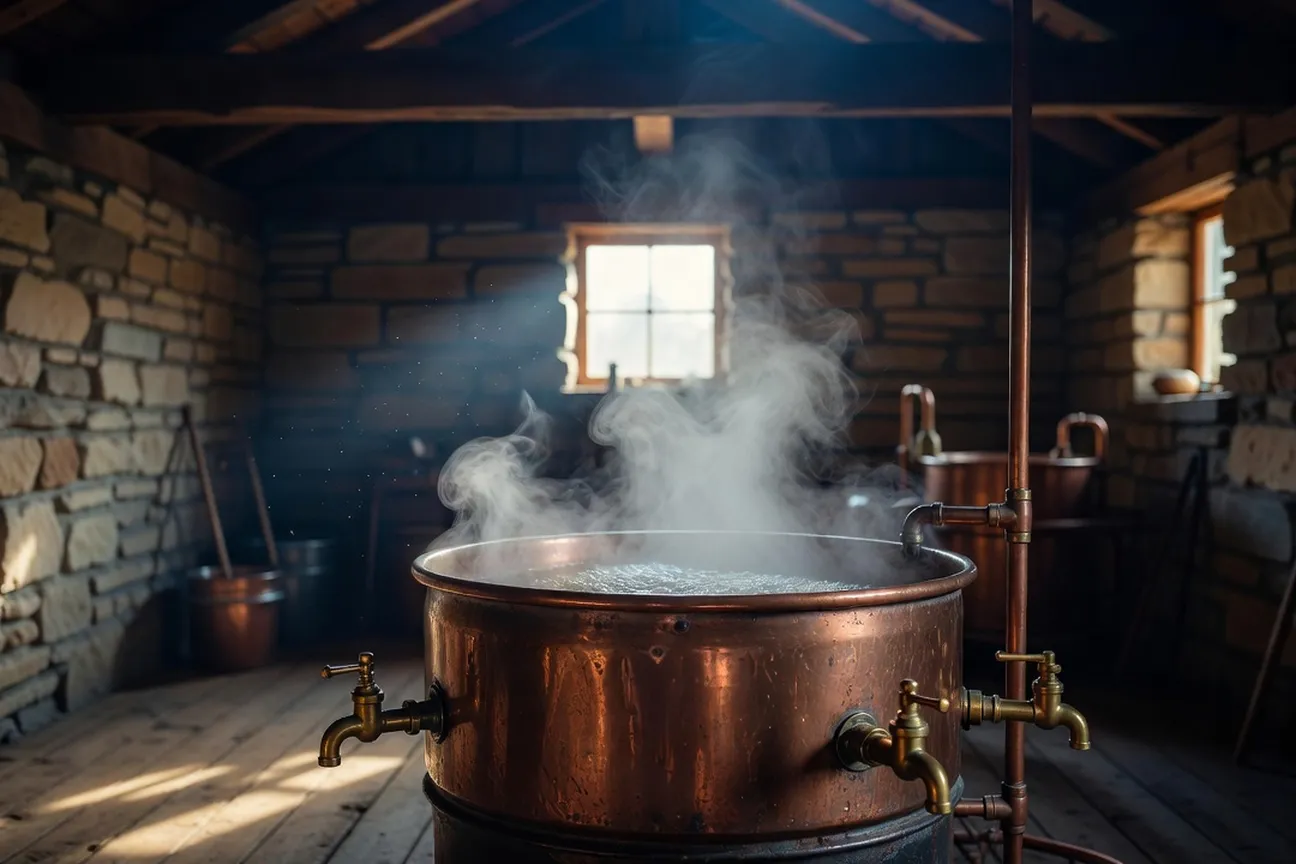
Sap flow in the Outaouais typically runs from the first week of February through the second week of April, though the exact dates shift from year to year with the weather. Temperature thresholds remain fairly consistent across producers: daytime highs above 5 °C paired with nighttime lows below 0 °C produce measurable flow. Most operations track an on-site weather station or the nearest Environment Canada data to decide when to open the main vacuum valves.
Question: How do you determine the start and end dates for tapping and collection each season?
Producer: Tapping generally begins once we’ve had a run of consecutive nights well below freezing and the forecast shows several days of freeze-thaw cycles in a row — that’s usually sometime in early to mid February, though it can shift by a couple of weeks either way depending on the winter. Collection continues until daily sap volume drops off sharply or the trees show visible bud swell, whichever comes first, and that end point typically falls somewhere in early to mid April.
We monitor sugar content with a handheld refractometer. When average sap readings drop below a certain threshold for a few days running, we close the lines and shut down the vacuum pump — there’s no point boiling sap that’s too dilute to be worth the energy.
Question: What daily schedule governs sap collection and storage once the season is under way?
Producer: The vacuum pump runs for most of the daylight hours. Sap is pumped periodically into a large stainless holding tank kept refrigerated, and each load is weighed and logged before it goes to the reverse-osmosis unit. On peak days we can move tens of thousands of litres of raw sap, which the reverse-osmosis system concentrates significantly before it ever reaches the evaporator — that pre-concentration is what makes boiling a commercial-scale volume of sap practical.
Producers farther west in the region sometimes coordinate with operators near Wakefield village day trip for joint visitor programmes, though many sugarbushes don’t host public tours during the boiling period itself.
The boil ratio and grading scale explained
Sugarbushes that use reverse-osmosis pre-concentration typically cut their effective boil ratio well below the traditional roughly 40 litres of sap per litre of syrup — the exact ratio depends on the equipment and how much the sap is concentrated before it reaches the evaporator. Finished syrup has to reach the industry-standard density (66 °Brix) before it’s drawn off into storage drums.
Question: Can you explain how the boil ratio works once concentrate enters the evaporator?
Producer: The reverse-osmosis unit raises the sugar content of the sap well before it hits the evaporator, so the evaporator itself only has to do a fraction of the concentration work that a traditional open-pan operation would need. That’s the main reason reverse-osmosis has become so widespread commercially — it cuts fuel costs and boiling time substantially compared to boiling raw sap straight from the trees.
Question: How is the final grading performed and documented before drums are sealed?
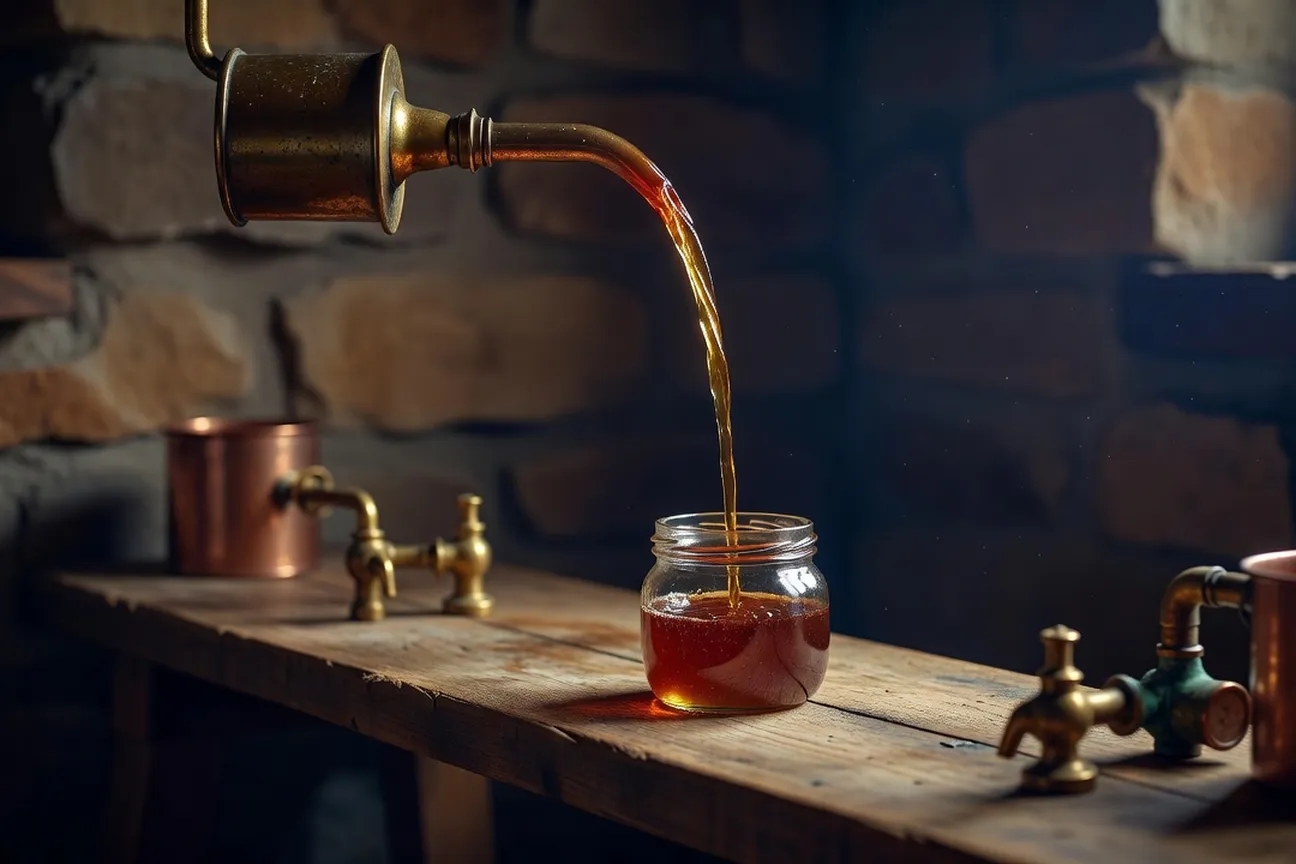
Producer: Each batch is sampled and tested for light transmission, either with a spectrophotometer or an equivalent approved instrument. The Fédération’s grading scale runs from “Golden” at the lightest end down through “Amber,” “Dark,” and “Very Dark” as transmission drops. Drums are labelled with lot number, date, and grade before they go into storage. Which grades come out in a given season depends heavily on when in the season the sap was collected — sap boiled earlier in the season tends to produce lighter grades, and later-season sap tends to run darker.
| Grade | Light transmission |
|---|---|
| Golden | 75% or higher |
| Amber | 50-74% |
| Dark | 25-49% |
| Very Dark | Below 25% |
Good to know: The grading scale is based purely on light transmission through the syrup, not on taste — Amber and Dark grades both come from the same sap, just boiled at different points in the season.
Further details on industry standards are available through resources such as voyage-canada.com, which maintains updated summaries of provincial production statistics.
What a cabane a sucre meal actually serves
Question: How does a traditional cabane à sucre menu differ from simplified tourist versions found elsewhere in the Outaouais?
Producer: At a traditional sugar shack meal you’ll usually get a fixed sequence rather than a menu to choose from: it typically starts with soupe aux pois made from yellow peas, salted pork, and carrots, followed by ham baked with maple glaze, baked beans slow-cooked in maple syrup, and tourtière made with ground pork and spices. Plates are usually accompanied by fresh bread and pickled beets, and the meal wraps up with maple taffy poured on snow and a choice of sugar pie or doughnuts.
The sequence reflects the order in which farm workers historically ate during the sugaring season. Most sugarbushes that serve meals only operate on weekends during the season, and larger groups are generally expected to reserve ahead since dining rooms tend to be small. Pricing, hours, and whether reservations are required all vary by operation, so it’s worth checking the specific sugar shack’s own website or calling ahead before planning a visit. Many don’t offer à-la-carte options during peak weeks because the kitchen runs on a single continuous production line for the fixed menu.
A traditional cabane à sucre sequence typically runs in this order:
- Soupe aux pois (yellow peas, salted pork, carrots)
- Ham baked with maple glaze
- Baked beans slow-cooked overnight in maple syrup
- Tourtière with ground pork and spices, served with fresh bread and pickled beets
- Maple taffy poured on snow
- Choice of sugar pie or doughnuts to finish
Question: Which maple products made on site appear on the table, and how does the reverse-osmosis system affect their flavour profile?
Producer: Most sugarbushes put out a small carafe of their own syrup at each table, usually drawn from the current season’s output. Reverse-osmosis pre-concentration raises the sugar content of the sap significantly before it reaches the evaporator, which shortens boiling time substantially and, in many producers’ experience, preserves more of the volatile aromatics — that tends to give a cleaner, less caramelised taste than syrup boiled entirely in open pans from raw sap.
Many operations also put out maple butter and maple jelly alongside the syrup, often made in the same evaporator room that handles the season’s first runs. Most sugar shacks sell tins of syrup and other maple products to take home from an on-site shop — pricing varies by producer and by year, so it’s best to check current prices on the shack’s own site or ask on arrival rather than assume a fixed rate.
The meal functions as both sustenance and a demonstration of the current season’s output.
Producers in the region consistently describe the same marker of a successful sugar shack meal: a family finishing the table d’hôte and asking how the syrup got its colour.
Visiting respectfully - rules of the season
Question: What operational constraints typically govern visitor movement inside a working sugarbush during the March and April production window?
Producer: Most commercial sugarbushes that welcome visitors keep vehicle traffic to designated gravel lanes once sap flow begins, and ask visitors to stay on marked paths or boardwalks between the parking area and the evaporator house. Off-path walking is generally discouraged everywhere because heavy boots can compact the shallow root systems of sugar maples and risk damaging the lateral collection lines that run just under the surface feeding the main header.
Public access hours and daily visitor caps vary a lot from one operation to another, and some sugarbushes close trails early on very high-sap-flow days so the crew can complete vacuum-line checks before dusk. It’s worth checking a specific sugar shack’s posted hours rather than assuming they match another operation’s.
Before you go: Off-boardwalk walking is generally discouraged at working sugarbushes — boots compact the shallow maple root systems and can damage the lateral collection lines running just under the surface.
Question: How do noise levels and photography affect the daily work of the boiling crew?
Producer: The evaporator room runs very hot during peak boil, and flash photography or camera equipment can interfere with the optical sensors some level-control systems use, occasionally forcing a manual reset. Because of that, most sugarhouses ask visitors to switch off camera flashes near the evaporator and keep conversation to a reasonable volume so the crew can hear equipment alarms and steam cues that signal when the syrup has reached the right density. Visitor-conduct rules like these are common across the industry precisely because a distracted operator missing a density reading can mean a batch has to be discarded or a run has to be interrupted.
Practical: how to book, what to bring
Question: What are typical booking channels and payment methods at sugar shacks that serve meals?
Producer: Most operations take reservations by phone or through an online booking calendar on their own website, and many charge a small non-refundable deposit per person at the time of booking that’s applied to the final bill. Payment on arrival is usually by debit, credit card, or cash, though policies on cheques and e-transfers vary. Because hours, deposit amounts, and accepted payment methods differ from one sugar shack to the next, the safest approach is always to check the specific operation’s own website or call ahead before finalising plans. Visitors mapping out a broader spring itinerary around the sugaring season often check our festivals and events calendar for what else is running in the capital that same weekend.
During March and April, parking areas at rural sugarbushes are sometimes ploughed only as far as the main lot, with overflow parking farther down the access road. Visitors who need mobility assistance should mention this when reserving so staff can plan accordingly.
Question: Which items should visitors carry for a March visit, and how do temperatures inside the buildings compare with outdoor conditions?
Producer: Late-winter mornings in the Outaouais commonly sit well below freezing even as the afternoon thaw begins, while the evaporator house runs very hot during a boil and the dining room is kept comfortably warm. Layered clothing and waterproof boots rated for winter conditions are the safest bet. Hats and gloves are useful on outdoor paths but usually come off before entering the dining room. Cash in small denominations is handy for retail shops, though most now accept cards.
Many Ottawa residents combine the outing with day trips from Ottawa that also stop at Wakefield village day trip. Additional planning resources are available at voyage-canada.com.
Quick facts: visiting a sugar shack in the Outaouais
| Detail | Note |
|---|---|
| Distance from Ottawa | Sugarbushes throughout the Outaouais are within roughly 45-90 minutes of the capital |
| Sugaring season | Typically early February to mid-April, weather-dependent |
| Meal service | Usually weekends only during the season, fixed menu |
| Pricing | Varies by operation — check the sugar shack’s own site for current rates |
| Reservations | Recommended, especially for groups — check individual policies |
What to bring for a March visit:
- Layered clothing for temperature swings between the boardwalk and the evaporator house
- Waterproof boots rated to at least minus 10°C
- Hats and gloves for the boardwalk (removed before the dining room)
- Small-denomination cash for the retail shop, though cards are accepted
This conversation shows that maple production near Ottawa remains a working agricultural activity rather than a staged spectacle. The constraints of temperature, equipment, and regulatory oversight determine the precise window during which visitors can observe the process, and they also shape the modest scale and fixed menus typical of family-run dining rooms across the region. The result is an experience that rewards advance planning and quiet attention rather than spontaneous arrival.
Frequently asked
A sugar shack, or 'cabane à sucre', is a small cabin or building where sap from sugar maple trees is collected and boiled down to produce maple syrup. These shacks are typically found in maple-producing regions and are most active during the sugaring season in early spring, usually from late February to April.
The best time to visit a sugar shack near Ottawa is during the sugaring season, which runs from late February to April. This is when the sap is harvested, and visitors can witness the syrup-making process. Many sugar shacks offer tours and tastings during this period.
The cost to visit a sugar shack near Ottawa varies depending on the activities offered. Generally, tours and tastings range from CAD 10 to CAD 20 per person. Some shacks may offer additional activities like sleigh rides or meals, which could increase the cost.
Visitors to a sugar shack can expect to see the entire maple syrup production process, from tree tapping to sap boiling. Many shacks offer guided tours, syrup tastings, and traditional meals featuring maple products. Some also provide family-friendly activities like wagon rides or hiking trails.
There are several sugar shacks located within a short drive from Ottawa. Some popular options include Fulton’s Pancake House and Sugar Bush in Pakenham and Stanley’s Olde Maple Lane Farm in Edwards. These locations offer a range of activities and experiences for visitors.