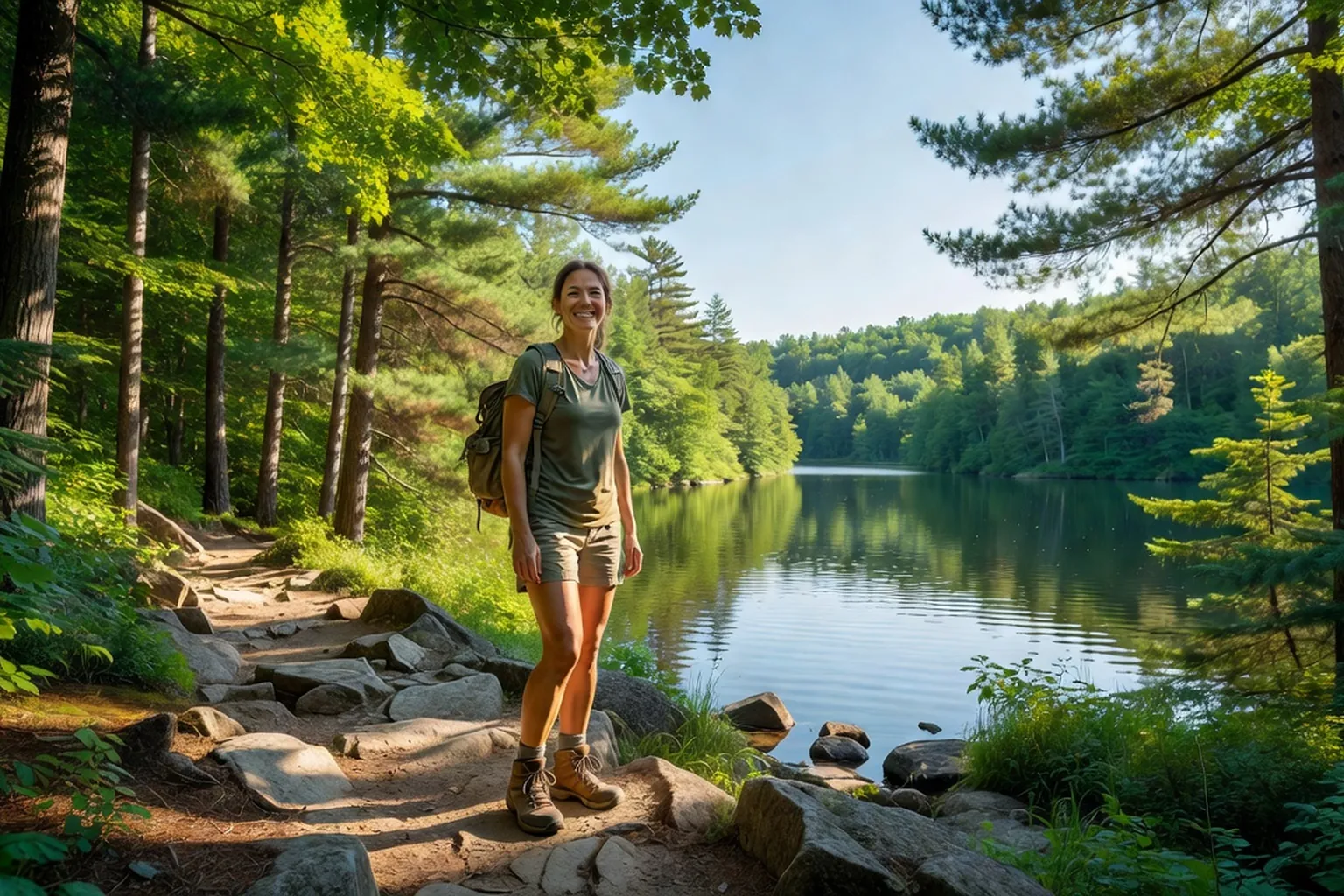
Lusk Cave is the best-known hike in Gatineau Park and the most unusual: an 8.5 km loop from Parent Beach on Philippe Lake that ends at a genuine marble cave you can walk through, wading sections of knee- to waist-deep water. The National Capital Commission rates the trail most difficult and suggests about four and a half hours; plan on five. This guide covers the route, the fees, exactly what to bring, and how to turn the hike into a full day in the park. For the broader picture of the 360-square-kilometre park around it, start with our Gatineau Park year-round guide.
What Is Lusk Cave and Why Go
Lusk Cave is a solution cave carved out of marble as glacial meltwater drained through this corner of the Canadian Shield after the last ice age. That origin story is what makes it special: marble bedrock is rare in the Ottawa-Gatineau region, and very few caves anywhere near the capital can be reached on foot and explored without a guide, ropes or special caving gear. The NCC manages the site as part of Gatineau Park, and the cave is open to self-guided visitors from spring through fall.
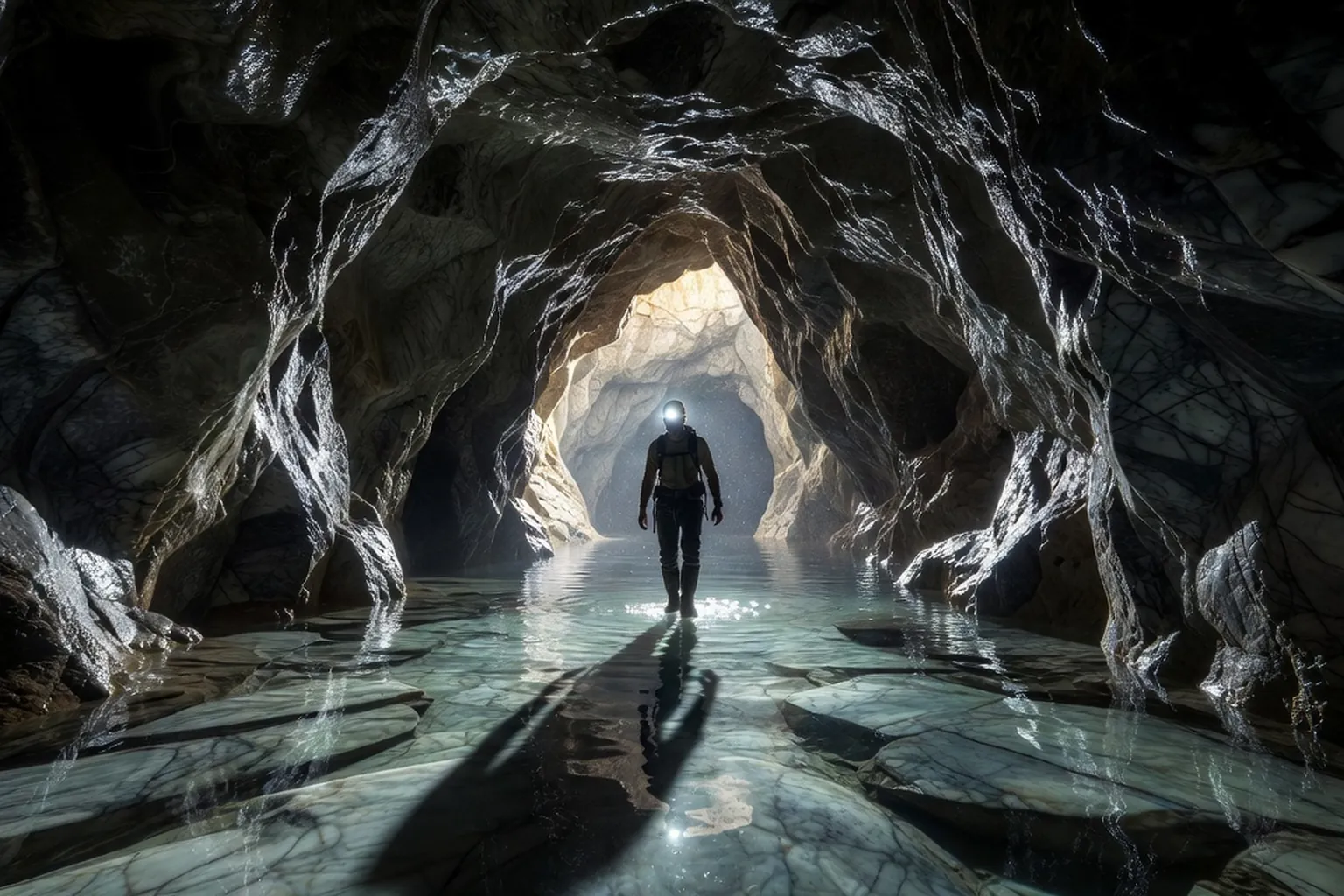
Two sections make up the cave passage, together roughly 100 to 150 metres depending on how you measure. The first is the easy one: a walkable corridor where the water is usually knee-deep and the ceiling stays comfortably high. The second is narrower, lower and deeper, with sections where visitors regularly find the water at waist level or above after wet weather, and where you will be ducking under the roofline. Both sections can be explored independently, which is worth knowing before you arrive: turning back after the first section is a completely respectable way to do Lusk.
The cave sits at the end of a trail that is a destination in its own right. The route follows the eastern shoreline of Philippe Lake through mature forest, passes quiet inlets and rocky lookouts, and can be extended past the cave to Lusk Lake and the historic Lusk Cabin area on the return leg. Visitors who arrive expecting a ten-minute grotto and leave having spent half a day in the woods are the norm, not the exception.
The Trail from Parent Beach to the Cave
All routes to Lusk Cave start at Parent Beach on Philippe Lake, in the northern sector of Gatineau Park. From the parking lot, Trail 50 heads south along the lakeshore: rolling terrain, roots and rocks underfoot, and repeated glimpses of the water through the trees. The walking is pleasant rather than dramatic for the first stretch, which is exactly why the trail builds a crowd gradually instead of all at once.
At the far end of the lake, signs point toward the cave. The last 500 metres climb away from the shore into the forest, and it is here that you first hear the water: an underground stream audible through the rock before you see the entrance. Most hikers reach the cave after about an hour and a half to two hours from the parking lot at a moderate pace.
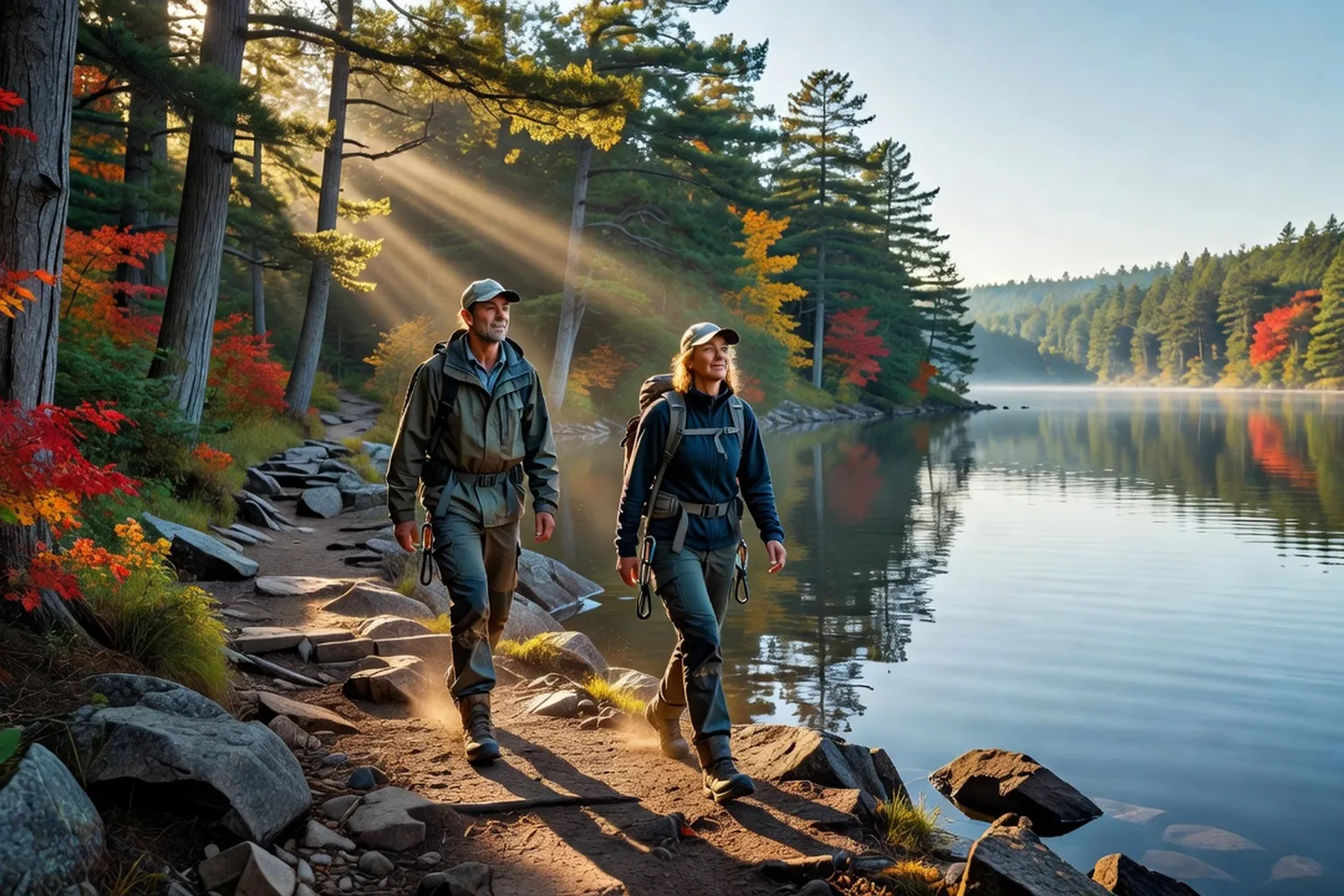
The classic loop continues past the cave on Trail 54 toward Lusk Lake, returning to Parent Beach along a higher, rougher line through the woods. Heritage documentation for the Pontiac area puts the full Parent Beach–cave–Lusk Lake loop at about 12 km with roughly 80 metres of cumulative elevation gain, which matches the way most trip reports describe the long version. Whichever loop you choose, the return leg feels longer than the outbound one; save water and energy accordingly.
A few navigation habits worth adopting:
- Download the NCC’s Gatineau Park trail map before leaving home; cell coverage is unreliable in the northern sector.
- Follow the trail markers at junctions rather than unofficial shortcuts, which braid the area heavily in summer.
- Note the time you leave the parking lot, and decide in advance what your turnaround time is.
- If you want the shortest day, out-and-back along Trail 50 is the simplest option.
Fees, Parking and Getting There
Lusk Cave has no admission fee. The costs are access-related. The Parent Beach parking lot operates seasonally, from spring through fall, and the NCC applies vehicle access fees at Gatineau Park lots from mid-June until Labour Day. Recent visitor reports place a full day of parking in the CA$13 to CA$15 range, and a 2026 change introduced paid parking with a daily maximum around CA$16 at some NCC lots. Fee structures are adjusted from time to time, so verify the current rates on the NCC’s official pages before setting out.
Getting there requires a car. From downtown Ottawa, cross into Gatineau and follow the route toward Old Chelsea and the Lac Philippe sector; Parent Beach is signed from the park’s internal roads, and the drive takes roughly 45 minutes to an hour depending on your starting point and weekend traffic. The road is paved but narrow in places, and on hot Saturdays the lots fill early.
There is no direct public transit service to the Parent Beach trailhead, and cycling to it is realistic only for strong riders comfortable with the park’s rolling roads and a long day in the saddle. Most visitors arriving without a vehicle pair the trip with a taxi or ride-share from Old Chelsea, but the return pickup is unreliable in the northern sector, so this is one Gatineau Park outing where having your own wheels genuinely matters.
Arrive before 10 a.m. on summer weekends for a reasonable shot at parking near the trailhead, and bring payment ready, since payment machines rather than attendants handle most lots. If you are basing a longer stay around the park, our guide to camping and car camping near Ottawa covers the Lac Philippe campground, which sits minutes from the trailhead and turns the Lusk hike into a leisurely morning departure.
What to Bring for the Cave Passage
The single most common mistake at Lusk is arriving with hiking gear only. The trail is only half the activity; the cave is the other half, and it demands its own kit. The NCC’s published list for the cave is specific, and it aligns with what experienced visitors report:
- Water shoes or sturdy sandals with a heel strap you are willing to soak; the cave floor is sharp, uneven marble, so bare feet are a bad idea.
- A helmet — a standard bike helmet is perfectly acceptable and what most visitors wear.
- A waterproof flashlight or headlamp, plus a backup; the cave interior is genuinely dark away from the entrances.
- A bathing suit or quick-dry clothing, and a wetsuit for early- and late-season visits, as the NCC recommends.
- A towel and a full change of clothes left at the entrance or in a dry bag.
- Drinking water and snacks for the trail itself; there is nothing for sale at Parent Beach.
Add insect repellent for the shaded shoreline sections in June and July, and a small dry bag or double zip-locked bag for anything that must stay dry, keys and phone above all.
Inside the Cave: Water Levels and Honest Difficulty
Set expectations correctly and the cave is a delight; set them wrong and it becomes a cold surprise. Water levels in Lusk vary with the season and recent rainfall, and no two summer weeks are identical. The consistent pattern in visitor reports: the first section runs knee-deep and forgiving, while the second section can reach waist depth or higher, with low ceilings that force crouching and occasional hands-and-knees scrambling over slippery rock.
The water is cold even in August. That is half the fun on a hot day, but it also means time spent standing in it saps warmth, and anyone proceeding into the second section should expect to be wet to the chest. The passage takes most groups between twenty minutes and an hour depending on how far they go, how many photos they take, and how carefully they move on the slick footing.
Three groups should think twice about the second section: young children, anyone uncomfortable in enclosed spaces, and anyone who cannot comfortably lift themselves over wet, chest-high rock ledges. The first section alone is genuinely rewarding, involves far less commitment, and still delivers the strange pleasure of watching daylight vanish behind you while an underground stream pulls the light out of the water.
It is also worth knowing what the cave is not. Lusk is not a show cave: there are no installed lights, no paved walkways, no guide at the entrance taking tickets, and no one monitoring conditions hour by hour. That freedom is exactly what makes it memorable, but it means the assessment of water levels, footing and weather is yours to make at the entrance. When conditions look marginal, the correct decision is the unglamorous one. The trail and the lake remain excellent even if the cave interior is skipped entirely.
Safety and Leave No Trace
Lusk is managed as a self-guided cave, which means the responsibility model is different from a show cave with railings and a guide at the front. Treat it accordingly.
Safety first: Check the weather for the days before your visit, not just the day itself — heavy rain raises water levels inside the cave quickly. Never enter alone, tell someone your route and expected return time, and turn back if the water inside is running high or fast. A twisted ankle inside a wet, dark cave is a serious problem, not an inconvenience.
The wider principles are the ones that keep places like Lusk open to the public at all. Stay on the marked trails above the cave to protect the thin soils and the plants clinging to the rock. Pack out everything you pack in, including food scraps. Do not touch cave formations, and resist the urge to move rocks or stack cairns. The marble walls record every visitor’s passage as wear; a decade of care is what keeps the passage walkable, and a season of neglect is what closes places like this. If you are building a wider outdoors itinerary around the capital, our roundup of outdoor adventures near Ottawa, from hiking to paddling, follows the same low-impact logic at other sites.
Turning the Hike into a Full Gatineau Park Day
Lusk Cave pairs naturally with the rest of the northern park. The most obvious addition is Philippe Lake itself: the beach at the trailhead is one of the park’s better swimming spots, and the combination of cave in the morning and swim after lunch is the classic local routine. Here is how the main options compare:
| Add-on | Distance from Parent Beach | Time needed | Best for |
|---|---|---|---|
| Philippe Lake beach and picnic area | At the trailhead | 1-2 hours | A swim and lunch after the cave |
| Lusk Lake and Lusk Cabin loop extension | On the return route | +1 hour | A longer, quieter return leg |
| King Mountain Trail (Trail 30) | About 25 min by car | 2 hours | Lookouts over the Ottawa Valley |
| Mackenzie King Estate and gardens | About 30 min by car | 1-2 hours | History, gardens and afternoon tea |
| Fall parkway drive via Pink Lake | About 30 min by car | Half day | Peak colour from late September |
In July and August, the water-focused version wins: cave early, swim at midday, picnic in the shade. In late September and early October, flip the priorities. The same hardwood forest that frames the trail turns colour, the crowds drop away, and the cave’s cold water becomes bracing rather than refreshing. Our fall foliage guide to Gatineau Park maps the best colour routes for that window, and French-speaking readers looking for more low-cost nature outings in the province will find useful ideas in this French-language guide to budget nature travel in Québec.
Whichever version you choose, give the day one extra margin: Lusk is the kind of outing where a quick visit quietly becomes five hours, and the parking lot conversation on the way out — wet shoes in hand, comparing who went how far into the second section — is half the point. Few hikes this close to a national capital deliver a real cave, a real lake and a real workout in a single loop. Lusk Cave does all three, honestly, and asks only that you show up prepared and leave the place as you found it.
Frequently asked
The National Capital Commission lists the Lusk Cave route as an 8.5 km loop rated most difficult, with an estimated time of about four and a half hours. In practice, most visitor trip reports put the distance closer to 10 km once you account for the walk from the Parent Beach parking area and the wandering the cave itself invites. Budget five hours including a proper cave visit.
No swimming is required, but you will almost certainly wade. Visitor reports consistently describe water that is knee-deep in the first, easier section and waist-deep or occasionally higher in the second section, depending on recent rainfall and the season. You can always turn back at any point, and many visitors explore only the first section.
The cave itself is free and there is no admission charge for the trail. The cost is access and parking: the NCC applies vehicle access fees at Gatineau Park lots from mid-June until Labour Day, and recent visitor reports put a full day of parking in the CA$13 to CA$15 range. Fee structures change, so check the NCC's official rates page before you go.
Fit beginners can manage it in good conditions if they start early, carry water and food, and take their time on the return leg. The honest caveats: the NCC rates the route most difficult, the return trail feels longer than the outbound one, and the cave passage adds slippery rock and cold water on top of the hiking. Families with young children often prefer Lac Philippe's shorter shoreline walks instead.
Mid-summer through early fall is the most forgiving window, when water levels are typically lower, the air is warm and the trail is dry. The cave and its trail are open from spring to fall only, and the parking lot operates seasonally. Late-season visitors should bring a wetsuit or extra warmth, as the NCC recommends, because the water stays cold even when the air does not.