
Getting from Ottawa Macdonald-Cartier International Airport, VIA Rail’s Ottawa Station, or an intercity bus stop into the downtown core is straightforward for first-time visitors, provided you know which option fits your arrival point. The airport lies roughly 10 km south of Parliament Hill, with both the O-Train Line 4 Airport Link and OC Transpo Route 97 providing direct connections in 30–45 minutes for the price of a single OC Transpo fare. VIA Rail’s station at 200 Tremblay Road connects via a covered walkway to Tremblay O-Train station, placing downtown stops such as Parliament and Rideau within a 10–12-minute ride. Intercity buses currently use on-street stops rather than a central terminal, so planning a short taxi or local transit leg is usually required. This guide walks through each arrival point in turn, so you can pick the right route before your wheels touch down or your train pulls in.
Quick answer: whichever way you arrive, a single OC Transpo fare gets you from the airport or train station to downtown Ottawa in well under an hour.

Arriving at Ottawa Macdonald-Cartier International Airport (YOW)
Ottawa Macdonald–Cartier International Airport, code YOW, handles the majority of air arrivals to the capital. The facility sits south of the city, and travellers can expect a roughly 20-minute drive under normal traffic conditions when heading north toward the downtown core via the Airport Parkway. Two reliable public-transit choices operate from the arrivals level: the O-Train Airport Link and a 24-hour bus service. Both options integrate with the broader OC Transpo network, allowing seamless transfers to Line 1 stations serving Parliament Hill and Rideau Centre.
Because Line 4 opened only in January 2025, riders should confirm current schedules on the OC Transpo website before travel — a new rail line’s early operating patterns can still be adjusting. The line runs to South Keys station on Line 2, after which a quick transfer to Line 1 completes the journey to downtown in roughly 35–45 minutes total. Route 97 continues to serve the same corridor alongside the new rail service, offering a reliable backup during maintenance periods or late-night travel when rail frequencies drop. For visitors landing after a long-haul flight who would rather not manage a transfer, this bus route also has the advantage of being a single, direct ride.
Airport signage typically directs arriving passengers toward both the O-Train platform and the bus stop, both accessible from the same arrivals-level concourse without needing to cross a roadway. If this is your first time navigating a Canadian transit system, allow a few extra minutes to locate the correct platform or find a ticket machine — airport transit hubs are usually well marked, but jet lag and unfamiliar signage can slow anyone down.
Public Transit Options from the Airport
A single OC Transpo fare covers the entire trip from the airport to any downtown station, whether you choose the train or the bus. The following table summarises the two primary choices:
| Option | Travel Time | Frequency | Notes |
|---|---|---|---|
| O-Train Line 4 + Line 1 | 35–45 min | Peak every 10–15 min | Fully accessible; transfer at South Keys |
| OC Transpo Route 97 | ~30 min | Every 15–30 min, 24 hours | Direct to Hurdman; continues to Rideau |
Both services are low-floor and include designated spaces for mobility devices, so travellers with luggage, strollers, or mobility aids should find boarding straightforward on either option. Night bus routes run approximately every 30 minutes and extend to Rideau Station after O-Train service ends for the night. Line 1 operates until roughly 2 a.m. on Fridays and Saturdays, while Lines 2 and 4 follow more standard hours of roughly 6 a.m. to midnight on weekdays — worth keeping in mind if your flight lands very late or very early.
If you are travelling with a large group or significant luggage, the bus option (Route 97) can feel simpler since it avoids a mid-journey transfer. Solo travellers or those comfortable with one transfer often find the train faster during peak daytime hours.
VIA Rail Arrivals at Ottawa Station
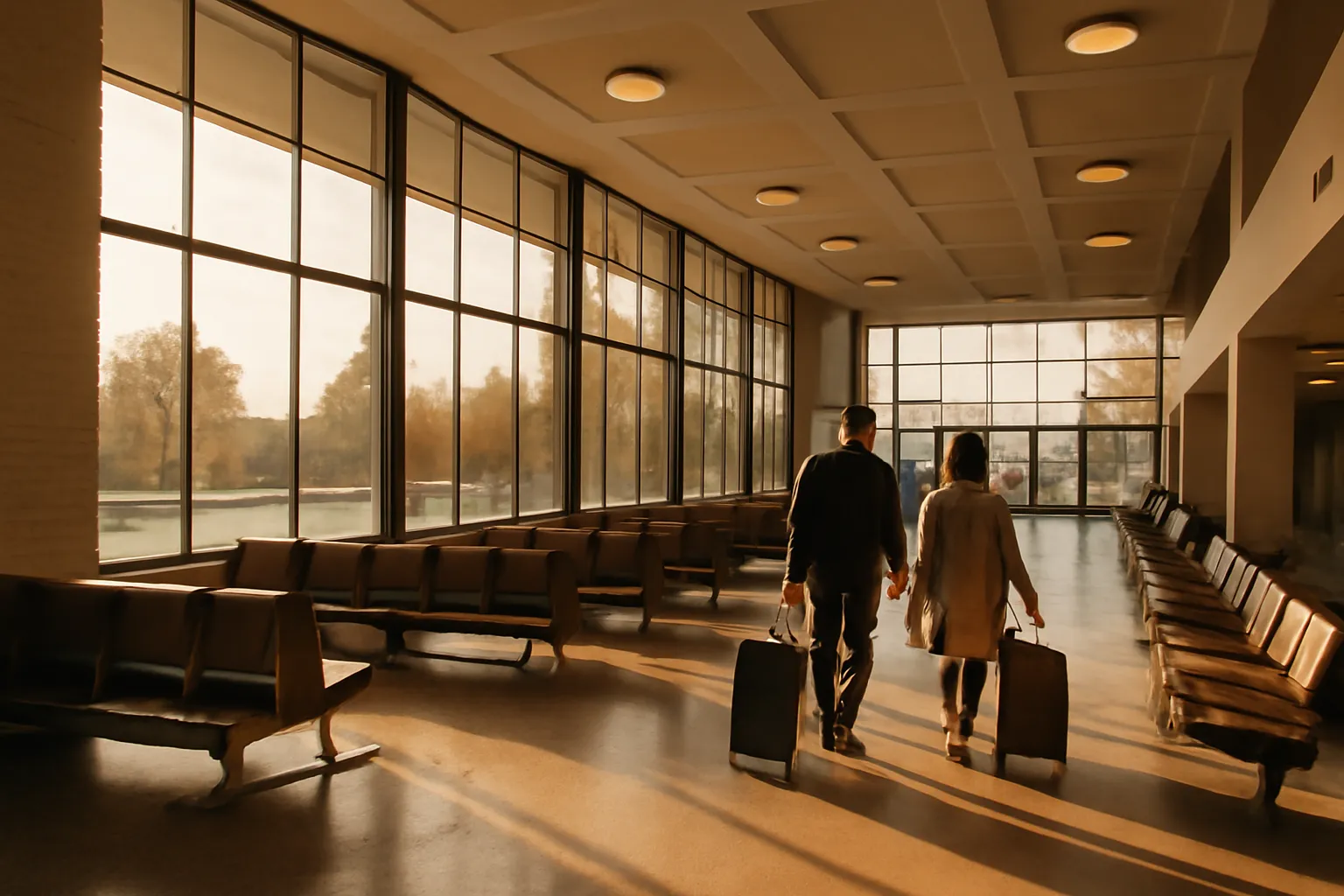
Trains pull into the station at 200 Tremblay Road, east of the downtown core, in a modern facility with clear signage toward the O-Train connection. A covered walkway leads directly to Tremblay O-Train station on Line 1, eliminating the need to cross streets with luggage in poor weather — a genuinely useful design touch for anyone arriving in winter or during a downpour. From Tremblay, westbound trains reach Parliament and Rideau stations in 10–12 minutes. The station building itself provides indoor waiting areas, ticket counters, and washrooms, making the transfer comfortable even in poor weather, and there are typically food and coffee options for a quick bite before the final leg of the journey.
Connecting from the Train Station to Downtown
Once aboard Line 1, riders can disembark at Rideau for immediate access to the ByWard Market or continue one stop farther to Parliament for the Rideau Canal and major museums. Because the line runs frequently during daytime hours, most visitors reach their accommodation or first attraction within 15 minutes of boarding. For those arriving after midnight, the station remains connected to several night bus routes that follow the same corridor, though frequencies drop and it’s worth checking current schedules rather than assuming the same daytime cadence applies.
For visitors heading straight to a hotel outside the immediate downtown core, it’s worth checking your accommodation’s exact distance from the nearest O-Train stop before committing to the transit option over a taxi — a few blocks can make a meaningful difference with heavy luggage.
Intercity Bus Travel to Ottawa
Ottawa has operated without a dedicated intercity bus terminal since the former Greyhound facility on Catherine Street closed in 2021. Megabus and FlixBus now use designated on-street stops, most often near major transit hubs or along Rideau Street. Upon arrival, travellers can transfer directly to OC Transpo buses or the O-Train using the same single-fare system that covers the rest of the city’s transit network. Because stops lack extensive indoor facilities compared to a proper terminal, checking the exact drop-off location in advance and allowing extra time for luggage handling is advisable, particularly in poor weather or after dark.
This is a genuine gap compared to some other Canadian cities, and it’s worth setting expectations accordingly: don’t expect a covered terminal with seating and washrooms if you’re arriving by intercity coach. A quick look at your carrier’s website for the current stop address before you travel will save confusion on arrival.
Taxi, Rideshare, and Other Ground Options
Taxis and rideshare vehicles are available at the airport arrivals curb and outside the VIA Rail station. These services reach downtown hotels in about 20 minutes under typical conditions, though traffic on Highway 417 can extend the trip during rush hours. For visitors staying in the core, public transit remains the most economical choice; however, rideshare apps provide a convenient alternative when travelling with heavy luggage, young children, or outside regular transit hours when frequencies drop.
If you’re arriving as a family or group of three or more, comparing the combined cost of individual transit fares against a single rideshare fare is worth a moment’s thought — the economics can tip either way depending on group size and luggage.
Accessibility on Arrival and First Steps
OC Transpo buses and O-Trains are low-floor vehicles equipped with ramps and priority spaces for mobility devices. The airport and VIA Rail station both feature elevators and accessible washrooms. Once downtown, Parliament Hill’s Visitor Welcome Centre and West Block offer ramps, elevators, and accessible seating on request. The Canadian Museum of History and National Gallery of Canada similarly provide free wheelchairs and scooters on loan. ByWard Market presents more challenges: cobblestone surfaces, gravel patches, and uneven sidewalks can impede mobility-device users, so planning routes along paved streets is recommended if this affects your visit — see our accessible Ottawa guide for a fuller breakdown.
Deciding Between a Rental Car and Transit-Only Itinerary
- Downtown attractions, museums, and the ByWard Market are all reachable on OC Transpo without a vehicle.
- Gatineau Park can be accessed via STO buses to the park edge or the NCC’s free seasonal shuttle operating weekends and holidays from May to October.
- Wakefield is served by a Transcollines route roughly once daily, though the limited schedule reduces flexibility.
- Montebello has no practical direct transit link and is best reached by car or a bus-plus-taxi combination.
Most first-time visitors therefore find public transit sufficient for an initial stay centred on the downtown core, and can add a rental only if day trips beyond the city — particularly Montebello — are firmly on the itinerary. For a deeper look at this decision, see our car vs. no car guide.
What to Do in Your First 30 Minutes
Once you’ve cleared the airport or stepped off the train, a short checklist keeps the first leg of your trip simple:
- Locate the OC Transpo fare machine or app and load a single fare or a day pass, depending on how much travel you expect that day.
- Confirm the current platform or stop for your connection — signage is generally clear, but double-checking avoids a wrong-direction ride.
- If arriving very early morning or late at night, check whether your connecting service is still running at reduced frequency before committing to the transit option over a taxi.
- Keep your accommodation address and a rough transit or driving route saved offline in case of connectivity issues on arrival.
To complete your arrival plan, purchase an OC Transpo Presto card or single-ride tickets before leaving the airport or train station, then board the next O-Train or Route 97 service heading north. Whichever mode you choose, the connections into downtown Ottawa are short enough that most visitors are checking into their accommodation, or standing in front of Parliament Hill, within the hour.
Frequently asked
OC Transpo Route 97 bus reaches downtown (Hurdman station) in about 30 minutes and runs 24 hours a day, making it a reliable direct option. The O-Train Line 4 Airport Link (opened January 2025) connects to South Keys, then onward via Line 2 and Line 1, taking roughly 35-45 minutes total with one transfer.
Ottawa's VIA Rail station is at 200 Tremblay Road, east of downtown. A covered walkway connects it directly to Tremblay O-Train station on Line 1, putting Parliament and Rideau stations 10-12 minutes away by train.
No. Ottawa has had no dedicated intercity bus terminal since the former Greyhound facility closed in 2021. Current operators like Megabus and FlixBus use on-street stops, so check your carrier's exact stop location before travelling.
No — OC Transpo's Route 97 bus and the O-Train Line 4 Airport Link both connect YOW airport to downtown, and taxis or rideshare are also readily available at the arrivals curb.
Yes. OC Transpo buses and O-Trains are low-floor vehicles with designated spaces for mobility devices, and both the airport and VIA Rail station have elevators and accessible washrooms.