
Planning an accessible visit to Ottawa is less about finding a single “fully accessible” route through the city than it is about choosing the right anchors: transit-connected attractions, reliable indoor options, realistic distances and a little flexibility around older streets and seasonal conditions. The compact downtown core can work well without a car, while landmark institutions have made meaningful provisions for wheelchair and mobility-device users.
Quick answer: Ottawa’s downtown core, its major museums and its low-floor transit network make an accessible car-free visit realistic, but ByWard Market’s older streets need specific planning.
For this editorial Q&A, OttawaTours speaks with Maya Chen, a fictional accessibility-focused travel planner created for this feature. Her suggestions are general trip-planning guidance, not individualized accessibility advice. Conditions, entrances, loan equipment and transit operations can change, so travellers should confirm details directly with each venue before setting out.
Starting an Accessible Ottawa Itinerary
Question: Where should a visitor begin when planning an accessible Ottawa itinerary?
Maya Chen: Begin by building your trip around a few confirmed, wheelchair-accessible major sites rather than trying to cover every neighbourhood in a day. Ottawa’s downtown core is a good base because Parliament Hill, several museums, Rideau Centre and much of the central transit network are close together.
I would first decide on three practical things:
- Where you will stay and how you will reach it: Look for a location near a Line 1 O-Train station or a frequent downtown bus corridor, then ask the accommodation directly about the access details that matter to you: step-free entrance, elevator dimensions, accessible-room features, parking, bed height or shower configuration.
- Your must-see places: Parliament Hill, the National Gallery of Canada and the Canadian Museum of History are strong starting points because accessibility provisions are clearly established.
- Your energy and weather plan: Ottawa can involve long blocks, wide streets and winter conditions. Leave room for breaks, indoor stops and a return-to-hotel option rather than treating an itinerary as a fixed checklist.
For broad orientation, readers can pair this article with OttawaTours’ guide to things to do in Ottawa and its getting around Ottawa coverage. The key difference here is to plan each transfer, entrance and rest stop deliberately.
Accessible Transit Options
Question: Can visitors get around Ottawa on public transit with a wheelchair or mobility device?
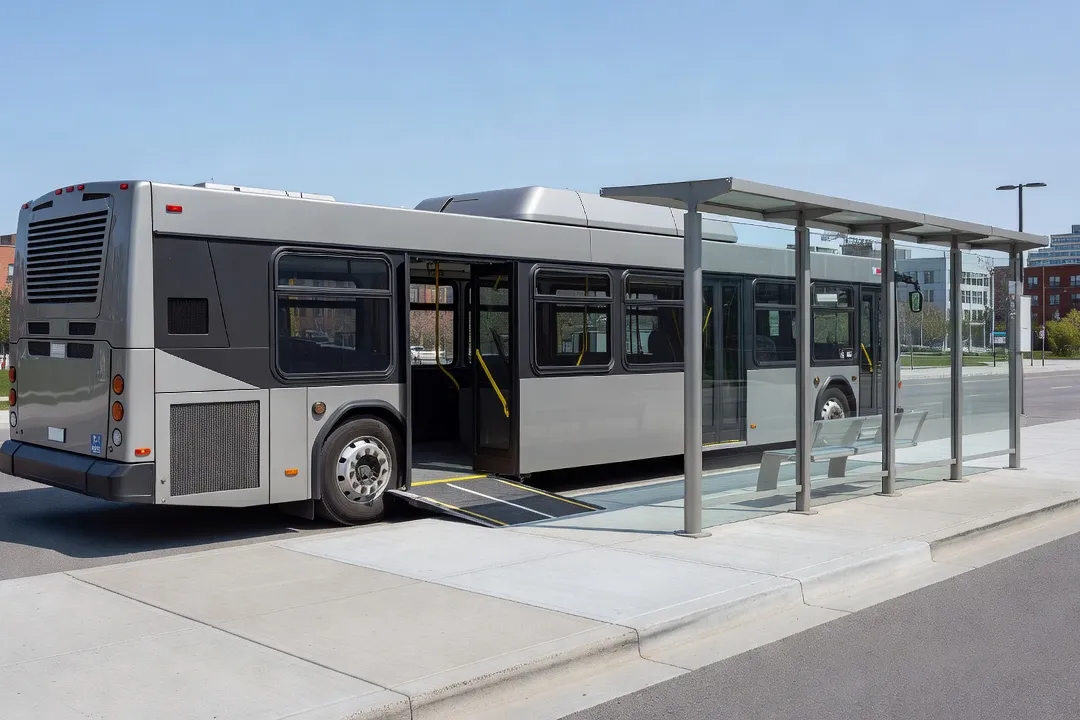
Maya Chen: In many cases, yes. OC Transpo buses and O-Trains are low-floor and accessible, with designated mobility-device spaces. For a downtown-focused visit, public transit can be a practical alternative to renting a car.
The most useful principle is to keep transfers simple. Check the exact route and station before leaving, allow extra time, and have a backup option if an elevator, service pattern or weather condition affects the route you expected to take.
| Travel situation | Practical accessible-transit note |
|---|---|
| Airport to downtown | O-Train Line 4, the Airport Link, connects Ottawa Macdonald–Cartier International Airport (YOW) with South Keys, where travellers can connect with Line 2 and then downtown Line 1. It generally takes roughly 35–45 minutes in total and uses a single OC Transpo fare; confirm the current fare before travel. |
| Airport alternative | OC Transpo Route 97 runs 24 hours and connects YOW with downtown via Hurdman station. The ride is roughly 30 minutes, and the route continues to operate alongside Line 4. |
| Downtown movement | Line 1 serves central stations including Parliament and Rideau, making it useful for a cluster of downtown attractions. |
| Rail arrival | VIA Rail’s Ottawa Station is at 200 Tremblay Road. A covered walkway links it with Tremblay O-Train station on Line 1; downtown Parliament/Rideau stations are roughly 10–12 minutes away by train. |
| Late travel | “Night” buses run roughly every 30 minutes and extend to Rideau Station. Line 1 runs until roughly 2am on Friday and Saturday, while Lines 2 and 4 generally keep weekday hours of roughly 6am to midnight. Check schedules for your date. |
Airport travel is a good example of why it helps to confirm the live journey on the day. The airport is about 10 km south of downtown, approximately a 20-minute drive in favourable conditions, but a transit trip includes connections and station navigation. A visitor who prefers the least complicated journey may choose an accessible taxi or other pre-arranged vehicle instead; contact the provider in advance to discuss the size and type of mobility device.
One honest caveat: intercity bus arrival can be less straightforward. Ottawa has not had a dedicated intercity bus terminal since Greyhound Canada’s 2021 shutdown. Current operators including Megabus and FlixBus generally use on-street stops, not a terminal building. If you are arriving by intercity coach, verify the exact stop, surrounding curb conditions, boarding process and luggage assistance arrangements before booking.

The Most Reliable Accessible Attractions
Question: Which major attractions are the most reliable choices for wheelchair accessibility?
Maya Chen: The strongest starting list is short and reassuring: Parliament Hill’s visitor facilities, the National Gallery of Canada and the Canadian Museum of History. These are major experiences, not “accessibility substitutes,” so an accessible itinerary does not need to feel like a compromise.
Parliament Hill remains worth including despite the long Centre Block restoration. The Centre Block is under restoration, with completion currently expected around 2031 and public reopening anticipated in 2032. In the meantime, visitors should focus on what is available through the Visitor Welcome Centre and West Block.
- Parliament Hill Visitor Welcome Centre: Located between West Block and Centre Block, it is wheelchair accessible.
- West Block: Wheelchair accessible, with ramps and elevators.
- Accessible seating: Available on request for parliamentary experiences where applicable; ask during the planning or booking process.
- National Gallery of Canada: Wheelchair accessible, with elevators and free wheelchairs and scooters available on loan.
- Canadian Museum of History: Wheelchair accessible, with elevators and free wheelchairs and scooters available on loan.
The National Gallery and the Museum of History also make an excellent cross-river pairing, although visitors should allow enough time for transit and entry rather than assuming the river crossing is an effortless add-on. The Museum of History is in Gatineau, and it is worth treating it as a principal destination for the day.
At each venue, I would confirm the day-of details: accessible entrance, security procedures, loan-equipment availability, whether equipment can be reserved, accessible washroom locations and any temporary gallery or elevator disruptions. “Wheelchair accessible” is useful information, but it does not always answer the details a particular traveller needs.
ByWard Market: Realistic Expectations
Question: Is the ByWard Market accessible enough to include?
Maya Chen: It can be included, but it should be approached with clear expectations. ByWard Market is one of Ottawa’s most recognisable areas, with food, shops and historic streets, yet it is also the part of a central itinerary where surface conditions can become the biggest barrier.
Heritage-building constraints, uneven sidewalks and patches of cobblestone or gravel make some parts of the area genuinely difficult for wheelchair users and people using mobility devices. It would not be accurate to describe the entire Market as fully accessible.
My approach would be:
- Plan a short, purpose-led visit rather than an open-ended wander.
- Identify one or two particular businesses or food stops and contact them if step-free access is essential.
- Move slowly, especially after rain, during freeze-thaw periods or when winter conditions affect pavement.
- Keep a nearby indoor backup in mind: the enclosed ByWard Market Building has shops and food available year-round.
- Use Rideau Station and the nearby CF Rideau Centre as practical transit and rest anchors.
The Rideau Centre, at 50 Rideau Street, is a large downtown shopping mall one block from Parliament Hill and connected to The Westin hotel. That makes it useful not only for shopping but as a weather-protected pause in a day that includes the Market, Parliament Hill or nearby galleries.
The Market can still be rewarding, but accessibility planning here should be specific rather than assumed. For a fuller neighbourhood overview, see OttawaTours’ ByWard Market guide, while keeping the surface limitations in mind.
Weather and Backup Plans
Question: What should visitors do if rain, snow or fatigue changes the plan?
Maya Chen: Ottawa rewards having a “Plan B” that is as enjoyable as Plan A. Rather than treating indoor time as a fallback, build it into the itinerary from the beginning. Museums are obvious choices, but there are several useful downtown alternatives.
For a flexible indoor day, consider this mix:
- National Gallery of Canada: A major accessible museum option with elevators and loan wheelchairs/scooters.
- Canadian Museum of History: Another accessible major museum, across the river in Gatineau.
- Bank of Canada Museum: Free admission.
- Ottawa Art Gallery: Free admission and open late Wednesday through Saturday.
- CF Rideau Centre: Large enclosed shopping centre near Parliament Hill.
- ByWard Market Building: An enclosed Market option with year-round shops and food.
- Lansdowne: Shops, restaurants and the historic Aberdeen Pavilion.
The important distinction is between indoor shelter and a genuinely low-effort day. A museum can be fully indoors but still involve a lot of gallery space, standing or travelling between floors. If energy conservation matters, choose one substantial venue, schedule a meal or quiet break nearby, and avoid stacking multiple cross-city transfers.
Season also matters outdoors. In spring, some visitors ask about cherry blossoms. Ottawa does not have a formal cherry blossom festival. The popular informal viewing area is the Dominion Arboretum, part of the Central Experimental Farm between Dow’s Lake and the Rideau Canal. Magnolias generally peak in early to mid-May, followed by cherry blossoms in mid to late May. Many trees photographed as “cherry blossoms” around Ottawa are actually crabapple blossoms. It is a self-guided visit, so surface conditions, weather and accessible route details should be checked locally rather than assumed from blossom photographs.
Gatineau and Day Trips Without a Car
Question: Does a visitor with mobility needs need to rent a car for Ottawa and Gatineau?
Maya Chen: Not necessarily for an urban visit. Downtown Ottawa, Parliament Hill, the major museums and ByWard Market are all served by OC Transpo buses and the O-Train. A no-car trip can be realistic when the itinerary stays concentrated and the traveller is comfortable planning routes in advance.
A car becomes more attractive when the priority is reaching less-connected day-trip destinations, carrying equipment, or controlling timing in bad weather. But it is not the only way to see beyond downtown.
For Gatineau Park, a car is not strictly required. STO bus routes reach the park’s edge, and the National Capital Commission operates a free seasonal shuttle on weekends and holidays from May to October, linking downtown Ottawa-Gatineau with park attractions and the Chelsea Visitor Centre. Check the current shuttle schedule and accessibility information before relying on it; a seasonal service should never be assumed to be operating outside its stated period.
For the region’s better-known village trips, the trade-off is clearer:
- Wakefield: Reachable by a Transcollines bus line in roughly 40 minutes, but service is limited to about once daily. It is technically possible by transit but impractical for many visitors.
- Montebello: There is no meaningful direct public transit. It is effectively car-only, or requires a bus-plus-taxi combination, and is roughly a one-hour drive from Ottawa.
For more on outdoor planning, readers can consult OttawaTours’ Gatineau Park year-round guide and day trips from Ottawa. Accessibility needs may make an independently paced city itinerary more satisfying than trying to force a distant day trip into a short stay.
Who to Contact Before You Arrive
Question: Who should visitors contact with accessibility questions before arrival?
Maya Chen: Contact the organisation that controls the part of the journey you are relying on. It sounds obvious, but travellers often ask a hotel about museum access, or a museum about transit elevator status. A better plan is to make a short list and ask targeted questions.
| If you need to confirm… | Contact first | Questions worth asking |
|---|---|---|
| Accessible airport-to-city journey | OC Transpo and, where relevant, your vehicle provider | Current service, accessible boarding, mobility-device space and elevator or station status |
| Hotel room and building access | Your accommodation directly | Step-free entry, accessible room features, lift access, parking and any equipment-storage needs |
| Parliament visit | Parliament Hill’s official visitor service | Accessible entrance, ramps/elevators, security process and accessible seating request |
| Museum visit | The National Gallery or Canadian Museum of History directly | Loan wheelchair/scooter availability, reservation process, accessible entrance and washrooms |
| Specific Market shop or restaurant | The business itself | Step-free entrance, washroom access, seating layout and temporary construction issues |
| Park shuttle or outdoor route | The NCC or relevant transport operator | Current seasonal operation, boarding arrangements and accessible stops |
When contacting a venue, be precise. Instead of asking only, “Is it accessible?” try: “Is the public entrance step-free?” “Can I reserve a loan scooter?” “Is there an elevator on the route to the exhibition?” “Can my device fit in the designated transit space?” “Is the accessible washroom available during my visit?” Those questions produce answers you can use.
For solo travellers, Ottawa generally has a positive reputation among visitors, but normal city travel awareness still applies. Keep a charged phone, know your return route, and avoid relying on late-night rail without checking the schedule. Night buses offer more coverage later in the evening, while rail availability is more limited outside Line 1’s later Friday/Saturday hours.
Final Checklist
Question: What is the most useful final step before booking or setting out each day?
Maya Chen: Make official accessibility pages part of your itinerary, not an afterthought. Before visiting, check the official accessibility page for every major site and the official service updates for OC Transpo. Reconfirm the details closest to your date, especially if you need loan equipment, accessible seating, an elevator-dependent route or seasonal transportation.
A practical final checklist is:
- Check the venue’s official accessibility information.
- Confirm opening hours, entrance and any advance booking requirement.
- Check OC Transpo service updates and your station/transfer route.
- Contact venues directly with device-specific or personal access questions.
- Save a lower-energy indoor alternative nearby.
- Leave extra time for transfers, security, weather and uneven historic streets.
Ottawa can be a rewarding city for accessible travel when plans are specific, realistic and flexible. Start with the accessible major institutions, use transit deliberately, be candid about the ByWard Market’s uneven surfaces, and verify official accessibility information before every visit.
Frequently asked
Not necessarily. Downtown Ottawa, Parliament Hill, the major museums and ByWard Market are all served by low-floor OC Transpo buses and the O-Train, which have designated mobility-device spaces.
Parliament Hill's Visitor Welcome Centre and West Block, the National Gallery of Canada, and the Canadian Museum of History are the strongest starting points, all offering ramps or elevators and, at the two museums, free loan wheelchairs and scooters.
Only partially. Heritage buildings, cobblestone patches and uneven sidewalks make some blocks genuinely difficult, so a short purpose-led visit with a nearby indoor backup like the enclosed ByWard Market Building is the recommended approach.
Yes, in season. STO buses reach the park's edge, and the National Capital Commission runs a free seasonal shuttle on weekends and holidays from May to October linking downtown to park attractions and the Chelsea Visitor Centre.
Contact whichever organisation controls that leg of the journey directly: OC Transpo for transit, your accommodation for room access, and each venue for loan-equipment availability, accessible entrances and washroom locations.