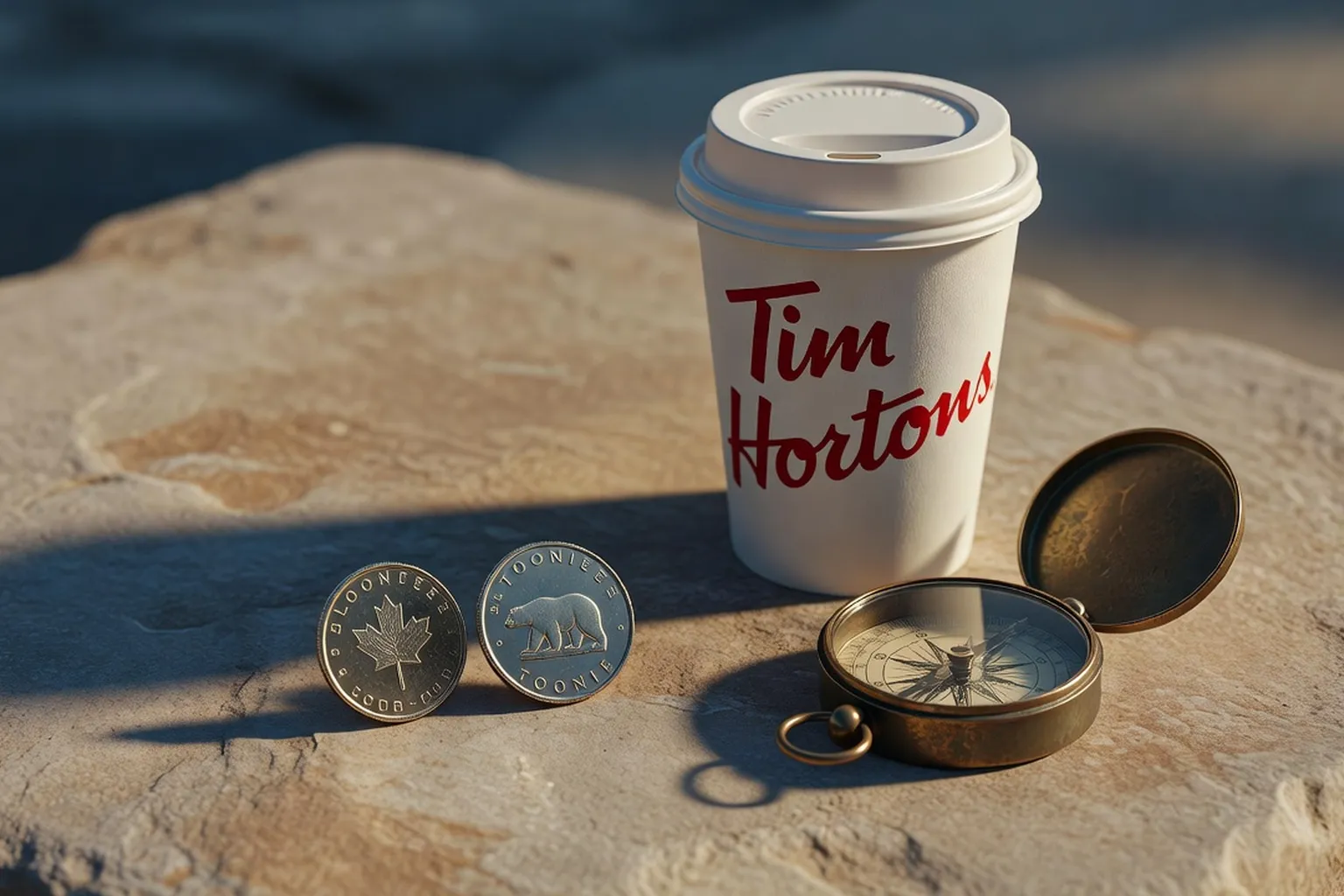
Ottawa’s vocabulary sits at the intersection of Canada’s two founding languages, layered with regional colloquialisms and federal bureaucratese. The city’s linguistic particularities reflect its role as the national capital: a place where “double-doubles” are currency in Tim Hortons, where the Rideau Canal becomes “the world’s largest skating rink,” and where “protocol” isn’t just etiquette but a way of navigating Parliament Hill. This glossary decodes the terms most likely to puzzle visitors from the US and UK, from the price of a poutine to the purpose of a “constituency office.” These words are not mere labels—they are keys to understanding daily life in a capital built to serve citizens from coast to coast.
| Term | Meaning |
|---|---|
| Loonie | The one-dollar coin, named for the loon on its reverse |
| Toonie | The two-dollar coin, featuring a polar bear |
| Double-double | A coffee with two creams and two sugars, Tim Hortons shorthand |
| GST/HST | Goods and Services Tax, combined with provincial tax into a 13% HST in Ontario |
| Tap and Go | Contactless payment, usable up to $250 CAD without a PIN |
Heads up: listed prices in Canada rarely include tax — the HST is added at the till, so budget roughly 13% above the sticker price in Ontario.
Currency, coffee and daily exchanges
Loonie
The loonie is the common name for Canada’s one-dollar coin, introduced in 1987 to replace the paper one-dollar note. Named for the image of a common loon—a diving waterfowl—on its reverse, the coin is 26.5 mm in diameter, weighs 7 g, and is struck from aureate-plated nickel. Visitors will often see it in use when paying exact fares on the OC Transpo bus, where drivers do not provide change for bills over $20. The coin is also essential for visitors hoping to leave a tip in cash at a local café or for purchasing a bag of fresh produce at the ByWard Market’s food culture on a Saturday morning.
Toonie
Introduced in 1996 as a companion to the loonie, the toonie is the two-dollar coin, featuring a polar bear on its reverse. Weighing 7.5 g and measuring 28 mm across, it is the heaviest regularly used Canadian coin. In Ottawa, where seasonal temperatures can swing from –25°C in winter to +30°C in summer, the toonie’s durability makes it ideal for vending machines at outdoor rinks or for buying a hot chocolate after skating on the Rideau Canal. Many visitors remark on the weight of the toonie in their pockets—an immediate tactile lesson in Canadian currency.
Double-double
A “double-double” is a coffee order that contains two creams and two sugars, and is most closely associated with the Tim Hortons chain, founded in Hamilton, Ontario, in 1964. While the term is widely used across Canada, Ottawa has one of the highest concentrations of Tim Hortons per capita in the country, with dozens of locations including a 24-hour branch on Rideau Street. Locals may shorten it to “double” when ordering, but visitors who request a “large coffee with cream and sugar” will still be understood. Pricing varies by location and changes over time, so check current prices in-store or on the Tim Hortons app, but the drink remains an inexpensive staple of Canadian social ritual, from pre-dawn commutes to post-skate hangouts.
Poutine
Poutine is a dish of fresh-cut fries topped with cheese curds and brown gravy, originating in rural Quebec in the 1950s. In Ottawa, it has been elevated into a culinary symbol, with a range of restaurants and pubs across the city serving versions that blend Quebecois tradition with local ingredients — worth checking current menus and prices locally, since both vary by venue. It is best enjoyed after a winter walk along the Ottawa River Pathway, when the warmth of the gravy contrasts with the cold air. Visitors from the US or UK may find the cheese curds—a squeaky, unaged cheddar—to be the most distinctive element, especially when served warm.
Timbit
A Timbit is a bite-sized doughnut hole sold by Tim Hortons, introduced in 1976. Flavours range from classic plain, cinnamon, and apple to seasonal options like pumpkin spice or maple dip. In Ottawa, Timbits are a popular snack for schoolchildren during field trips to the Canadian Museum of History or for office workers during coffee breaks at the National Arts Centre. Prices vary by store and change over time, so check current pricing in-app or in-store, and visitors are often surprised by the sheer variety of flavours on offer. While some may dismiss them as fast food, their convenience and cultural ubiquity make them an essential part of Ottawa’s daily rhythm.
Visitors who become comfortable with Ottawa’s monetary and culinary terms will find themselves navigating markets, cafés, and public transit with greater ease. These exchanges are not just transactions—they are the micro-moments that reveal how the city functions. While the next section turns to the language of power and governance, these terms ground the reader in the texture of local life: the weight of a toonie in your palm, the scent of gravy on a frozen evening, the first sip of a double-double after a long journey.
Politics, institutions and federalese
LCBO
The LCBO, or Liquor Control Board of Ontario, is the provincial Crown corporation that regulates the sale of alcoholic beverages in Ontario. Founded in 1927 following Prohibition, it operates several hundred retail outlets across the province, including a number in Ottawa such as the one at Rideau and Dalhousie. The LCBO’s mandate includes enforcing minimum pricing, restricting sales to those over 19, and operating a mail-order service for residents. Visitors from jurisdictions with privatised liquor sales—such as much of the US—often remark on the LCBO’s regulated pricing, which is uniform across the province and factors provincial taxes and markups into the shelf price. Prices for Canadian whisky and other spirits vary by brand and size, so check the LCBO website or an in-store price tag for current figures.
OHIP
OHIP, the Ontario Health Insurance Plan, is the publicly funded health insurance programme that covers medically necessary services for Ontario residents, including visitors who qualify under interprovincial agreements. While tourists are not typically eligible for OHIP coverage, they are still responsible for presenting their provincial or territorial health card—or, in the case of international visitors, private travel insurance—when seeking treatment at hospitals like The Ottawa Hospital or clinics in the ByWard Market. The system operates on a fee-for-service model, with physicians billing OHIP directly for consultations. Visitors should note that while emergency care is accessible, non-emergency services such as dental care, prescriptions, or ambulance transport are not covered and must be paid out of pocket or through private insurance.
Rideau Canal
The Rideau Canal, designated a UNESCO World Heritage Site in 2007, is a 202 km-long waterway linking Ottawa to Kingston and the St. Lawrence River. Built between 1826 and 1832 under the direction of Lieutenant Colonel John By, it was designed as a military supply route to bypass the vulnerable St. Lawrence during the War of 1812. Today, it serves as a recreational corridor and, in winter, transforms into the world’s largest skating rink—20 km of frozen surface from the Rideau Centre to Carleton University, covered in full detail in our Rideau Canal UNESCO guide. In summer, visitors can rent kayaks or take boat tours from the Ottawa Locks; current lockage fees and passage rates are posted by Parks Canada and are worth checking before setting out. The canal’s stone locks and historic buildings, including the former Commissariat, offer a glimpse into Canada’s early engineering achievements.
Shawarma
Shawarma, a Levantine dish of spiced meat cooked on a vertical rotisserie and served in pita with garlic sauce, pickles, and vegetables, has become a staple of Ottawa’s culinary landscape. The dish arrived with Lebanese and Syrian immigrants in the mid-20th century and has since evolved into a late-night meal for students and civil servants alike. A number of shawarma spots around Elgin Street and the ByWard Market keep late hours on weekends, catering to those leaving Parliament Hill after evening sessions or students from the University of Ottawa — it is worth checking current hours before heading out late. Prices for a standard serving of beef shawarma with garlic sauce, fries, and a drink vary by restaurant. Visitors from the UK may recognise shawarma from its appearance in popular culture, though Ottawa’s versions tend to be less sweet and more heavily spiced with cumin and sumac.
OC Transpo
OC Transpo is the public transit agency serving the City of Ottawa, operating bus routes and the O-Train light rail system. Formed in 1973, it is one of the few transit systems in North America to operate 24 hours on weekends, reflecting Ottawa’s status as a city of shift workers, students, and late-night commuters. The O-Train network includes Line 1, the east-west light rail line that opened in 2019, and Line 2, the Trillium Line running north-south toward the airport area, which has since been extended and upgraded. Current OC Transpo fares and transfer windows are posted on the OC Transpo website and are worth checking before travelling, as they are periodically revised; a single adult fare typically allows enough transfer time to travel from the airport area to downtown with a connection. The system’s use of Presto cards—shared with GO Transit in the Greater Toronto Area—simplifies fare payment for visitors already familiar with the technology.
Distance, weather and units
Before diving into individual entries, a quick conversion table covers most of the metric-to-imperial confusion visitors run into:
| Metric unit | Imperial equivalent | Common Ottawa reference |
|---|---|---|
| 1 kilometre | 0.621 miles | Downtown core spans roughly 4 km |
| 1 litre | 0.264 gallons | Standard bottled water size |
| 1 kilogram | 2.205 pounds | Air Canada’s 23 kg checked-bag limit |
| 1 metre | 3.28 feet | Peace Tower rises 92.2 metres |
| 0°C / 100°C | 32°F / 212°F | Winter lows near -20°C, summer highs near 30°C |
Insider tip: wind chill readings are not the same as the air temperature — Environment Canada posts both, and a wind chill of -20°C can feel closer to -30°C on exposed skin, so check the wind chill figure specifically before dressing for an outdoor walk.
Kilometre
The standard metric unit for measuring distance in Canada, abbreviated as km, replaces the imperial mile. One kilometre equals 0.621 miles, making distances feel shorter on paper than in practice when converting. Ottawa’s downtown core spans roughly 4 km from the Rideau Canal locks to the eastern edge of Parliament Hill, a walk that takes about 45 minutes at a moderate pace. Visitors familiar with miles will find that kilometre markers on highways and city streets provide the most reliable reference; for instance, the drive from downtown to Ottawa Macdonald-Cartier International Airport covers approximately 15 km, or 9.3 miles. Public transit routes also list stops by distance, ensuring consistency for those adjusting from imperial measurements.
Celsius
Temperature in Canada is expressed in degrees Celsius (°C), a unit that aligns with the metric system. The scale sets 0°C as the freezing point of water and 100°C as its boiling point, making it straightforward for visitors to gauge conditions. Winter in Ottawa often hovers between -10°C and -20°C in January and February, while summer highs in July and August reach 25°C to 30°C. Layered clothing becomes practical in colder months, as the difference between indoor and outdoor temperatures can be stark—museums and cafés maintain interiors around 20°C, even when snow blankets the streets outside. A reliable thermometer or weather app is essential, as wind chill can make -15°C feel closer to -25°C.
Hour
Canada’s time zones divide the country into six regions, with Ottawa situated in the Eastern Time Zone (ET), UTC−5 during standard time and UTC−4 during daylight saving time. The shift to daylight saving occurs on the second Sunday in March, when clocks move forward one hour, and back to standard time on the first Sunday in November. This adjustment affects not only travel schedules but also daylight hours—summer evenings in Ottawa stretch until nearly 21:00, while winter darkness arrives by 16:30. Visitors should confirm time differences when coordinating tours or reservations, especially if arriving from regions with different daylight saving rules. For example, the UK’s GMT shifts to BST in March, creating a five-hour difference with Ottawa during summer.
Litre
The litre (L), the metric unit for volume, is used for fuel, beverages, and groceries in Canada. One litre equals 0.264 gallons, meaning a standard 50-litre fuel tank holds roughly 13.2 gallons. Gas stations display prices per litre; in Ottawa, regular unleaded fuel prices fluctuate with global oil markets, so it is worth checking current pump prices on arrival rather than relying on a fixed figure. Visitors renting cars will find petrol stations abundant along major routes like the 416 and 417 highways, with self-service pumps common outside urban centres. For those purchasing bottled water or soft drinks, the 1-litre bottle has become the standard size in supermarkets, replacing the 16.9-ounce (0.5-litre) bottles more common in the US. Small cafés may still serve drinks in millilitres, particularly in espresso-based beverages.
For a wider editorial map of what the capital actually delivers across a three-day visit, see our companion piece on things to do in Ottawa, which sits at the top of our site architecture.
Kilogram
Weight in Canada is measured in kilograms (kg), with one kilogram equalling 2.205 pounds. This unit is standard for both personal weight and food packaging. At grocery stores like Loblaws or Metro, produce is priced by the kilogram, with prices for items such as apples or carrots varying by season and store—worth checking the shelf label or flyer for current pricing. Visitors weighing luggage for flights will find airport scales calibrated in kilograms; Air Canada’s checked baggage allowance for economy class typically permits 23 kg per suitcase. In fitness contexts, gyms and personal trainers use kilograms for weightlifting, with common dumbbell increments ranging from 2.5 kg to 20 kg. For those more accustomed to pounds, a 10 kg dumbbell feels roughly equivalent to 22 pounds.
Metre
The metre (m) is Canada’s primary unit for measuring height, length, and depth, replacing the foot and yard. One metre equals 3.28 feet, making it easier to visualise distances in urban spaces. Ottawa’s landmarks provide tangible examples: the Peace Tower on Parliament Hill rises 92.2 metres, while the Rideau Canal’s average width is approximately 30 metres. Sidewalks and pedestrian paths are often described in metres, such as the 150-metre walk from the Rideau Centre to the ByWard Market. For outdoor activities, trails like the Gatineau Park pathways list distances in kilometres, but individual features—such as the height of a waterfall or the depth of a lookout point—are measured in metres. Visitors will also encounter metres in construction zones, where road closures are marked by signs indicating distances in both metric and imperial units for clarity.
Wind chill
Wind chill is a critical concept in Canadian winters, describing how cold temperatures feel on exposed skin due to wind speed. Environment Canada provides wind chill readings alongside temperature forecasts, as a wind chill of -20°C can make conditions feel as harsh as -30°C. In Ottawa, wind chill is particularly noticeable along the Ottawa River or in open areas like the Experimental Farm, where gusts can exceed 30 km/h. Visitors should prioritise exposed skin protection—gloves, scarves, and insulated boots become essential, even for short walks. Layering clothing in increments of 1 cm between layers helps trap warmth, while moisture-wicking fabrics prevent sweat from exacerbating cold stress. Public transit shelters and indoor attractions offer respite, but those exploring outdoor sites like the Canadian War Museum’s LeBreton Gallery should plan for wind chill adjustments.
Blizzard
A blizzard is defined by Environment Canada as a severe snowstorm with sustained winds of at least 40 km/h, reducing visibility to less than 400 metres for at least four hours. Ottawa experiences one to three blizzards per winter, typically between December and March, with the most intense storms occurring in January and February. Major historical snowstorms remain a reference point locally for winter preparedness. Visitors should monitor Ottawa’s winter travel advisories for real-time updates, as blizzard conditions can disrupt getting around Ottawa by bus or car. Sidewalks may become impassable without proper footwear, and flights at Ottawa Macdonald-Cartier International Airport are occasionally delayed. Stocking up on non-perishable food and keeping a shovel in the vehicle is advisable for those venturing out during such events.
A short winter-preparedness checklist worth keeping in mind regardless of forecast:
- Check Environment Canada’s wind chill reading alongside the plain temperature before heading out
- Monitor the City of Ottawa’s winter travel and maintenance advisories during storm season
- Keep insulated boots and layered clothing on hand from December through March
- Build in extra time for transit and flights during blizzard-prone weeks in January and February
Our French-language partner voyage-canada.com covers similar editorial ground for francophone readers planning a cross-country trip.
Ice pellets
Ice pellets, also known as sleet, are small translucent balls of ice that form when snowflakes partially melt and refreeze before reaching the ground. In Ottawa, ice pellets often precede or accompany winter storms, creating hazardous conditions for pedestrians and drivers. The pellets accumulate quickly, coating roads and sidewalks with a layer of ice that can be treacherous until cleared by municipal services. Visitors should exercise caution when walking near the Rideau Canal, as ice pellets can melt and refreeze on the pathways, turning them into slippery surfaces. Public transit vehicles are equipped with sanders and de-icers, but delays are common during sleet events. Checking the City of Ottawa’s winter maintenance updates can help plan routes and avoid unnecessary exposure to the elements.
Spelling, accents and the French question
Canadian English
Canadian English blends British and American spellings, reflecting the country’s dual linguistic heritage. While it adopts American conventions for many words—such as centre often spelled center—it retains British spellings for others, including colour, honour, and traveller. This hybrid approach extends to public signage and official documents, where consistency is prioritised for clarity. For example, the National Capital Commission uses programme in French contexts but program in English, mirroring the linguistic divide. Visitors will notice the difference in place names: Beaverbrook is spelled without the ‘re’ ending, while Manotick retains its French-influenced orthography. The result is a spelling system that feels familiar yet distinct, requiring a brief adjustment for those accustomed to either British or American norms.
Good to know: neither American nor British spelling rules apply consistently in Canadian English — expect centre alongside color-style exceptions on the same page, and treat official signage as the authority rather than either national convention.
Francisation
Francisation refers to the process of adapting English terms or names into French, a practice mandated by Quebec’s Office québécois de la langue française (OQLF) and observed in Ottawa due to its bilingual status. This includes translating public signs, menus, and official communications into French, ensuring accessibility for the city’s Francophone community. For instance, the Rideau Centre becomes Centre Rideau in French, while ByWard Market is translated as Marché By. Visitors will encounter francisation in transit announcements, where station names like Tunney’s Pasture are rendered as Prairie des Tunneys, or in restaurant menus where poutine remains untranslated but cheeseburger might appear as hamburger au fromage. The practice extends to street names, with Elgin Street becoming rue Elgin in French contexts, underscoring the city’s commitment to bilingualism.
Accent grave
The accent grave (`) appears in French loanwords and proper nouns in Canadian English, adding a distinctive visual marker to otherwise anglicised terms. Common examples include café, cliché, and déjà vu, where the accent alters pronunciation and meaning. In Ottawa, the accent grave is particularly noticeable in place names like Gatineau, where the pronunciation shifts from the English “Gat-in-oh” to the French “Gah-tee-noh.” Public signage often includes these accents, such as Boulevard Saint-Laurent or Avenue Laurier, to reflect their Francophone origins. Visitors will also encounter the accent in borrowed culinary terms, where crème brûlée retains its diacritical marks even on English-language menus. While the accent is often omitted in informal contexts, its presence in official and cultural settings underscores the city’s bilingual identity.
Travellers based in France will find our partner timetours-voyages.fr covers similar ground in French.
Anglicisation
Anglicisation is the adaptation of French or Indigenous terms into English, a process that has shaped Ottawa’s linguistic landscape. Words like portage (from French portage, meaning a carrying place) and kettle (from Anishinaabe giigidoonh, referring to a type of lake) have entered English usage, often with altered spellings or pronunciations. In Ottawa, anglicisation is evident in neighbourhood names like Vanier, originally Cyrville after a French settler, or Hintonburg, derived from an English surname. The process extends to food, where terms like poutine and tourtière have gained widespread acceptance in English menus. While anglicisation can obscure etymological roots, it also facilitates cross-cultural communication, making the city’s linguistic landscape a blend of adaptation and preservation.
Bilingualism
Canada’s official bilingualism, enshrined in the Official Languages Act of 1969, requires federal institutions to provide services in both English and French. In Ottawa, this manifests in street signs, public transit announcements, and government communications, creating a linguistic duality that shapes daily interactions. For example, OC Transpo buses announce stops in both languages, while the National Gallery of Canada offers exhibitions and audio guides in English and French. Visitors will notice bilingualism in retail environments, where products like savon de Marseille (Marseille soap) are labelled in both languages, or in healthcare settings, where medical forms are available in English and French. While fluency in both languages is not required, visitors who recognise common phrases—such as bonjour (hello) or merci (thank you)—will find interactions smoother and more inclusive.
Loanword
A loanword is a word borrowed from one language and adopted into another, often retaining its original spelling or pronunciation. In Ottawa, loanwords from French dominate the linguistic landscape, reflecting the city’s proximity to Quebec and its bilingual governance. Examples include restaurant, menu, and boutique, which are used interchangeably in English and French contexts. Visitors will also encounter culinary loanwords like sauté, quiche, and soufflé, which appear on menus across the city. Indigenous loanwords, though less common, include * wigwam* and totem, which reference traditional structures and cultural symbols. While some loanwords undergo anglicisation—such as prairie from French prairie—others retain their original forms, creating a linguistic tapestry that reflects Ottawa’s diverse influences.
Hyphenation
Hyphenation in Canadian English follows specific rules that differ from American usage, often reflecting British conventions. For example, compound adjectives like well-known and full-time retain their hyphens, while nouns such as bookstore and airport are written as single words. In Ottawa, hyphenation is evident in place names like Nepean (originally Nepean Township) and Kanata, where the hyphen has been dropped over time. Public signage and official documents adhere to these rules, with institutions like the City of Ottawa using hyphenated terms in zoning bylaws or community names — the same bilingual precision that shows up on menus and museum labels described in our Ottawa tourism vocabulary glossary. Visitors will also notice
Frequently asked
In Canadian currency, a 'loonie' is a one-dollar coin, named for the image of a common loon on the reverse side. A 'toonie' is a two-dollar coin, featuring a polar bear. The loonie is gold-coloured, while the toonie is bi-metallic with a silver centre and a gold outer ring.
GST stands for Goods and Services Tax, which is a national tax of 5% applied to most goods and services in Canada. In Ottawa, this tax is combined with the provincial sales tax to form the Harmonized Sales Tax (HST), which totals 13%. Visitors should be mindful that this tax is added at the point of sale and not included in the listed price.
Canadian Thanksgiving is celebrated on the second Monday in October, unlike the US, where it is observed on the fourth Thursday in November. This earlier date in Canada coincides with the end of the harvest season, and it always falls on a Monday in early-to-mid October.
Canada uses the metric system for most measurements, which includes kilometres for distance, litres for volume, and Celsius for temperature. For instance, Ottawa's average temperature in July is around 27°C, and the speed limits are often posted in kilometres per hour, with urban areas typically at 50 km/h.
‘Tap and Go’ refers to contactless payment methods using credit or debit cards, or mobile devices. This technology is widely available in Ottawa, making it convenient for visitors to pay for purchases up to $250 CAD without needing a PIN. Many establishments, from coffee shops to public transit, accept tap payments.