Parliament Hill sits at the top of nearly every visitor’s Ottawa itinerary, and for good reason: it is free, it is the literal seat of the Canadian government, and the guided experience inside Centre Block is unlike anything else in the city. But “free” and “walk-in” are not the same thing here — every visit runs through an official reservation system, and the building you actually get to see depends on what is open that season. This guide sets out exactly what to expect, sourced from the Parliament of Canada’s own visitor information rather than third-party tour operators.
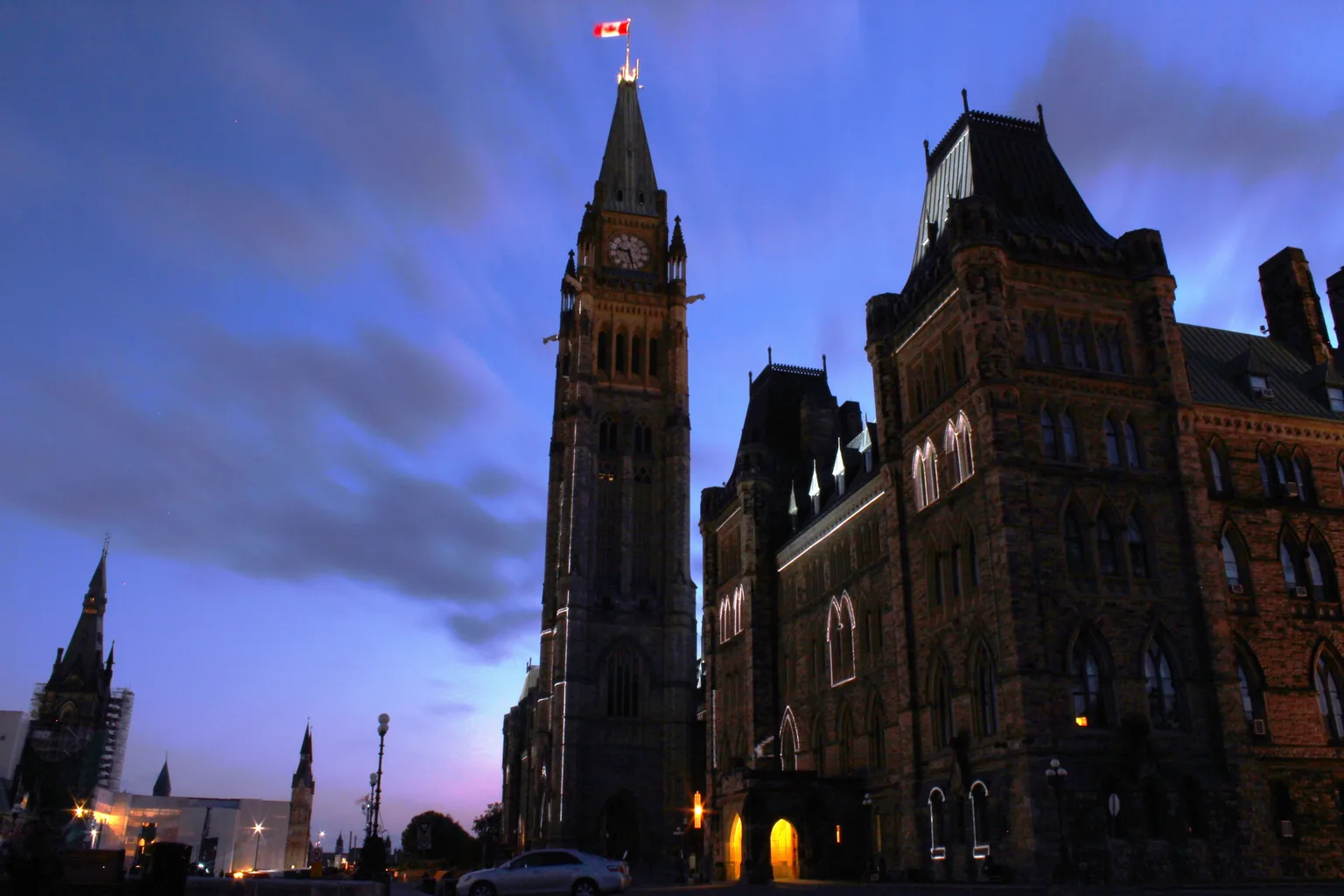
Is Parliament Hill free to visit?
Yes. Every official Parliament of Canada tour — the grounds, the Centre Block experience, and the guided visits of the parliamentary precinct — is free of charge, with no admission fee at any point in the process. This puts it in a small category of national capital attractions worldwide that charge nothing at all, and it is one of the reasons Parliament Hill anchors so many Ottawa itineraries regardless of budget.
Free does not mean unrestricted, though. Access to the buildings is managed by reservation and by security screening, and opening hours and availability vary throughout the year — Parliament recommends checking ahead rather than assuming a fixed year-round schedule. The outdoor grounds themselves, including the lawn, the Centennial Flame, and the walking paths around the precinct, remain open and freely accessible without any booking at all.
How to book a tour
Tickets are reserved online through the official Parliament of Canada ticketing system at rts.parl.ca — this is the only channel Parliament itself endorses, and it is worth booking directly rather than through a third-party site that may add a service fee for something that costs nothing at the source. If you run into trouble with the online system, the Tour Reservations Office can be reached by phone at 613-996-0896.
When you book, be prepared to provide the full names and dates of birth for everyone in your group. Anyone aged 16 or older needs government-issued photo ID at the door — a passport, driver’s licence, or similar document. There is no walk-up ticket window, so arriving without a reservation and hoping to join a tour is not a reliable plan, particularly during the busy summer months when Ottawa sees its highest visitor volume.
Good to know: book as early as your travel dates allow. Summer reservation slots for the more limited guided experiences (House of Commons chamber visits, in particular) fill up well ahead of the actual visit date, especially around Canada Day in early July.
What the visit actually includes
The centrepiece of a Parliament Hill visit today is “Parliament: The Immersive Experience,” the official presentation inside the restored Centre Block. Rather than a traditional room-by-room guided walkthrough, it combines an exhibition space with a 360-degree multimedia show — a deliberate choice by Parliament to give visitors a meaningful experience of the building and its history while the surrounding restoration work continues.
Separately, guided House of Commons tours are offered on the Hill, typically running from late June through September. These last about 40 minutes and take place in the West Block, which currently houses the temporary House of Commons chamber while Centre Block undergoes its long-term restoration — not inside Centre Block itself, a distinction worth knowing before you book if seeing the actual chamber in session is your priority.
The Senate of Canada Building, a separate stop from the Parliament buildings on the Hill itself, runs its own visit program and is reached via a short walk from Rideau Station through the Rideau Centre. It is described by the Senate as fully accessible, with a barrier-free path of travel throughout.
Baggage rules apply across all these visits: only one small bag within Parliament’s stated size limit is permitted, and there is no bag check available on-site — plan your day so you are not carrying luggage or oversized bags when you arrive.
The Changing of the Guard
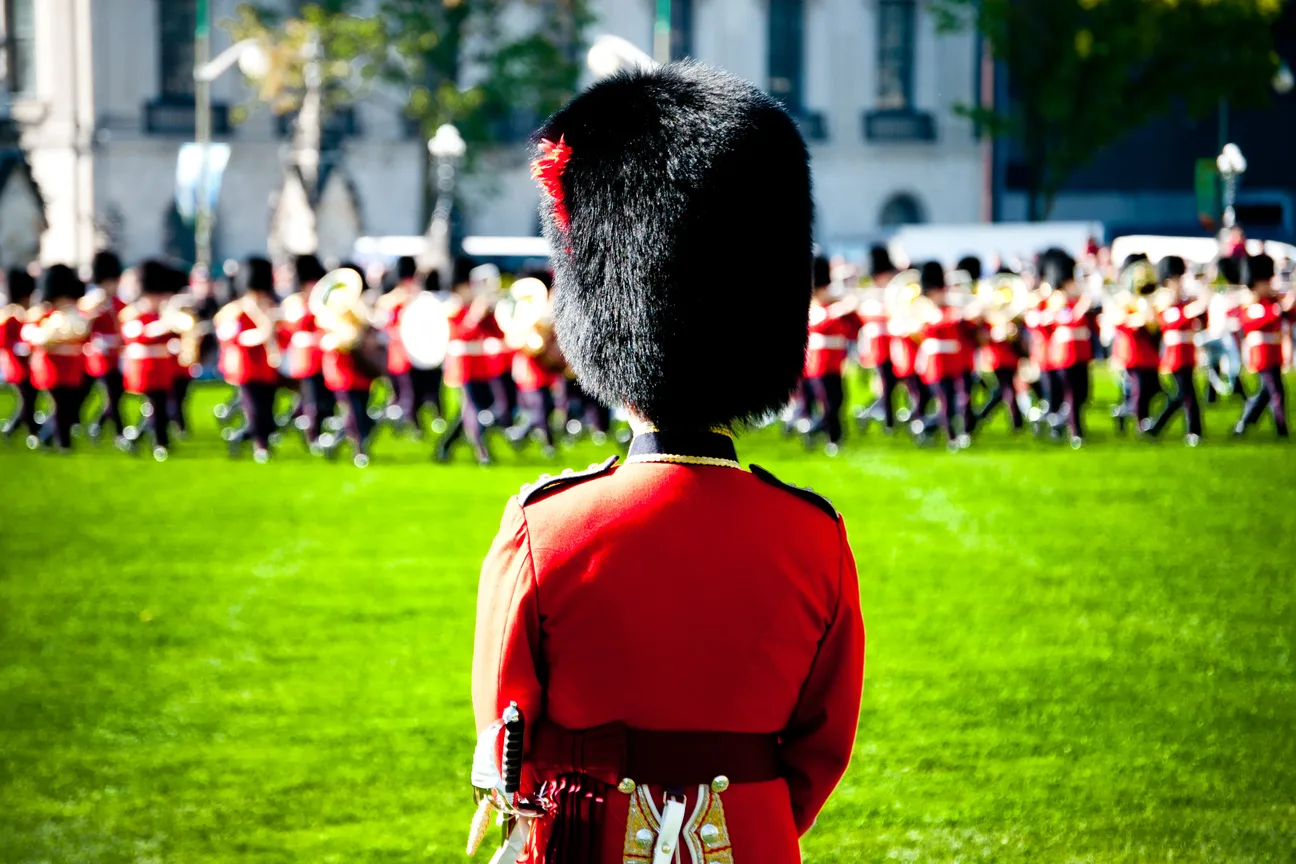
Between July 1 and August 14, 2026, the Changing of the Guard ceremony takes place on Parliament Hill at 10:00 a.m., with the full ceremonial parade running Thursday through Sunday and a scaled-back band-only performance on Monday through Wednesday. It is one of the few genuinely free, no-reservation-required spectacles in the city — you simply show up on the lawn.
The ceremony itself lasts about 30 minutes, but the full visitor experience runs closer to 45 minutes once you account for the march-in beforehand. Arriving by 9:45 a.m. gives you time to find a good vantage point and see the Ceremonial Guard — recognizable by their scarlet tunics and bearskin caps — arrive and take their positions before the ceremony formally begins at 10:00.
The Guard performs immediately in front of the Parliament buildings, close to the base of the Peace Tower, which means it fits naturally into the same visit as a Centre Block tour if your timing lines up. The Memorial Chamber, a separate interior space inside the Peace Tower itself, is not part of the Guard ceremony and operates on its own visiting arrangement — worth confirming separately if that specific chamber is on your list, since current published sources don’t give a fixed year-round schedule for it.
Why the Centre Block restoration changes what you’ll actually see
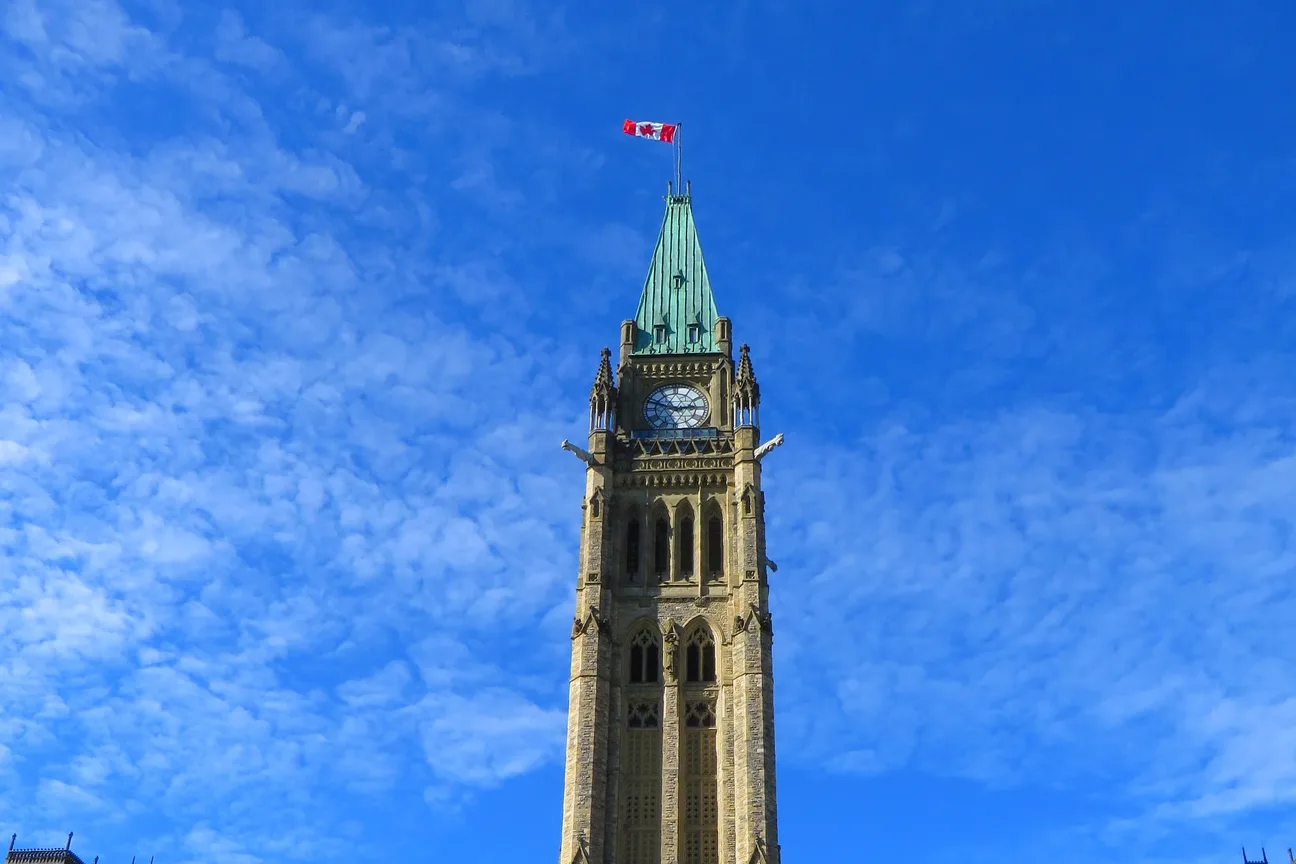
Anyone who last visited Parliament Hill before 2018 will find a noticeably different experience today. Centre Block, the building most people picture when they think of Parliament — the one with the Peace Tower rising from its centre — has been closed for a major restoration since 2018, and that work is on track for construction completion around 2031, with a public reopening expected in 2032 after post-construction testing. That is a long closure by any standard, and it directly explains why “Parliament: The Immersive Experience” exists as a distinct, purpose-built visitor program rather than a stopgap: it was designed specifically to give visitors a substantive way to engage with the building and its history during a restoration measured in over a decade, not a couple of years.
Practically, this means a 2026 visit to Parliament Hill is not the same visit your parents or an earlier trip might have described. The House of Commons chamber you can currently tour sits in the West Block, temporarily rehoused there for the duration of the Centre Block work, not in its historic home. This is not a downgrade so much as a different kind of visit — the West Block itself is a restored heritage building in its own right, and seeing the working, sitting Parliament of Canada function inside a repurposed historic space is arguably more interesting than an empty ceremonial chamber would be. But it is worth knowing in advance so expectations match reality, particularly if a photo of the classic green-benched Commons chamber inside Centre Block specifically was the goal.
Seasonal variation and when to visit
Parliament Hill operates on a noticeably different rhythm depending on the season, and this affects both what is open and how crowded it feels. Summer (late June through September) is when the fullest range of programming runs: the House of Commons guided tours in West Block operate during this window specifically, the Changing of the Guard runs its full ceremonial schedule from July 1 to August 14, and Ottawa’s tourist volume peaks accordingly — meaning longer security lines and a genuine need to book tour slots further ahead.
Spring and fall bring smaller crowds and a good chance of seeing the grounds and gardens at their most photogenic — spring for the tulip plantings that Ottawa is well known for regionally, fall for the maple colour along the Ottawa River escarpment below the Hill. Building access and specific tour availability still varies, so this is exactly the situation where checking directly with Parliament’s reservation system before finalizing a visit date pays off, rather than assuming shoulder-season access mirrors summer.
Winter visits trade the Changing of the Guard and some seasonal programming for a quieter, less crowded precinct, and for visitors who are also planning time on the nearby Rideau Canal Skateway — the world’s largest naturally frozen skating rink when conditions allow — a winter Parliament Hill stop pairs naturally with a canal skate a short walk away.
Getting to Parliament Hill
| Route | Best for | Notes |
|---|---|---|
| O-Train Line 1 to Parliament Station | Parliament Hill itself | Station at Queen and O’Connor, steps from the Hill, accessible elevators |
| O-Train Line 1 to Rideau Station | Senate of Canada Building | Short walk through CF Rideau Centre, then across Colonel By Drive |
| Walking from ByWard Market | Either building | 10-15 minutes on foot from the Market’s northern edge |
| Driving | Not recommended | No parking on Parliament Hill itself; nearest lots are a short walk away |
The single easiest way in is the O-Train Line 1 to Parliament Station, which sits close enough to the Hill that the walk from the platform is only a few minutes. If your visit is specifically to the Senate of Canada Building rather than the main Parliament precinct, Rideau Station is the better stop — from there, the route runs through CF Rideau Centre and out onto Rideau Street, crossing Colonel By Drive to reach the Senate building.
Visitors coming from ByWard Market or downtown hotels can comfortably walk the distance in ten to fifteen minutes, which is often faster than waiting for transit for a trip this short. For anyone still deciding between driving and relying on transit for the rest of an Ottawa trip, see the site’s broader guide to getting around Ottawa.
Parking and accessibility
There is no parking available directly on Parliament Hill. The nearest paid options are at CF Rideau Centre, the National Arts Centre, and Ottawa City Hall — all within reasonable walking distance but requiring a short walk regardless of which lot you choose. Several private and city-operated lots also serve the surrounding blocks. Given the lack of on-site parking and the cost of downtown lots, transit genuinely is the more practical choice for most visitors rather than simply the eco-friendly one.
On accessibility, both Parliament and the Senate describe their facilities as accessible to wheelchairs and service animals, and the Senate specifically notes a fully barrier-free path of travel through its building. Every visitor, regardless of mobility needs, passes through the same security screening on entry — a brief screening for general access, with a secondary screening for gallery access where applicable at the Senate.
Good to know: if you have specific accessibility requirements, contacting the Tour Reservations Office ahead of your visit (613-996-0896) lets staff plan for your needs rather than working it out on arrival.
Planning your visit day
A realistic half-day plan starts with booking your Centre Block or House of Commons slot as early as possible once your travel dates are confirmed — this is the piece most likely to sell out, not the grounds or the Guard ceremony. If your visit falls between July 1 and August 14, building the day around the 10:00 a.m. Changing of the Guard makes sense: arrive by 9:45, watch the full ceremony, then move directly into your booked tour slot afterward.
Outside that Guard season, the flexibility runs the other way — book your tour time first, then treat the Centennial Flame, the East and West Block exteriors, and the surrounding grounds as a self-paced walk before or after, since none of that requires a reservation. For visitors also interested in the building’s architecture and the decades-long Centre Block restoration itself rather than the practical logistics covered here, the site’s companion Parliament Hill field guide goes deeper into that history.
Whichever season you visit, leave more time than the tour length alone suggests. Security screening adds a real queue during peak summer weeks, and the walk from transit, combined with finding your reservation checkpoint on a large open precinct, easily adds twenty to thirty minutes on either side of the booked visit itself.
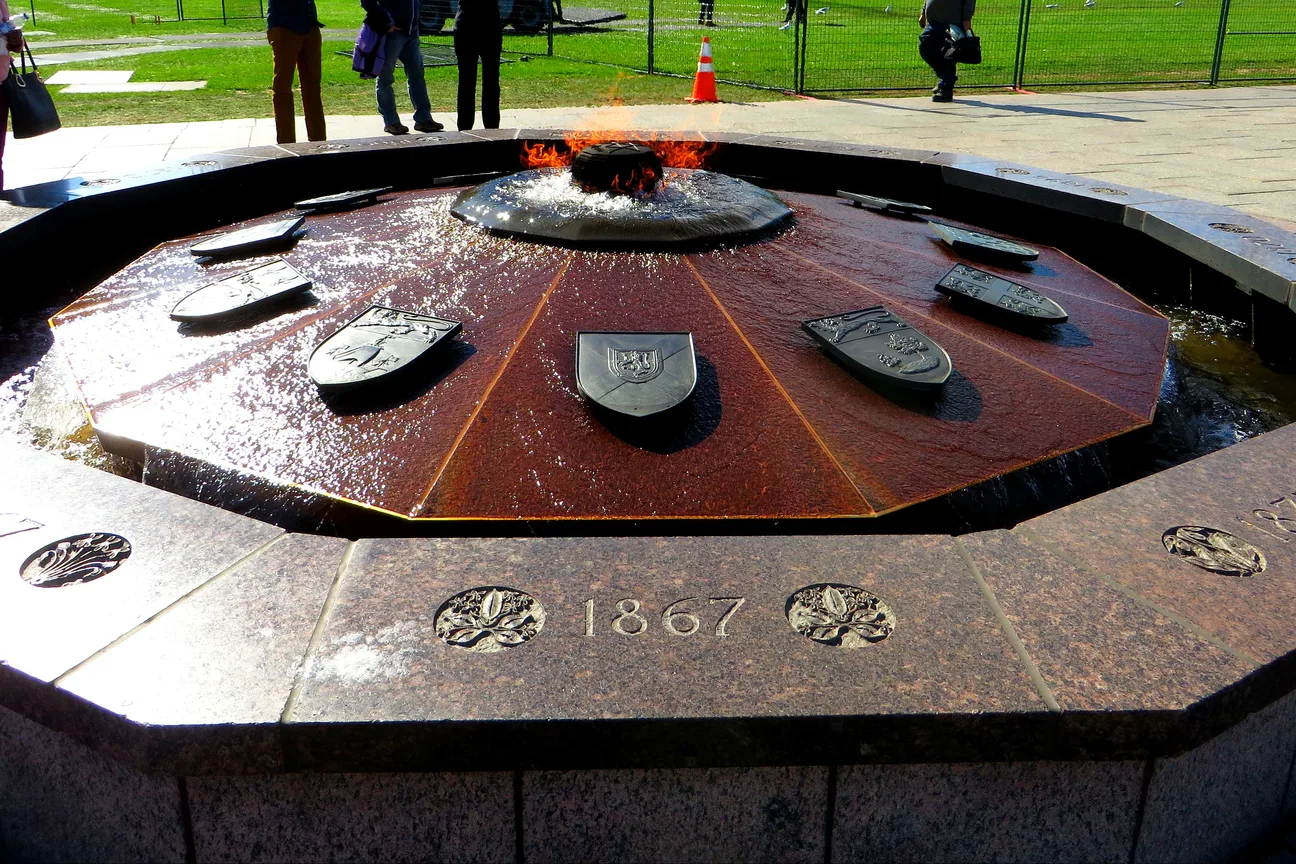
The Centennial Flame, lit continuously since 1967 and ringed by the shields of Canada’s provinces and territories, sits directly on the walking route between Parliament Station and the Hill’s main lawn — an easy stop that costs no extra time if you are already making the walk from transit to your tour.
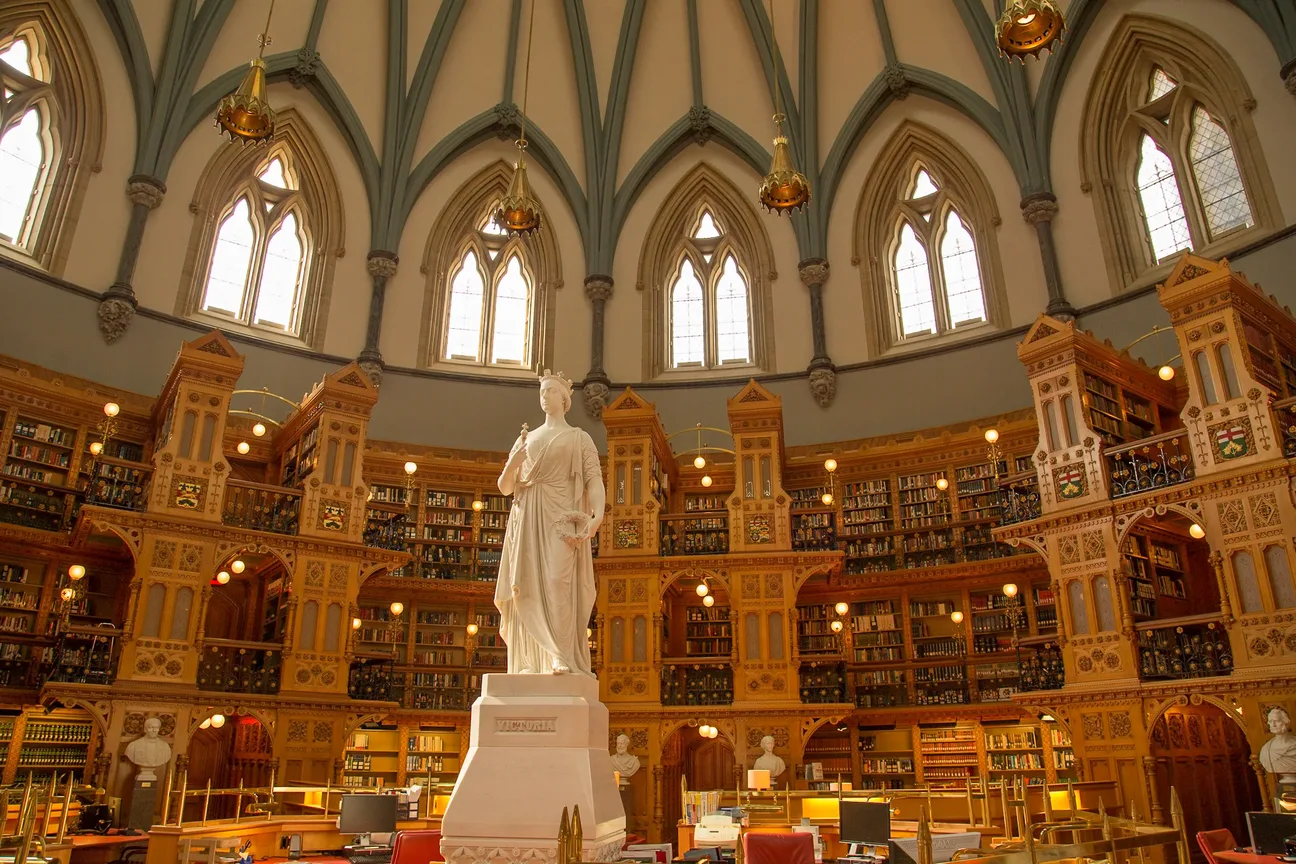
Photo credits: hero photo by Dylandamic0 (CC BY-SA 3.0); Peace Tower by Ken Lund (CC BY-SA 2.0); Changing of the Guard by Paste Berlusconi (CC BY 2.0); Library of Parliament by Tony Webster (CC BY-SA 4.0); Centennial Flame by Ken Lund (CC BY-SA 2.0) — all via Wikimedia Commons.
Combining Parliament Hill with the rest of downtown
Because entry to Parliament Hill is free and the tour itself only takes up part of a morning or afternoon, most visitors build it into a longer downtown day rather than treating it as a standalone trip. The geography works in your favour here: the Hill sits within easy walking distance of several of Ottawa’s other major attractions, so a single reservation slot can anchor a full day without requiring transit back and forth.
The Rideau Canal, a UNESCO World Heritage Site, runs directly below the Hill’s eastern edge and makes for a natural extension of the visit — a stroll along the canal pathway in summer, or a skate on the frozen Skateway in winter, both start within a few minutes’ walk of the Parliament grounds. Heading the opposite direction, the ByWard Market is close enough to reach on foot in ten to fifteen minutes, offering the most practical lunch option for anyone who has just spent a morning in security lines and tour queues without much of a food break built in.
For visitors staying multiple days, it is worth deliberately not trying to cram Parliament Hill, the Canal, and the Market into a single afternoon. Each rewards unhurried time, and a Parliament Hill tour that ends rushed because you are racing to a canal boat departure or a dinner reservation undercuts the whole point of booking a free, unhurried government tour in the first place. A cleaner split is Parliament Hill and a canal walk in the morning, Market and museums in the afternoon — or vice versa, depending on which season’s programming you are chasing.
Common mistakes to avoid
A few recurring planning mistakes are worth flagging directly, since they come up often enough in visitor accounts to be predictable rather than random bad luck. Booking too late is the single most common one — Parliament’s tour slots, particularly the House of Commons chamber tours in West Block, are limited by physical capacity and do fill up during the summer peak, sometimes days ahead rather than hours. If your Ottawa trip has a fixed window, book the Parliament Hill slot as one of your first reservations, not something to fit in once you have arrived.
Assuming you can park nearby for free is the second. There is no on-site parking, and downtown Ottawa parking rates are not cheap by Canadian standards — a visitor who drives downtown expecting a quick, inexpensive park-and-walk will likely spend more on parking than the entire visit would have cost if it weren’t free to begin with. Budget the transit trip in instead.
Forgetting photo ID is the third, and it is an easy one to overlook precisely because the whole experience is free — there is a natural assumption that a no-cost, no-ticket-in-hand experience won’t require the same paperwork as a paid attraction. It does. Anyone 16 or older needs government-issued photo ID at the door regardless of how the reservation was made or what it cost.
Finally, misjudging the Changing of the Guard window trips up visitors who arrive at 10:00 a.m. sharp expecting the ceremony to still be starting. The march-in begins before the official 10:00 start time, and by the time the ceremony proper gets underway, the best viewing positions near the front of the lawn are often already taken by visitors who arrived at 9:45 or earlier. If seeing the full ceremony from a good vantage point matters to you, treat 9:45 as the real arrival time, not 10:00.
Frequently asked
Official Parliament tours are free of charge. There is no admission fee for the grounds, the Centre Block immersive experience, or the guided tours of the parliamentary precinct. Reservations are required but do not carry a booking fee.
Yes. Tickets must be reserved in advance through the Parliament of Canada's official reservation system (rts.parl.ca), not purchased at the door. If you need help booking, the Tour Reservations Office can be reached at 613-996-0896. Bring government-issued photo ID if you are 16 or older, and be ready to provide full names and dates of birth for everyone in your group.
The Changing of the Guard runs at 10:00 a.m. during the 2026 summer season (July 1 to August 14), with the full ceremonial parade Thursday through Sunday and a band-only performance Monday through Wednesday. The ceremony lasts about 30 minutes; arrive by 9:45 a.m. to see the full march-in.
No, there is no parking directly on Parliament Hill. The closest paid parking is at CF Rideau Centre, the National Arts Centre, and Ottawa City Hall, all within walking distance. Taking the O-Train to Parliament Station is the more reliable option, especially in summer.
Parliament and the Senate state that their facilities are accessible to wheelchairs and service animals. Parliament Station on the O-Train has accessible elevators. All visitors, regardless of mobility needs, go through the same security screening before entry.